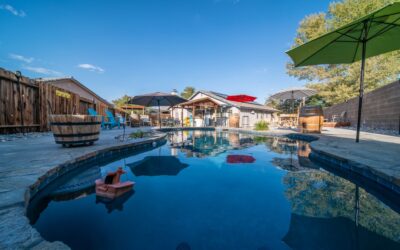
A black aluminum pool fence should be planned as a continuous safety barrier, not as a row of attractive panels. Height matters, but so do the openings below and between components, the gate hardware, nearby climbable surfaces, and every change in grade.
Part of our Decks & Outdoor guide — explore the full guide →
Start with a field survey and the rules that apply at the property. Local building and pool codes, the authority having jurisdiction, and the selected system’s installation instructions control the final dimensions and details. The checks below help a homeowner prepare a sound plan; they do not replace permits, inspections, or professional design where required.
- What a Compliant Black Aluminum Pool Fence Requires
- Set the Barrier Line Before Choosing Panel Height
- Treat Openings as a System, Not Separate Numbers
- Plan the Gate as the Highest-Risk Opening
- Match Panels and Posts to Grade and Site Loads
- Keep the Black Finish Clean, Visible, and Repairable
- Build the Budget Around Corners, Gates, and Site Work
- Approve the Fence Only After a Full Perimeter Test
What a Compliant Black Aluminum Pool Fence Requires
Before appearance, this fence has to work as a safety barrier. Many jurisdictions require a minimum height around 48 inches, with some requiring 60, and they limit gaps: pickets typically sit less than 4 inches apart, and the gap under the fence stays under 4 inches.
The gate is the controlled part. Barrier codes usually require a self-closing, self-latching gate that swings away from the pool, with the latch mounted high, often near 54 inches. Materials tend to run about $25 to $45 per linear foot before gates, corners, and installation. Confirm the height, spacing, and gate rules your local code actually adopts.
Set the Barrier Line Before Choosing Panel Height
Walk the entire proposed fence line before comparing panel sizes. Mark the pool deck, steps, retaining walls, equipment pads, doors, existing fences, and the points where the ground rises or falls. A panel that appears tall enough on level pavement may provide a different effective barrier where soil builds up on one side or a raised surface sits nearby.
Confirm where the regulating authority measures barrier height and which side is considered the approach side. Also ask how it treats changes in elevation, adjoining walls, and structures that form part of the enclosure. These details vary, so a nominal panel height on a product page is not proof that the installed barrier will comply.
Keep furniture, planters, storage boxes, pumps, and landscape features out of any clearance area defined by local rules. If a deck, wall, or building completes part of the perimeter, verify its openings and access points with the same care as the new fence. A broader aluminum pool barrier planning guide can help organize the material and layout decisions, but the site-specific line should be approved before materials are ordered.
Treat Openings as a System, Not Separate Numbers
The critical opening is not always the space between two pickets. Inspect the bottom clearance, panel-to-post joints, corners, transitions to walls, gate edges, and the triangular gaps that can form when a panel follows a slope. Even if each standard panel is manufactured consistently, installation tolerances can create a larger opening at a single post or grade break.
Do not rely on an informal hand-width test. The inspection authority may use a prescribed gauge or sphere test and may measure from a defined surface. Ask which rule set applies, then record the permitted openings on the site plan and order documents. The installer should know where those limits must be maintained after posts are set and panels are adjusted.
| Barrier area | Field check | Common planning miss |
|---|---|---|
| Panel field | Compare every picket bay and rail opening | Checking only one factory panel |
| Finished grade | Follow the lowest and highest points under each panel | Measuring before soil or paving is complete |
| Connections | Review posts, corners, walls, and gate edges | Assuming unlike components meet without a gap |
On uneven ground, decide whether the approved system can rack with the slope or must step in controlled increments. Do not improvise by cutting rails, widening brackets, or stacking loose material below a panel. Use manufacturer-approved components and have the finished transitions checked against the applicable opening limits.
Plan the Gate as the Highest-Risk Opening
A gate concentrates movement, alignment, hardware, and human behavior into one part of the barrier. Establish its location only after mapping the normal route from the house, parking area, and service access. The path should let the gate complete its required swing without striking a step, planter, furniture, or sloped paving.

Local rules commonly address swing direction, self-closing action, self-latching operation, latch placement, release access, and the openings around gate hardware. The exact requirements are jurisdiction-specific. Match the gate leaf, hinges, closer, latch, posts, and fasteners as an approved system rather than combining parts whose loads or adjustment ranges are unknown. This guide to planning a black aluminum gate covers the component choices that should be confirmed with the fence manufacturer and inspector.
Test the actual gate after the surrounding grade and paving are finished. Open it a small amount, halfway, and fully, then let it close without assistance from each position. Confirm that the latch engages and remains secure, and repeat the test after post and hinge adjustments. Never solve a dragging or misaligned gate by disabling the closer, holding the leaf open, or defeating the latch.
Match Panels and Posts to Grade and Site Loads
A black aluminum pool fence must fit both the barrier plan and the ground supporting it. Rackable panels can follow some slopes while keeping rails and pickets connected as designed; stepped panels may suit other systems but create different bottom clearances. The manufacturer’s allowable angle, bracket arrangement, and post spacing determine what is possible. If the site exceeds those limits, redesign the run instead of forcing the panel.
Post foundations depend on more than fence height. Soil condition, drainage, frost depth, wind exposure, gate weight, nearby paving, and underground services can all affect installation. Have utilities located before digging, and use the footing and anchorage details required for the selected product and local conditions. A gate post often carries loads that an intermediate line post does not, so it should not be treated as interchangeable.
Where the fence meets concrete, masonry, timber, or an existing barrier, specify the connection rather than leaving it to a field patch. The junction must preserve required height and opening control without creating a foothold or weak attachment. Coastal air, pool chemicals, irrigation, and poor drainage can also accelerate wear at fasteners and base plates, making compatible metals and proper isolation important.
Keep the Black Finish Clean, Visible, and Repairable
Black aluminum is popular because slender members can preserve sightlines while the dark finish recedes against landscaping. That visual benefit should not obscure the barrier itself. Check how the fence reads from the house, patio, and approach paths in bright sun, shade, and evening lighting. A gate needs to remain easy for adults to identify without adding objects that create a climbing aid.
Compare coating specifications, warranty terms, and cleaning instructions before selecting a system. Powder-coated and other factory-finished products vary, and the correct maintenance method comes from the manufacturer. Avoid abrasive tools or unapproved chemicals that can dull the surface or expose metal. Rinse deposits as directed, especially where salt spray, fertilizer, irrigation water, or pool chemicals reach the fence.
Inspect scratches, chips, loose fasteners, and signs of dissimilar-metal corrosion during routine barrier checks. Use only the approved repair process. Thick paint, makeshift sleeves, or sealant around moving gate joints can hide wear or interfere with operation. Finish care supports appearance, but reliable hardware movement and sound connections remain the priority.
Build the Budget Around Corners, Gates, and Site Work
Panel price is only one part of the installed cost. Corners, end posts, changes in direction, gates, upgraded hardware, wall connections, demolition, rock excavation, concrete cutting, drainage work, and slope transitions can change labor and material needs. A simple rectangular run on finished level paving is not a useful comparison for a perimeter with several elevations and access points.
Ask each bidder to price the same marked layout and product specification. The proposal should identify panel and gate types, finish, posts, hardware, footing or anchorage method, removal work, permit responsibility, and final adjustment. Exclusions should be written clearly. This overview of aluminum pool fence cost factors can help build a comparison sheet without treating a broad online range as a site quotation.
Reserve money for conditions discovered after layout, but do not use an allowance to leave safety-critical details undefined. Survey questions, property-line conflicts, unusual retaining walls, or uncertain structural attachments should be resolved before installation. If electrical bonding or grounding questions arise, have the applicable authority and a qualified professional determine what the local code requires.
Approve the Fence Only After a Full Perimeter Test
Final review should start at one gate post and continue around the complete enclosure without skipping familiar sections. Check effective height at grade changes, every bottom gap, picket and rail openings, post connections, wall transitions, fasteners, and potential climbing conditions on the approach side. Confirm that construction debris, stored materials, or new landscaping has not altered the clear area.
Operate every gate repeatedly through its full range. Verify self-closing and self-latching performance from several opening positions, stable post alignment, required swing, secure release protection, and clear movement over the finished surface. Arrange the required inspection before treating the pool area as ready for use. A fence is one layer of protection, not a substitute for active supervision or any other safety measures required for the property.
After approval, set a maintenance routine based on the manufacturer’s instructions and local conditions. Recheck gates after storms, soil movement, paving work, landscape changes, or heavy use. The best specification is the one that remains testable: a continuous barrier, controlled openings, compatible hardware, and a gate that closes and latches every time.
For most homes, the sound decision is to approve a black aluminum pool fence only after the layout, product documents, installer details, and finished field measurements agree. That sequence protects both the clean visual result and the safety function the enclosure is expected to provide.