Few combinations feel as instantly luxurious as a black and gold backsplash. The pairing is dramatic without being loud, timeless without being boring, and it makes a kitchen or bathroom feel custom and expensive even on a moderate budget.
- Design Ideas for a Black and Gold Backsplash
- Materials That Deliver the Look
- Style Pairings: Modern, Art Deco, and Glam
- Pairing With Brass and Gold Fixtures
- Choosing the Right Grout Color
- What It Costs
- Cleaning and Upkeep
- Where a Black and Gold Backsplash Works Best
- Final Thoughts on a Black and Gold Backsplash
Black grounds the space and hides splatter, while gold and brass accents catch the light and add warmth. Whether you love clean modern lines, roaring-twenties Art Deco glamour, or soft transitional style, there is a black and gold look that fits. Here are the design ideas, materials, and practical details worth knowing before you tile.
Design Ideas for a Black and Gold Backsplash
The magic of a black and gold backsplash is in the ratio. Black should dominate as the field, with gold used as an accent so it reads elegant rather than gaudy. A few combinations that consistently look stunning:
- Black subway tile with gold grout: Matte black 3×6 subway tiles set off by thin metallic gold or brass grout lines. Clean, graphic, and surprisingly affordable.
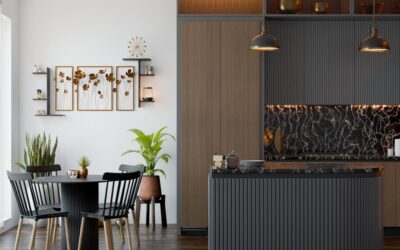
- Black marble with gold veining: Nero Marquina or a black quartz slab shot through with natural gold and white veins reads high-end and needs no other pattern.
- Gold-accent mosaics: Black mosaic sheets with scattered brushed-gold metal chips or gold-leaf glass tiles woven in for shimmer.
- Black hexagon with brass trim: Matte black hex tile framed by a slim brass pencil-liner edge for a geometric, modern-glam feel.
- Vertical stacked black tile: Glossy black tiles stacked in straight vertical lines with gold cabinet hardware and a brass faucet to tie it together.
Materials That Deliver the Look
Several materials pull off black and gold, each with a different price and vibe. Match the material to how the space gets used and how much upkeep you want.
- Porcelain and ceramic: The most practical and budget-friendly. Available in matte or glossy black, easy to clean, and unaffected by acids. Ideal behind a cooktop.
- Marble and natural stone: Black marble with gold veining is the luxury choice, but it is porous, etches with acid, and needs sealing.
- Glass: Glass mosaics and gold-leaf glass tiles add reflective depth and light. Nonporous and easy to wipe, though they show fingerprints.
- Metal: Brushed or polished brass and gold-tone stainless accent tiles bring genuine metallic shine, usually used as inserts or a slim border rather than the whole field.
Style Pairings: Modern, Art Deco, and Glam
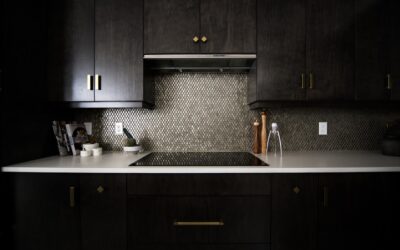
Black and gold flexes across several design languages. For a modern kitchen, use matte black large-format tile or stacked subway with brushed-gold hardware and clean, warm undertones. Everything stays understated and the gold reads as a deliberate metal choice rather than sparkle.
For Art Deco, lean into geometry: fan-shaped, scalloped, or fluted black tile with bold gold lines, a marble slab with strong veining, and symmetrical patterns. This is where black and gold truly sings, echoing 1920s glamour.
For glam and Hollywood Regency, go glossy. Polished black tile, gold-leaf mosaics, mirrored accents, and shiny brass fixtures create the high-shine, jewel-box effect. The rule across all three styles: pick one gold tone (brushed, polished, or antique) and repeat it in the faucet, cabinet pulls, and light fixtures so the metals do not clash.
Pairing With Brass and Gold Fixtures
A backsplash never lives alone. The reason black and gold looks so cohesive is that the gold in the tile gets echoed by the hardware around it. Coordinate your faucet, cabinet knobs and pulls, pendant lights, and even the drain and sink with the same gold finish.
Be consistent with the metal tone. Brushed brass is warm and matte and hides fingerprints; polished gold is bright and shiny and reads more formal; antique or aged brass leans traditional. Mixing two gold tones in one small space usually looks like a mistake rather than a choice. Against black tile, warm brass tends to read richest.
Choosing the Right Grout Color
Grout is a design decision, not an afterthought, especially with black tile. Your main options:
- Black or charcoal grout: Blends the joints away so the wall reads as one seamless dark surface. Modern and dramatic, and it hides kitchen grime well.
- Gold or metallic grout: A specialty grout or grout additive that turns the joints into thin gold lines. This is the show-stopper look, drawing the geometry of the tile in shimmering gold.
- Gray grout: A safe middle ground that softly defines each tile without stark contrast.
Avoid bright white grout with black tile unless you want a high-contrast, checkerboard-busy look; white also stains fastest behind a stove. Metallic gold grout costs more and is trickier to work with, but on a black backsplash the payoff is worth it.
What It Costs
A black and gold backsplash spans a wide price range depending on materials. Budget roughly $10 to $40 per square foot installed for most jobs, with luxury materials pushing higher.
- Black porcelain or ceramic subway: $5 to $15 per square foot for tile.
- Glass or gold-accent mosaic sheets: $15 to $40 per square foot.
- Black marble with gold veining: $20 to $50 per square foot for the stone alone.
- Real brass or gold metal accent tiles: $20 to $60 per square foot, typically used sparingly.
- Professional installation: $8 to $15 per square foot in labor.
A typical 30-square-foot kitchen backsplash in porcelain runs about $600 to $1,200 installed. Swapping to marble or heavy metal accents can double that.
Cleaning and Upkeep
Black shows two things: dust and water spots. Wipe the backsplash regularly with a soft microfiber cloth and a pH-neutral cleaner to keep it looking crisp. On glossy black tile, buff dry to prevent streaks and mineral spotting from hard water.
If you chose marble, seal it on installation and reseal annually, and never use acidic cleaners like vinegar or lemon, which etch the stone. Gold and brass fixtures need their own care: lacquered brass just wipes clean, while living, unlacquered brass will naturally patina over time unless you polish it. Metallic gold grout should be sealed to protect the finish.
A practical tip for the stove area specifically: grease and cooking oil are the enemies of any dark backsplash because the film they leave dulls the sheen and catches dust. Behind a cooktop, favor a glossy or glazed porcelain over honed marble, and give that zone a quick wipe-down every few days rather than waiting for buildup. A soft cloth and warm water handle daily maintenance; save deeper cleaning for weekends. Done consistently, this keeps the black looking rich and the gold accents bright for years without any special products.
Where a Black and Gold Backsplash Works Best
This palette shines in kitchens as a full backsplash or a stove-area accent, in bathrooms behind the vanity, in powder rooms where you can afford to be bold, and behind a bar or beverage station. It pairs beautifully with white, cream, or navy cabinetry and looks especially rich against warm wood tones and quartz counters.
Because black recedes visually, it works even in smaller kitchens without shrinking the room, as long as you keep lighting warm and layered so the gold accents can glow. It is one of the safest bold choices you can make.
A few placements deserve special mention. Behind a range, a full-height slab of black marble or large-format porcelain running to the hood makes a commanding focal wall with no grout lines to scrub. In a wet bar or butler’s pantry, gold-leaf glass mosaics catch the light from under-cabinet fixtures and turn a small utility space into a jewel box. For a laundry room or mudroom, a durable black porcelain with a thin brass border adds polish to a hardworking area at a modest cost.
Final Thoughts on a Black and Gold Backsplash
A black and gold backsplash is a high-impact, forgiving way to make any kitchen or bath feel custom and luxurious. Let black carry the field, use gold as a considered accent, commit to one metal tone throughout, and choose your grout deliberately. Whether you go modern-matte, Art Deco geometric, or full Hollywood glam, this combination delivers timeless drama that will still look expensive a decade from now.