Color trends come and go, but two shades never fall out of style. A black and white backsplash delivers high contrast, clean graphic appeal, and a timeless look that works equally well in modern, farmhouse, and classic kitchens. Because the palette is so simple, the design comes down to pattern, tile shape, and layout. This guide walks through the most popular approaches, what they cost, and how to make a two-tone backsplash look intentional rather than busy.
- Why Black and White Endures
- Popular Black and White Backsplash Styles
- Choosing Your Tile Material
- Layout and Grout Decisions
- Balancing the Two Tones
- What It Costs
- Matching the Backsplash to Your Kitchen Style
- Design Mistakes to Avoid
- Care and Cleaning
- Pairing With Counters and Cabinets
- Adding Color and Warmth to a Two-Tone Scheme
- Bottom Line
Why Black and White Endures
The appeal is rooted in contrast. Pure black and crisp white create the strongest visual contrast of any pairing, which makes patterns pop and gives a kitchen a polished, editorial feel. The combination is also flexible: it reads vintage in a checkerboard, modern in a clean grid, and bold in a geometric mosaic. And because it is neutral, it pairs with almost any cabinet color, countertop, and metal finish without clashing.
Popular Black and White Backsplash Styles
- Classic subway tile: White subway tile with black grout, or alternating black and white rows, for a crisp, affordable look.
- Checkerboard: Alternating black and white squares for a retro, statement-making pattern.
- Hexagon mosaic: Black and white hex tiles, often with a border or scattered accent pattern.
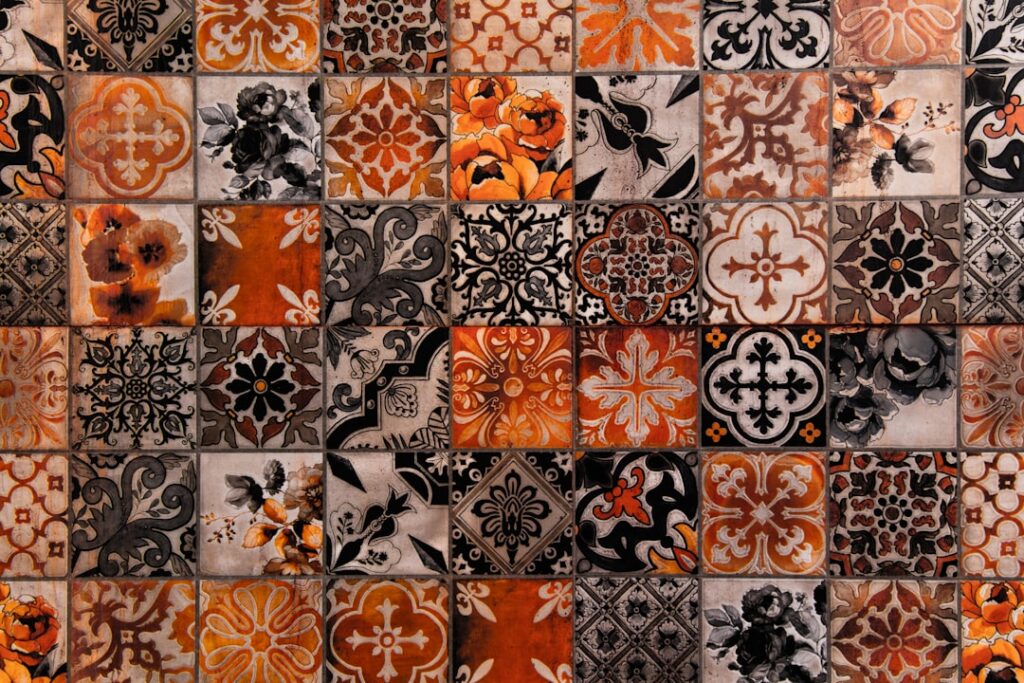
- Patterned cement-look tile: Bold Moroccan or geometric prints in black and white for a feature wall.
- Herringbone and chevron: Two-tone tile set in a directional pattern for added movement.
- Marble look: White marble or porcelain with dramatic black veining for a softer, luxe take.
Choosing Your Tile Material
Ceramic and porcelain are the most common and practical choices for a backsplash, offering durability and easy cleaning at a reasonable price. Glass tile adds depth and reflects light, brightening the space. Natural marble brings authentic veining but needs sealing and gentler care. For a budget-friendly entry, peel-and-stick tile can mimic black and white patterns in low-splash areas, though it lacks the durability of real tile near a stove or sink.
Layout and Grout Decisions
Grout color is a design tool, not an afterthought. White grout with white tile creates a seamless, calm field, while black or dark gray grout on white tile emphasizes each tile’s shape and leans graphic. With patterned tile, a neutral gray grout often keeps the focus on the pattern itself. Plan your layout around the focal points, the stove and the main run of counter, and center patterns so they look deliberate rather than cut off awkwardly at the edges.
Balancing the Two Tones
The ratio of black to white sets the mood. A mostly white backsplash with black accents feels light and airy, while a heavier dose of black reads dramatic and moody. As a general rule, let one color dominate and use the other as the accent rather than splitting fifty-fifty across a large wall, which can feel chaotic. Tie the backsplash to the rest of the kitchen by repeating one of the tones in the cabinets, hardware, or counters.
What It Costs
Backsplash costs depend on tile choice and labor. Basic ceramic subway tile runs roughly $3 to $10 per square foot for materials, patterned cement-look and marble tiles climb to $10 to $30 or more, and professional installation typically adds $7 to $15 per square foot. A standard kitchen backsplash of 30 to 40 square feet often lands somewhere between $500 and $2,000 installed, depending on the tile and pattern complexity.
Matching the Backsplash to Your Kitchen Style
Black and white flexes across nearly every kitchen style, but the execution should match the room. In a modern kitchen, clean white tile with crisp black grout or a stacked vertical layout feels sharp and minimal. A farmhouse kitchen loves a classic white subway with black accents or a checkerboard near the range. Traditional and vintage kitchens suit hexagon mosaics and patterned cement-look tiles. Industrial spaces pair well with large black tile and dark grout. Letting the tile shape and pattern echo your cabinetry and hardware keeps the whole room feeling deliberate.
Design Mistakes to Avoid
- Splitting fifty-fifty across a big wall: Equal black and white can feel chaotic; let one tone lead.
- Ignoring grout color: Grout is a design choice; pick it intentionally rather than defaulting.
- Choosing trendy over timeless: A wild pattern can date fast; balance bold with classic.
- Forgetting the focal point: Center patterns on the range or main run so they look planned.
- Skipping samples: View tile and grout together in your kitchen’s lighting before committing.
Care and Cleaning
Ceramic and porcelain wipe clean with mild soap and water. Black grout tends to hide stains, while white grout shows them, so seal grout and clean spills promptly to keep white grout crisp. For marble, use a stone-safe cleaner and avoid acidic products like vinegar, which etch the surface. A sealed backsplash stays low-maintenance for years.
Pairing With Counters and Cabinets
A black and white backsplash is neutral enough to work with almost any kitchen, but a few combinations stand out. White cabinets with a black and white backsplash and butcher-block or wood counters feel warm and balanced. Black or navy cabinets paired with a predominantly white backsplash keep the look crisp and high-contrast. White or gray quartz counters let the backsplash pattern take center stage, while a marble-look counter echoes a marble-look black and white tile beautifully. Metal finishes tie it together: brass and gold warm up the palette, while black or chrome hardware reinforces the graphic, modern feel.
Adding Color and Warmth to a Two-Tone Scheme
A black and white backsplash is striking, but some homeowners worry it will feel cold. The fix is to layer in warmth through everything around the tile. Wood open shelving, butcher-block counters, brass or gold hardware, and warm pendant lighting all soften the high contrast and keep the kitchen inviting. A bowl of greenery, a runner with color, and natural textures add life without disturbing the timeless black and white base. Because the backsplash stays neutral, you can refresh these accents seasonally, swapping warm tones in winter and brighter pops in summer, without ever touching the tile. That flexibility is a big part of why the two-tone look stays popular year after year.
Bottom Line
A black and white backsplash is a timeless, high-impact choice that flatters virtually any kitchen style. Pick a pattern that matches your aesthetic, let one tone lead, use grout color intentionally, and tie the palette into the rest of the room. Whether you go classic subway or bold checkerboard, the two-tone look delivers striking, lasting style.