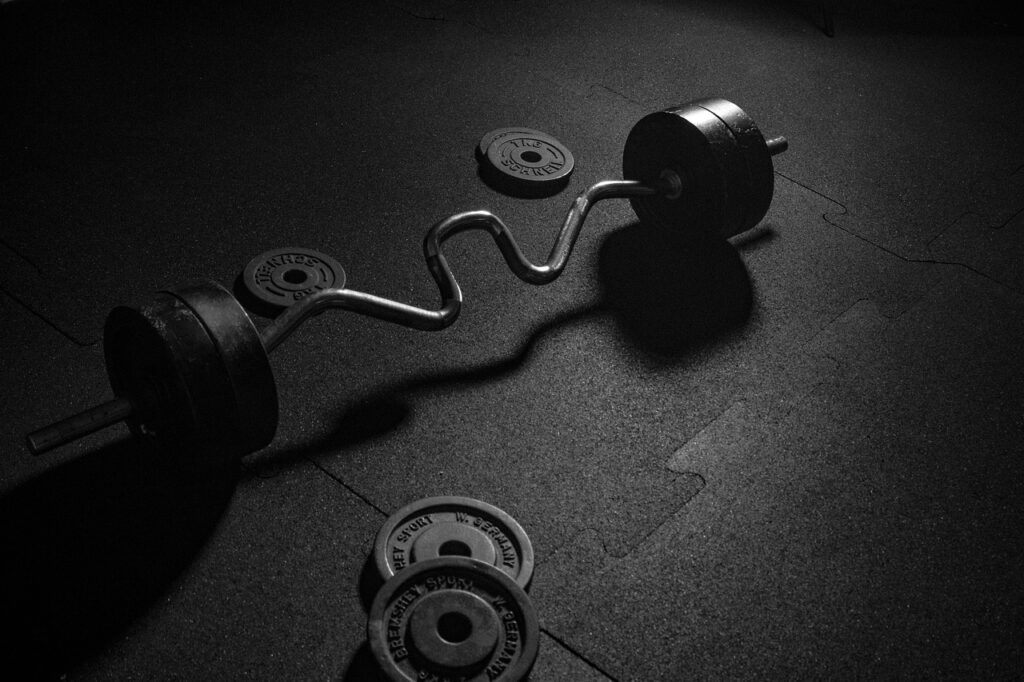
Drop a 45-pound plate from waist height onto a residential basement slab and you will crack the concrete by the third set. Black gym flooring is the rubber underlayment that absorbs that impact, protects the subfloor, and keeps the noise contained to a 75-decibel thud instead of a structural boom. The black color dominates the category for one practical reason: it is the cheapest pigment to manufacture from recycled tire crumb, and it hides the chalk dust, sweat, and barbell knurling marks that any serious training space accumulates in the first six months.
What Black Gym Flooring Actually Is
Most black gym flooring is recycled SBR rubber (styrene-butadiene rubber from post-consumer tires) bound with a urethane resin and pressed into rolls or tiles. The standard thicknesses are 8mm, 1/2 inch, 3/4 inch, and 1 inch, with the heavier gauges intended for free-weight zones and platform underlays. Rolls measure 4 feet wide by 25 or 50 feet long. Tiles run 2×2 feet or 3×3 feet with straight or interlocking edges.
Higher-end products such as Plae Sport, Mondo Sportflex, and Ecore Performance carry the same black colorway but use virgin EPDM rubber or a hybrid SBR-EPDM mix. These cost two to four times the budget tier and offer better dimensional stability, lower odor off-gassing, and longer service life — usually 20 to 30 years versus 8 to 15 for pure recycled SBR.
Once the floor can handle the impact, it’s time to fill the space. A solid storage box keeps bands, gloves, and smaller gear organized between sessions.
We may earn a commission when you purchase through our links.
Where Each Thickness Performs Best
8mm rolls work for cardio rooms, group fitness studios, and yoga zones where the heaviest impact is a kettlebell or dumbbell under 50 lbs. They roll out flat and hold position under traffic. Above 50 lbs of dropped load, the 8mm gauge transmits enough force to chip concrete or dent vinyl underneath.
1/2 inch is the standard residential garage gym thickness. It absorbs dropped dumbbells up to 100 lbs without telegraphing damage to the slab and works for most non-platform deadlift sets when paired with a horse stall mat layered underneath. Above 1/2 inch, you are into deadlift platform territory — 3/4 inch is the entry spec for serious lifters dropping 315 lbs or more, and 1 inch is the gold standard for CrossFit and powerlifting facilities.
Pros That Justify the Spec
- Impact absorption rated up to 80% on 3/4 inch material under dropped barbells
- Noise dampening of 15 to 22 dB compared to bare concrete slabs
- Subfloor protection from chipped concrete, cracked tile, and dented vinyl
- Chalk and rust concealment from the black colorway, which masks training residue
- Slip resistance when wet, with COF values typically 0.65 or higher
Drawbacks Worth Knowing Before You Buy
The odor is real. Fresh-installed recycled SBR off-gases a strong rubber smell for two to six weeks, particularly in poorly ventilated basements. Run a box fan and crack a window during the break-in period, and skip pure SBR entirely if anyone in the household has asthma or chemical sensitivities. EPDM and hybrid products have a milder odor that dissipates in three to seven days.
Rubber also blooms. A whitish powdery residue called sulfur bloom appears on the surface during the first 30 to 60 days after install, particularly in humid basements. It wipes off with a damp cloth and reappears a few times before fully exhausting. The black colorway hides it better than colored flecking, but the bloom is still visible under direct light.
Cost Breakdown Per Square Foot
- 8mm recycled SBR roll: $1.85 to $3.25 per sq ft
- 1/2 inch recycled SBR roll: $2.95 to $4.75 per sq ft
- 3/4 inch interlocking tile: $3.95 to $6.50 per sq ft
- 1 inch deadlift platform tile: $5.50 to $9.75 per sq ft
- Adhesive, seam tape, and labor: $0.85 to $2.25 per sq ft when professionally installed
A typical 400 sq ft garage gym in 1/2 inch SBR therefore runs $1,200 to $1,900 for materials with DIY install. Stepping up to a 200 sq ft deadlift platform in 3/4 inch tile and 400 sq ft of 1/2 inch perimeter brings the project to $2,800 to $4,600 total.
How to Spec the Right Product
Match the gauge to the heaviest single point load and drop height in the room. A homeowner doing 95-lb cleans onto a residential slab is fine with 1/2 inch. A 405-lb deadlifter needs at least 3/4 inch under the platform plus 1/2 inch on the surrounding floor, or the bar will leave permanent indentations in the underlayment after 60 days.
Order 10% extra material to account for blade kerfs, butt joints, and any future repairs. Black rolls and tiles fade slightly with UV exposure, so spare stock saved in a dark closet will match the original color much better than a fresh order three years later.
Installation Methods That Hold Up
Rolls are typically installed loose-lay for residential garage gyms under 600 sq ft. Larger commercial spaces use a urethane adhesive such as Wakol PU 280 along the perimeter and at every roll seam. Skip the adhesive on residential jobs and you will see roll edges curl up in cold months when the rubber contracts faster than the slab beneath.
Interlocking tiles need a flat substrate within 1/4 inch over 10 feet. Concrete slabs almost always need a thin self-leveling compound application in low spots before tile install. Stagger seams in a brick pattern, never aligning four corners — this prevents the tiles from rocking under heavy plate drops.
Cleaning and Long-Term Care
Sweep or shop-vac weekly to remove chalk dust, hair, and grit. The grit is what shortens the floor’s life faster than dropped weights, because each footstep grinds the abrasive into the rubber surface. Wet-mop monthly with a pH-neutral cleaner like Rejuvenate Rubber Floor Cleaner. Never use citrus, pine, or solvent-based cleaners — these break down the urethane binder and accelerate the floor’s failure.
Spot-treat blood, sweat, and protein shake spills within 24 hours using a 1:8 solution of dish soap and warm water. Iron oxide stains from rusty barbells should be hit with oxalic acid wood-deck cleaner diluted per the bottle directions, then rinsed twice with clean water to neutralize residual acid.
Warranty Coverage and What to Verify
Most recycled SBR rolls carry a 5 to 10 year manufacturer warranty against delamination, abnormal wear, and seam failure. Higher-end EPDM and hybrid products carry 15 to 25 year warranties. The fine print excludes damage from improper substrate prep, prolonged direct sunlight, oil and petroleum spills, and any chemical exposure outside the cleaner manufacturer’s approved list. Save the original receipt, two unopened squares from the install, and a substrate flatness reading from the install day — manufacturers request all three before authorizing claim adjustments. Done right, black gym flooring delivers years of impact absorption, subfloor protection, and forgiving cosmetic performance at a price most home gym owners can absorb.
Prefer to explore on your own?
See how new flooring looks in your actual room in seconds — free, no signup.
Try the free Floor Studio →