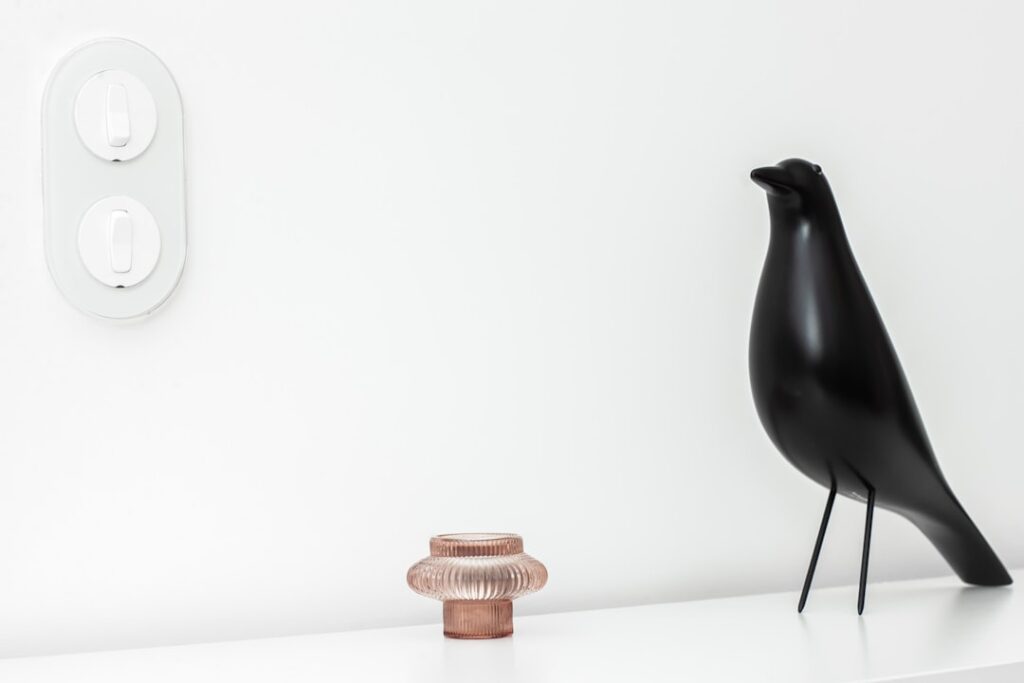
White plastic switches disappear into the wall, and for decades that was the point. But as matte-black hardware, faucets, and fixtures have taken over kitchens and bathrooms, the humble switch has become a design opportunity. A black light switch turns an overlooked builder-grade detail into a crisp, intentional accent that ties together modern interiors. This guide covers the switch types available, how to match plates and outlets, the wiring basics, and how to install one safely so your walls look as considered as the rest of your home.
- Why Homeowners Are Switching to Black
- Types of Black Light Switches
- Rocker Versus Toggle Styles
- Matching Plates and Outlets
- Finish Options in Black
- Wiring Basics You Should Know
- How to Install a Black Light Switch
- Smart Black Switches
- Cost and Where to Buy
- Common Mistakes to Avoid
- Dimmers and Smart Controls in Black
- Coordinating Black Throughout a Room
- Final Thoughts
Why Homeowners Are Switching to Black
The move to black switches follows the broader trend toward dark, high-contrast hardware. Against a white or light-gray wall, a black switch and plate create a graphic accent that reads as deliberate and modern. Against a dark or moody wall color, the same switch blends in more subtly than a stark white one would. Either way, black coordinates beautifully with the matte-black faucets, cabinet pulls, and light fixtures that dominate current design, giving a room a cohesive, finished feel.
Types of Black Light Switches
Just like their white counterparts, black switches come in every functional configuration. Choose based on how the light is controlled, not just the color.
- Single-pole: Controls one light from one location, the most common switch in a home.
- Three-way: Controls one light from two locations, such as both ends of a hallway or staircase.
- Four-way: Used with three-way switches to control a light from three or more spots.
- Dimmer: Adjusts brightness, available in rotary, slide, and touch styles.
- Smart switches: Wi-Fi or hub-connected switches with black faceplates for app and voice control.
Rocker Versus Toggle Styles
The two main switch shapes give very different looks, and black exaggerates the contrast between them.
- Rocker (Decora): A wide, flat paddle with clean lines. The modern default and the most popular for a black-on-black look.
- Toggle: The classic small flip lever. Available in black for a retro-industrial feel.
Most contemporary black switch setups use rocker/Decora styling because the flat paddle pairs seamlessly with screwless black wall plates for a nearly seamless surface.
Matching Plates and Outlets
A black switch only looks intentional when the plate and nearby outlets coordinate. Buying the switch alone and leaving a white plate ruins the effect.
- Matching wall plates: Choose a black plate, ideally a screwless design that hides the fasteners.
- Coordinating outlets: Swap nearby receptacles to black so the wall reads consistently.
- Finish consistency: Match the sheen; a matte switch looks best with a matte plate.
- Multi-gang plates: For boxes with several switches, use a single black plate spanning all of them.
Finish Options in Black
Not all black hardware is the same shade, and the finish changes the feel of the room. Matte black is the most popular, offering a soft, non-reflective surface that hides fingerprints and pairs with matte fixtures. Glossy black reads more formal and shows smudges more readily. Some manufacturers offer a textured or “black stainless” tone that leans slightly warm. When mixing switches with other black hardware, aim for a consistent matte finish across the room so nothing looks accidentally mismatched.
Wiring Basics You Should Know
A black switch wires exactly like any other switch of the same type; the color is purely cosmetic. Still, understanding the basics keeps the job safe.
- Line and load: A single-pole switch has two brass terminals for the hot wires plus a green ground screw.
- Traveler wires: Three-way switches add traveler terminals, usually brass, that carry current between the two switches.
- Ground: The bare or green wire always connects to the green ground screw.
- Neutral: Most smart switches require a neutral wire (white), so confirm your box has one before buying.
How to Install a Black Light Switch
Replacing a like-for-like switch is a common DIY electrical project, but always respect the circuit.
- Turn off the breaker: Switch off power at the panel and verify with a non-contact voltage tester.
- Remove the old switch: Take off the plate, unscrew the switch, and note which wire connects to which terminal, taking a photo for reference.
- Transfer the wires: Connect each wire to the matching terminal on the new black switch.
- Secure and tuck: Fold the wires neatly, screw the switch into the box, and attach the black plate.
- Restore power and test: Turn the breaker back on and confirm the switch works.
If you encounter unfamiliar wiring, aluminum wiring, or a box without a neutral for a smart switch, call a licensed electrician. Electrical work is also subject to local code, and permits may be required for anything beyond a simple like-for-like swap.
Smart Black Switches
Many popular smart switches now ship with black or dark faceplates, letting you combine app control with the on-trend look. These add scheduling, dimming, and voice control through platforms like Alexa, Google Home, and Apple Home. Most require a neutral wire and a stable Wi-Fi signal, and some use a separate hub. If your home was built before the 1980s, verify your switch boxes contain a neutral wire before buying a smart model, as older single-pole boxes sometimes lack one.
Cost and Where to Buy
Black switches cost only slightly more than white ones. Basic single-pole and three-way black rocker switches run $3 to $8 each, dimmers $15 to $30, and smart switches $25 to $60. Matching black wall plates add $2 to $10 depending on whether they are standard or screwless. Home improvement stores, electrical suppliers, and online retailers all stock black hardware from major brands like Leviton, Lutron, and Legrand. Buying switches, outlets, and plates as a matched set ensures the black tones are identical.
Common Mistakes to Avoid
- Leaving white plates: A black switch on a white plate defeats the whole look.
- Mismatched sheens: Mixing matte and glossy black on the same wall.
- Forgetting outlets: Nearby white receptacles that break the consistency.
- Buying smart without a neutral: Many smart switches will not work without one.
- Skipping the voltage test: Never trust that the breaker is off without verifying.
Dimmers and Smart Controls in Black
Black hardware is not limited to simple on-off switches. The full range of modern lighting controls comes in black or dark faceplates, letting you upgrade both function and looks at once. Choosing the right control for each room adds real everyday value.
- Rotary and slide dimmers: Adjust brightness for dining rooms, bedrooms, and living spaces.
- Touch and tap dimmers: Sleek surfaces with no moving paddle for a minimalist look.
- Motion-sensor switches: Hands-free control for pantries, closets, and laundry rooms.
- Smart dimmers: App and voice control with scheduling and scenes.
- Fan-and-light controls: Combination switches for rooms with ceiling fans.
Confirm bulb compatibility when choosing a dimmer, since not every LED bulb dims smoothly. Manufacturers publish compatibility lists, and matching a dimmer to dimmable bulbs prevents flickering and buzzing.
Coordinating Black Throughout a Room
A black switch delivers its full effect only when the surrounding elements support it. The most cohesive rooms repeat the black tone in several places so the switch reads as part of a deliberate palette rather than a lone dark rectangle on a pale wall. Consider matching the switch and plate to black outlet covers, black window hardware, black cabinet pulls, and black light fixtures. In a kitchen, a black faucet and black pendant lights tie the switches into the overall scheme; in a bathroom, black towel bars and a black mirror frame do the same. The goal is repetition, not saturation. Even two or three black touches distributed around a room are enough to make the switches look intentional. If your walls are a dark color, black switches recede for a subtle, seamless effect; against light walls, they become a crisp graphic accent, and either approach works as long as the choice is consistent throughout the space.
Final Thoughts
A black light switch is proof that the smallest details carry real design weight. For just a few dollars per switch, you can replace forgettable white plastic with a crisp, modern accent that coordinates with the black hardware defining today’s interiors. Choose the right switch function, commit fully by matching the plate and nearby outlets, keep your finishes consistently matte, and handle the wiring with the same care any electrical swap demands. Whether you go with a simple rocker or a full smart switch, the result is a wall that looks intentional, cohesive, and thoroughly current.