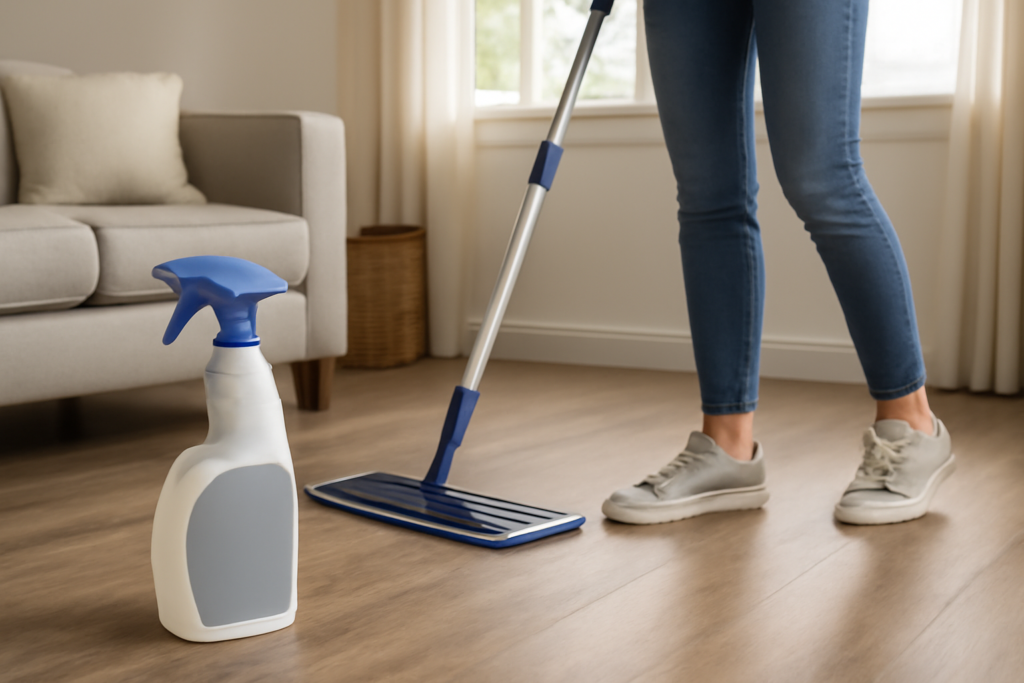
Luxury vinyl plank has taken over American homes, and cleaning it wrong leaves a hazy, sticky film that dulls the whole floor. The Bona Pro Series luxury vinyl floor cleaner is formulated to avoid exactly that, delivering a residue-free, streak-free clean that’s safe for LVP, LVT, and other resilient floors. Bona built its reputation on hardwood floor care, and their vinyl-specific formula carries that same no-buildup philosophy, which is why it shows up in the cleaning closets of a lot of flooring pros.
The Pro Series line is Bona’s commercial-grade tier, sold in larger concentrate and refill sizes aimed at people who clean a lot of floor. It’s the same trusted chemistry as their retail cleaners in a more economical, higher-volume format. If you’ve got a house full of LVP or manage rental properties, this is the version that makes financial sense.
- What It Is and Why Vinyl Needs Its Own Cleaner
- How to Use It Step by Step
- Performance and Real-World Results
- Price and Where to Buy
- Pros and Cons
- Alternatives Worth Knowing
- Bottom Line
- Bona vs. Plain Water and Other Bona Products
- Common Mistakes That Ruin the Finish
- How Often Should You Clean Vinyl?
- Frequently Asked Questions
What It Is and Why Vinyl Needs Its Own Cleaner
Luxury vinyl has a wear layer that’s durable but sensitive to the wrong chemicals. Oil soaps, wax, and many all-purpose cleaners leave a residue that builds up over time, trapping dirt and creating that dull, tacky feel. Bona’s vinyl formula is water-based, pH-balanced, and specifically designed to clean without leaving film behind, so the floor stays clear and the finish isn’t compromised.
The Pro Series comes as a ready-to-use spray or as a concentrate you dilute, along with refill cartridges for Bona’s spray mop system. The concentrate is the value play; a small amount makes gallons of cleaning solution.
How to Use It Step by Step
- Sweep or vacuum first. Remove grit and debris before wet cleaning. Sand and dirt dragged across vinyl under a mop can scratch the wear layer over time.
- Prep the solution. For concentrate, dilute per the label into a bucket or a Bona spray mop cartridge. For ready-to-use, just uncap and go.
- Spray in sections. Mist a light coat onto a manageable area of floor. Vinyl doesn’t need to be soaked, and less liquid means faster drying and no water working into seams.
- Mop with a microfiber pad. Use a flat microfiber mop, not a string mop or sponge, which leaves too much water. Work in the direction of the plank grain.
- Rinse the pad as needed. On a dirty floor, swap or rinse the microfiber pad partway through so you’re not just spreading grime.
- Let it air-dry. The formula dries fast and streak-free with no rinsing required. The floor is walkable within minutes.
Performance and Real-World Results
On everyday dust, footprints, and light spills, the Pro Series vinyl cleaner does exactly what it promises: it lifts dirt and dries clear with no haze, no streaks, and no sticky residue underfoot. That last point is where cheaper cleaners fail; walk across a floor cleaned with an oil soap in socks and you’ll feel the tack. Bona leaves the floor clean-feeling and the finish looking crisp.
For heavy grease or set-in kitchen grime, you may need a second pass or a bit more dwell time, but for routine maintenance it’s excellent. It won’t restore shine to a worn wear layer, since it’s a cleaner, not a finish, and no cleaner can fix physical wear.
Price and Where to Buy
Bona Pro Series vinyl cleaner is sold at Home Depot, Lowe’s, Amazon, and janitorial suppliers. A gallon of ready-to-use runs about $20 to $30, and the concentrate, which is the better value, costs $25 to $40 and yields many gallons of diluted solution. Refill cartridges for the spray mop run $8 to $15. Per cleaning, it’s inexpensive, especially the concentrate, which is why it’s popular with property managers and cleaning crews.
Pros and Cons
- Pros: Genuinely residue-free and streak-free, safe for all luxury vinyl and most resilient floors, water-based and low-odor, concentrate is economical, trusted brand with a strong floor-care track record, fast drying.
- Cons: Not the cheapest per bottle at retail sizes, not a heavy degreaser for the worst grime, won’t restore shine to worn floors, spray mop refills add a small ongoing cost.
Alternatives Worth Knowing
Bona’s standard retail luxury vinyl cleaner is the same idea in smaller, more available packaging if you don’t need Pro Series volume. Rejuvenate and Zep make vinyl-safe cleaners that also perform well. For a budget DIY route, a few drops of dish soap in a gallon of warm water cleans vinyl but risks leaving film if you use too much, so a proper vinyl formula is safer for the long-term look of the floor. Avoid anything with wax, ammonia, or abrasives, which damage the wear layer.
Bottom Line
The Bona Pro Series luxury vinyl floor cleaner is a reliable, professional-grade choice that keeps LVP and LVT looking clean and clear without the residue that plagues generic cleaners. It’s the version to buy if you’ve got a lot of vinyl to maintain, thanks to the economical concentrate. Sweep first, use a microfiber pad, go light on the liquid, and this cleaner will keep your floors looking their best for years without any buildup to strip later.
Bona vs. Plain Water and Other Bona Products
Plenty of homeowners ask whether they really need a dedicated cleaner or whether damp mopping with water is enough. Water alone handles dust, but it does nothing for the greasy film that footprints, cooking oils, and pet paws leave on vinyl. Worse, hard water dries with mineral spots that build into a cloudy haze over months. A pH-balanced formula like this one lifts the oily residue and dries clear, which water simply can’t do on its own.
Bona’s lineup can be confusing because several bottles look alike. The Pro Series vinyl cleaner is tuned for resilient floors, while Bona’s hardwood cleaner is formulated for sealed wood and its stone-tile-laminate cleaner covers those harder surfaces. They’re not interchangeable in the way a wood-specific formula might leave a slight film on vinyl over time. If your home mixes LVP downstairs and real oak upstairs, keep the matching bottle for each; the concentrate makes that affordable enough to justify.
Common Mistakes That Ruin the Finish
- Over-wetting the floor. Vinyl seams and the perimeter expansion gap don’t like standing water. Mist lightly; a soaked floor invites water under planks and swelling at the edges.
- Using a string or sponge mop. These dump too much water and drag grit. A flat microfiber pad is the only tool I recommend on LVP.
- Adding vinegar or dish soap “to boost it.” Acids dull the wear layer over time and soap leaves the exact residue you’re trying to avoid. Use the cleaner at label strength and nothing else.
- Skipping the sweep. Mopping over sand grinds micro-scratches into the finish. Always dry-clean first.
- Letting the pad dry out mid-job. A crusty pad smears. Keep spare microfiber pads on hand and swap them on larger floors.
How Often Should You Clean Vinyl?
For most households, a quick microfiber dust or dry mop two or three times a week keeps grit off the floor, with a full damp clean using the Bona formula once a week. Kitchens and entryways in a busy home may need the wet pass twice a week; a guest bathroom might go two weeks between wet cleans. High-traffic entries benefit from a walk-off mat, which cuts the tracked-in sand that does the real long-term damage to any vinyl floor.
Frequently Asked Questions
Can I use it in a spray mop? Yes. The concentrate fills refillable Bona spray-mop cartridges, or you can buy pre-filled Pro Series cartridges. That’s the fastest way to clean a whole floor.
Will it leave my floor slippery? No. It dries clean with no slick residue, unlike oil soaps that can leave a hazardous film on smooth vinyl.
Is it safe for pets and kids? The formula is low-odor and dries fast, and once dry the floor is fine for kids and pets. As with any cleaner, keep the bottle stored away and let the floor dry before letting the dog back in.
Prefer to explore on your own?
See how new flooring looks in your actual room in seconds — free, no signup.
Try the free Floor Studio →