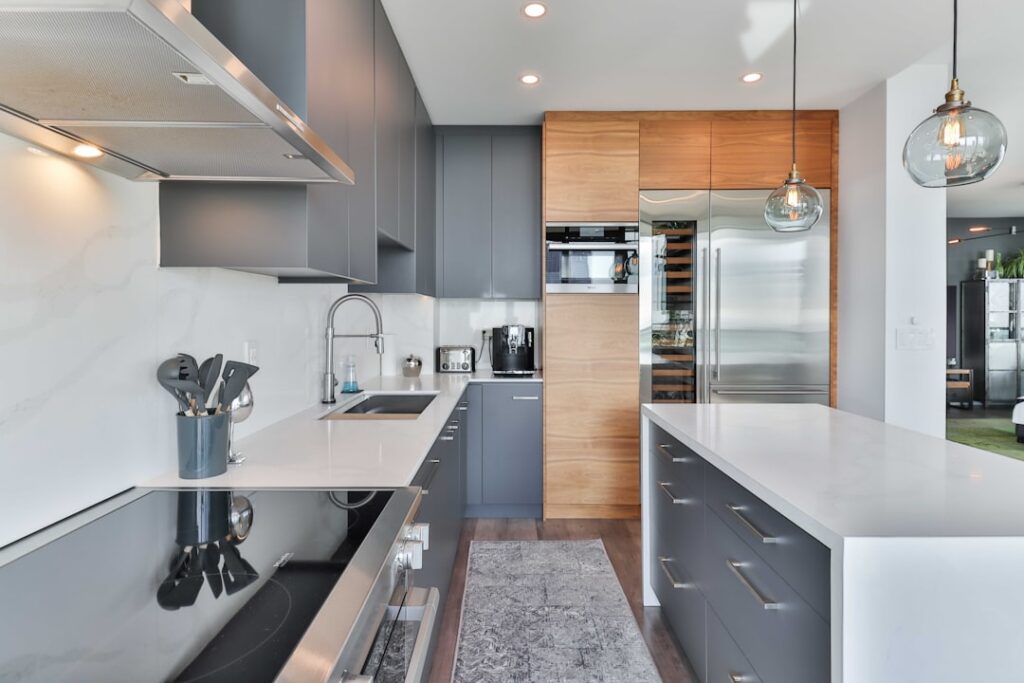
A broom propped between the fridge and the wall is the universal sign of a kitchen that ran out of planning budget. A proper broom closet cabinet solves that for $300 to $1,200 depending on finish, and it keeps the vacuum, mop, and cleaning supplies vertical, accessible, and out of sight. Here’s what the sizes mean, which brands hold up, and what to avoid at big-box stores.
Part of our Kitchen Remodeling guide — explore the full guide →
- Standard Sizes You'll See
- What to Look For Inside
- Construction Quality Check
- Stock, Semi-Custom, and Custom Pricing
- Where to Put It
- IKEA PAX and Sektion Options
- Installation Basics
- Organize the Interior
- When to Skip the Cabinet and Build a Closet
- Door Styles That Age Well
- Ventilation for Wet Cleaning Tools
- Accessibility and Reach Zones
- Final Thought
Standard Sizes You’ll See
- 18 inches wide x 24 deep x 84 tall: most common, fits a standard upright vacuum
- 24 inches wide x 24 deep x 84 tall: accommodates larger Dyson or Shark models plus shelves above
- 18 inches wide x 12 deep x 84 tall: shallow version for narrow laundry rooms
- 30 inches wide x 24 deep x 96 tall: pantry/utility hybrid with adjustable shelving
What to Look For Inside
The best broom closets have a lower compartment (42 to 48 inches tall) with vertical hanger hooks for broom and mop handles, plus 3 to 5 adjustable shelves above for cleaning supplies, paper towels, and small appliances. Cheap cabinets skip the hanger hardware and rely on a single hook, which means broom handles slide and tangle.
Construction Quality Check
Open the door and look at the box. Plywood sides with a dado-joined back hold up for 20+ years. Particleboard with stapled backing starts sagging within 5 under real use. Drawer glides should be full-extension soft-close on anything over $500. Hinges should be soft-close European-style (Blum or Salice brand), not surface-mount.
Stock, Semi-Custom, and Custom Pricing
Big-box stock cabinets (Hampton Bay, Project Source) run $180 to $400 in basic finishes. Semi-custom lines like KraftMaid or Shenandoah cost $500 to $900 with more door styles and internal hardware options. Fully custom cabinets from a local shop run $900 to $1,800 but match existing millwork exactly and use the best hardware.
Where to Put It
Best spots: next to the refrigerator at the end of a cabinet run, in a mudroom, in a laundry room against a tall wall, or flanking a pantry. Avoid placing it against exterior walls in cold climates; cold surfaces hold moisture that rusts vacuum electronics over time.
IKEA PAX and Sektion Options
IKEA’s Sektion line does a surprising job for the price. A 24 x 96-inch high cabinet in Axstad or Bodbyn runs about $350 to $550 configured. Add $40 to $80 in Maximera drawers and hooks for full functionality. The downside is the 24-inch depth locks you into their component system; swapping internal hardware later is limited.
Installation Basics
Mark studs, lag-bolt a French cleat to the wall for tall cabinets, and mount the cabinet to the cleat and to at least two studs through the back rail. Shim the bottom to level before tightening. Attach crown or scribe molding last to hide gaps against the ceiling or adjacent cabinets. Budget 2 to 4 hours for a handy homeowner, or $250 to $450 for a pro.
Organize the Interior
Install a vertical broom holder (Elfa or Rubbermaid, $25 to $45) on the door back. Add pull-out drawers to the lower third for cloths and sprays. Place a step-stool at the bottom if the top shelves are above 72 inches. An LED motion-activated strip light on the inside top ($30) makes it usable without flipping a room switch.
When to Skip the Cabinet and Build a Closet
If you have 24 inches of floor space and an adjacent stud wall, a framed broom closet with drywall and a single slab door can cost less than a premium cabinet while integrating seamlessly with the room. Budget $400 to $800 in materials and a weekend of work. Either way, the goal is the same: get the cleaning tools vertical, accessible, and out of the traffic path.
Door Styles That Age Well
Shaker-style slab doors in painted finishes have been the safest long-term choice for 15 years running. They suit transitional, farmhouse, and modern kitchens without reading as dated. Raised-panel cathedral doors lock you into a specific traditional style that looks heavy in contemporary kitchens. Flat slab doors in wood veneer or high-pressure laminate work in European-style builds. For a broom closet specifically, a single full-height slab door opens wider than a two-door split and gives better access to the interior.
Ventilation for Wet Cleaning Tools
Storing wet mops and damp rags in a sealed cabinet is how you grow mildew. Drill two 1-inch ventilation holes near the top and bottom of the back panel, or specify a perforated kick plate from the manufacturer. Better, keep a small mesh laundry bag inside for wet cloths and transfer them to the washer within 24 hours. A $12 dehumidifier absorber tub on the bottom shelf keeps humidity under 55 percent in closed utility closets year-round.
Accessibility and Reach Zones
Items you use weekly should sit between 30 and 60 inches off the floor, the natural reach zone. Daily-use tools like brooms and vacuums go in the primary vertical bay. Monthly or seasonal supplies (carpet cleaner, floor polish) ride the top shelves above 60 inches. The bottom 24 inches is for heavier items like mop buckets that you’d rather lift from the knees than reach up for. Plan the interior layout around frequency of use, not what looks neat on install day.
Final Thought
A well-chosen broom closet cabinet is one of those unglamorous upgrades that quietly makes a home feel more organized every single day. Spend the extra $100 for soft-close hardware and proper interior fit-out; it pays back in daily frustration avoided.