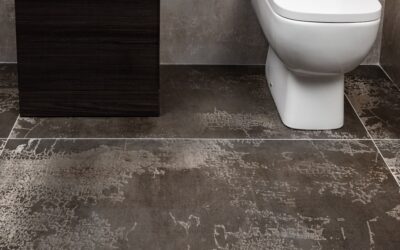
When closet space runs out and clutter starts creeping across the floor, a freestanding storage piece is often the simplest fix. A floor cabinet sits directly on the floor rather than hanging on the wall, giving you a sturdy, self-supporting place to stash everything from bathroom towels to garage tools. Because it carries its own weight, you can drop it almost anywhere without worrying about wall studs or anchors.
Part of our Kitchen Remodeling guide — explore the full guide →
The category is broad, though, and a flimsy particleboard unit and a solid wood storage cabinet can look nearly identical online. Knowing the types, the right dimensions, and what separates quality from junk will help you buy once and avoid the sagging-shelf regret.
What a Floor Cabinet Is and Where It Works
A floor cabinet is any enclosed storage piece that rests on the ground, typically with a door or two and one or more interior shelves. Unlike a wall cabinet, it does not depend on your wall framing, so it suits rentals, masonry walls, and rooms where you would rather not drill. You will find them in bathrooms beside the vanity, in laundry rooms, kitchens, garages, home offices, and living rooms as accent storage.
Because the footprint sits on the floor, these cabinets also double as a surface. The top becomes a landing spot for a lamp, a plant, or a basket, which is part of why they are so versatile.
Common Types of Floor Cabinets
Matching the style to the room keeps the piece both functional and good-looking.
- Bathroom floor cabinet: Narrow and tall, often built to fit beside or over a toilet, with moisture-resistant finishes.
- Kitchen base cabinet: Heavier duty, designed to carry a countertop and withstand daily use.
- Accent or console cabinet: Lower and wider, used in living and dining rooms for media gear or dishware.
- Garage and utility cabinet: Steel or heavy laminate construction built for tools, chemicals, and heavy loads.
- Pantry or storage tower: Tall, deep, and shelf-heavy for bulk food or supplies.
Materials and Build Quality
The material determines how long the cabinet lasts and how much it can hold. Solid wood is the most durable and refinishable but commands the highest price. Plywood offers excellent strength and screw-holding at a more moderate cost. Medium-density fiberboard, or MDF, takes paint beautifully and resists warping, though it is heavier and vulnerable to water damage if the finish chips.
Particleboard with a melamine surface is the budget standard and works fine for light loads, but it sags under weight and swells if it gets wet. For garages and laundry rooms, powder-coated steel cabinets shrug off moisture and heavy use. Expect to pay roughly $50 to $150 for a basic laminate unit, $150 to $400 for solid wood or quality plywood, and more for built-in-grade pieces.
Standard Sizes to Know
Measuring your space before you shop saves a frustrating return. Typical dimensions fall in these ranges:
- Width: 12 to 36 inches for most freestanding units.
- Depth: 12 to 24 inches, with kitchen base cabinets around 24 inches.
- Height: 30 to 36 inches for base-style cabinets, up to 72 inches for storage towers.
Leave a few inches of clearance for the door to swing and for air circulation in damp rooms. In a bathroom, confirm the cabinet will not block plumbing access or interfere with the door.
What to Look for When Buying
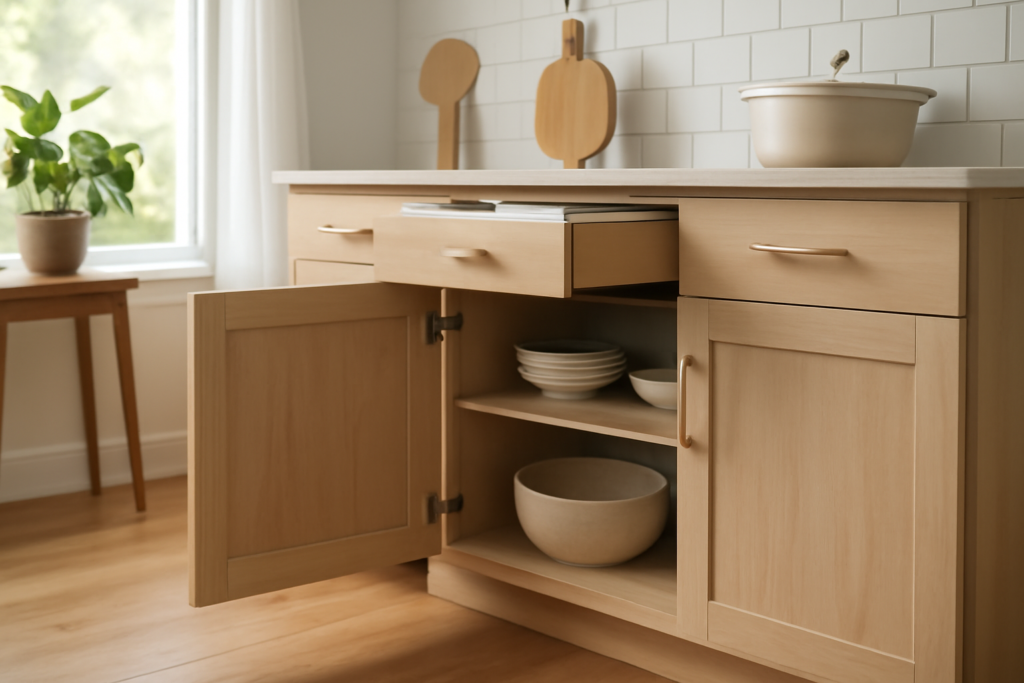
Open and close the doors if you can. Quality hinges feel smooth and stay aligned, while cheap ones bind or sag within months. Adjustable shelves add flexibility, and metal shelf pins outlast plastic ones. Check whether the back panel is solid or a thin sheet stapled on, since a sturdy back keeps the whole cabinet square and rigid.
For tall cabinets, look for an anti-tip strap or wall-anchor kit in the box. Securing a tall floor cabinet to a stud is a simple, important safety step, especially in homes with children.
Placement and Floor Protection
A heavy cabinet can dent or scratch the floor beneath it. On hardwood, laminate, and vinyl, stick felt pads under the corners or base, and lift rather than drag the cabinet when moving it. On uneven floors, adjustable feet or simple shims keep the doors aligned and the unit from rocking.
In bathrooms and laundry rooms, keep a small gap between the cabinet back and the wall so trapped humidity can escape. This simple habit prevents mildew and protects both the cabinet and the wall.
Matching the Cabinet to the Room
A floor cabinet should look like it belongs, not like it wandered in from a different house. In a bathroom, a slim white or wood-tone cabinet with a moisture-resistant finish reads as built-in storage rather than an add-on. In a living room, a low console-style cabinet in a finish that echoes your other furniture doubles as display space and hidden storage for media gear, blankets, or board games.
Garages and utility rooms call for function over looks, so steel or heavy laminate cabinets with adjustable shelving make the most sense. Home offices benefit from a cabinet with a mix of open and closed storage to hide clutter while keeping frequently used items in reach. Matching the proportions matters too: a tall narrow tower suits a tight corner, while a wide low cabinet fills a long blank wall without dominating it.
Maximizing Storage Inside
The shell is only as useful as how you organize it. Adjustable shelves let you tailor the interior to what you actually store, whether that is tall cleaning bottles or short stacks of towels. Adding inexpensive bins, baskets, or drawer organizers turns a single deep shelf into several tidy zones and keeps small items from disappearing into the back.
For deep cabinets, a pull-out shelf or a lazy susan brings rear items forward so nothing gets lost. Group like items together and store the heaviest things on the bottom to keep the cabinet stable and easy to use. A little organization on day one prevents the cabinet from becoming a cluttered catch-all later.
Assembly and Care
Flat-pack cabinets are common and usually go together with a screwdriver and the included hardware in under an hour. Work on a soft surface to avoid scratching the panels, and snug all fasteners before standing the cabinet up. Wipe finished surfaces with a damp cloth and mild cleaner; avoid soaking MDF or particleboard. With sensible loading and basic care, a well-built floor cabinet delivers organized, accessible storage for many years.
Prefer to explore on your own?
See how new flooring looks in your actual room in seconds — free, no signup.
Try the free Floor Studio →