
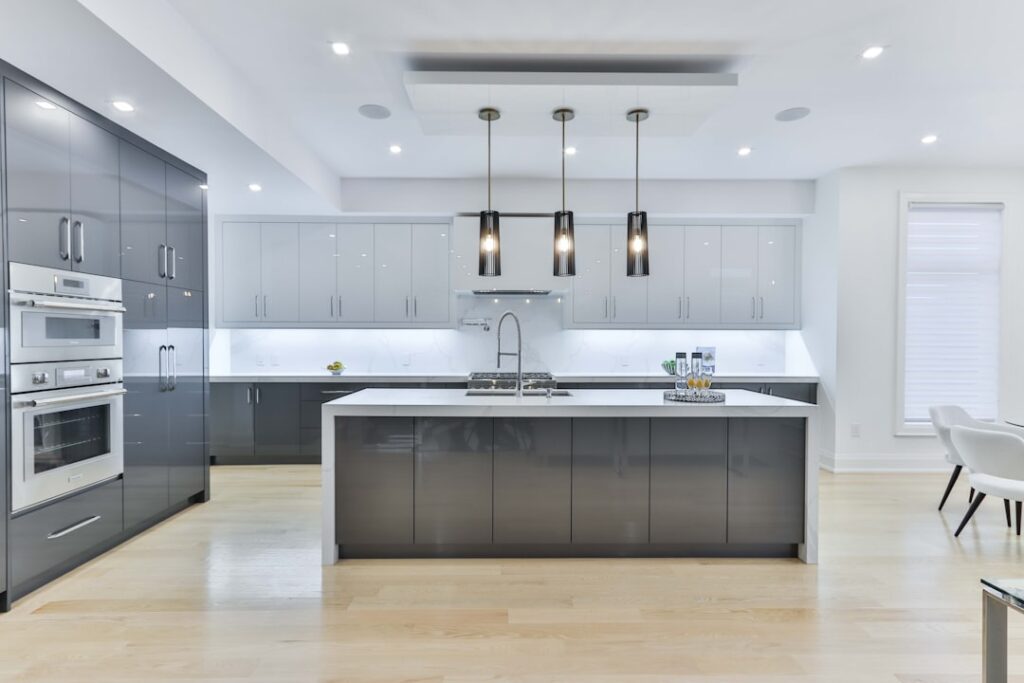
When floor space is tight but ceilings are high, storing upward is the smartest move. A tall storage cabinet with doors turns unused vertical wall space into concealed, organized storage for everything from cleaning supplies to pantry goods to garage gear. This guide covers materials, sizing, shelf configurations, and where these cabinets work best so you can choose one that fits your space and needs.
Part of our Kitchen Remodeling guide — explore the full guide →
- Why Choose a Tall Cabinet
- Common Materials
- Typical Sizes
- Shelf Configurations
- Weight Capacity and Shelf Support
- Where to Use One
- Door Styles and Hardware
- Anti-Tip Safety
- Freestanding vs. Built-In
- Adjustable Feet and Leveling
- Ventilation for Chemicals and Damp Items
- Matching Style to Your Room
- Organizing the Interior
- Assembly and Installation Tips
Why Choose a Tall Cabinet
Tall cabinets make efficient use of a small footprint. A unit that is only 24 inches wide but 6 feet tall stores as much as a much wider low cabinet while occupying far less floor. The doors hide clutter for a clean look, keep dust off contents, and can be secured to keep children or pets out of supplies. In rooms where you cannot spare floor area, going vertical is often the only practical way to add real storage.
Common Materials
The material determines durability, weight capacity, and price:
- Particleboard with laminate: The most affordable, common in flat-pack cabinets. Fine for light loads but sensitive to moisture.
- MDF: Denser and smoother than particleboard, good for painted finishes.
- Plywood: Stronger and more moisture-resistant, better for heavier storage.
- Solid wood: The most durable and attractive, and the most expensive.
- Steel: Ideal for garages and utility spaces, holding heavy tools and resisting moisture.
Match the material to the load and environment; steel or plywood for a garage, laminate or wood for a living space.
Typical Sizes
Tall storage cabinets generally range from about 60 to 72 inches high, 24 to 36 inches wide, and 12 to 24 inches deep. Deeper cabinets hold bulkier items but project further into the room. Before buying, measure your available space, including doorway and ceiling clearance for moving it in, and confirm the cabinet will stand upright in the room without hitting a sloped ceiling or trim.
Shelf Configurations
The interior layout affects how useful the cabinet is:
- Adjustable shelves: The most versatile, letting you reconfigure spacing for tall or short items.
- Fixed shelves: Sturdier but inflexible.
- Combination: A tall lower compartment for brooms or a vacuum plus adjustable upper shelves.
- Hanging space: Some pantry or utility models include a rod or hooks.
Adjustable shelving on metal pins or a track system gives the most flexibility as your storage needs change.
Weight Capacity and Shelf Support
Check both the total cabinet capacity and the per-shelf rating. Laminate particleboard shelves may sag under 20 to 30 pounds if unsupported, while plywood or steel shelves handle much more. For heavy items like canned goods, tools, or paint, look for thicker shelves, center supports on wide spans, and sturdy shelf pins. Distributing weight low in the cabinet also improves stability.
Where to Use One
Tall storage cabinets suit many rooms:
- Kitchen or pantry: A freestanding pantry cabinet for dry goods and small appliances.
- Garage or workshop: A steel cabinet for tools, chemicals, and gear.
- Laundry room: Concealing detergents, cleaning supplies, and an ironing board.
- Home office: Storing supplies, files, and equipment behind closed doors.
- Bathroom or hall: A linen cabinet for towels and toiletries.
The right material and finish let the same basic form fit almost anywhere in the home.
Door Styles and Hardware
Doors come in several styles: hinged single or double doors are most common, while some cabinets use sliding or bi-fold doors to save swing clearance in tight spaces. Look for solid hinges, and consider soft-close hinges for a quieter, higher-quality feel. Adjustable hinges let you align the doors evenly. For utility use, a lockable latch adds security for chemicals or valuables.
Anti-Tip Safety
A tall, narrow cabinet can tip forward, especially when loaded unevenly or when a child climbs on an open door. Most tall cabinets include an anti-tip bracket or strap to anchor them to a wall stud, and using it is essential for safety. Always secure the cabinet to the wall, load heavier items on lower shelves, and never let children climb on it. This simple step prevents serious injury.
Freestanding vs. Built-In
Freestanding cabinets are easy to buy, assemble, and relocate, and they need only wall anchoring for safety. Built-in cabinetry offers a seamless look and can be tailored to the exact space but costs far more and is permanent. For most homeowners, a quality freestanding tall cabinet delivers the storage benefit at a fraction of the cost and with the flexibility to move it later.
Adjustable Feet and Leveling
A tall cabinet is only as stable and functional as its footing. Uneven floors, common in basements, garages, and older homes, can leave a tall cabinet rocking or cause its doors to swing open or refuse to close flush. Look for models with adjustable leveling feet, or plan to shim the base yourself. Getting the cabinet plumb and level not only makes the doors align and latch properly but also distributes the load evenly so the structure is not stressed. On a garage or basement slab, a level cabinet also keeps the base off any occasional moisture.
Ventilation for Chemicals and Damp Items
If you plan to store cleaning chemicals, paints, or anything that can off-gas or hold moisture, ventilation matters. A fully sealed cabinet can trap fumes and humidity, leading to odors, condensation, or even corrosion of metal items inside. For chemical or utility storage, choose a cabinet with vented doors or leave the doors cracked periodically, and never store gasoline or highly flammable products in a living-space cabinet. Damp items like mops should dry before going in a closed cabinet to prevent mildew. Matching ventilation to contents keeps both the cabinet and its contents in good shape.
Matching Style to Your Room
Because a tall cabinet is a large visual element, its finish and style influence the whole room. In a kitchen or living space, a wood-grain or painted finish that coordinates with existing cabinetry and trim blends in, while a bold color can make it a deliberate accent. In a garage or workshop, a powder-coated steel cabinet reads as purposeful and durable. Consider the door style too: flat slab doors look modern, while shaker or paneled doors suit traditional rooms. Choosing a finish that fits the space keeps a large storage piece from feeling like an afterthought.
Organizing the Interior
A tall cabinet delivers the most value when its interior is organized rather than a deep, cluttered void. Use the adjustable shelves to create right-sized compartments for the items you store, keeping heavy things low and frequently used items at eye level. Add bins or baskets on the shelves to corral small loose items and pull them out easily, and consider door-mounted racks or hooks to use the inside of the doors for shallow items like spray bottles or tools. A tall lower section is perfect for brooms, mops, or a vacuum. Grouping like items together and labeling bins turns a big empty box into genuinely usable storage, which is the whole point of adding the cabinet in the first place.
Assembly and Installation Tips
Most flat-pack cabinets ship unassembled. To get a solid result, work on a soft surface to avoid scratching panels, follow the instructions in order, and do not fully tighten fasteners until everything is aligned. Square the cabinet before attaching the back panel, since the back is what keeps it from racking. Finally, anchor it to the wall before loading it with contents.
A tall storage cabinet with doors is one of the most efficient ways to add concealed, organized storage without sacrificing floor space, working equally well in kitchens, garages, laundry rooms, and offices. Choose a material suited to the load and environment, confirm the size and shelf layout fit your needs, and always anchor it to the wall for safety. With the right cabinet, you turn tall empty walls into practical, tidy storage that keeps your home clutter-free.


