Open shelving may dominate design magazines, but in real kitchens, doors win. Kitchen wall cabinets with doors hide clutter, keep dishes dust-free, and deliver far more practical storage than exposed shelves, which is why they remain the backbone of nearly every functional kitchen. The challenge is choosing the right sizes, door styles, and materials so your upper cabinets work as hard as they look. This guide walks through everything from standard dimensions to mounting, so you can plan a wall of storage that fits your space and your budget.
Part of our Kitchen Remodeling guide — explore the full guide →
Why Doors Beat Open Shelving
The case for doors is mostly practical. Closed cabinets conceal mismatched dishware, pantry boxes, and small appliances, keeping the kitchen looking tidy with minimal effort. They also protect contents from grease, cooking splatter, and dust that settle relentlessly on open shelves near a stove.
Open shelving requires constant styling and frequent cleaning to look good. Doors let you stash everyday items without curating them, which is exactly what most busy households need. For maximum impact, many kitchens mix the two: doors for the workhorse storage and a small run of open shelves for display.
Standard Wall Cabinet Dimensions
Wall cabinets come in fairly standardized sizes, which makes planning straightforward. Knowing the common dimensions helps you map a layout before you shop:
- Widths: typically 9 to 48 inches, in 3-inch increments
- Standard height: 30, 36, and 42 inches; taller cabinets reach the ceiling for extra storage
- Standard depth: about 12 inches, shallower than the 24-inch base cabinets below
- Mounting height: usually 18 inches above the countertop
The 18-inch gap between counter and upper cabinet is the convention, but you can adjust it for taller users or to fit small appliances underneath. Taller 42-inch cabinets eliminate the dust-collecting gap above and add a full shelf of storage.
Choosing a Door Style
Door style sets the entire look of your kitchen, since uppers occupy so much of the visual field. The choice ranges from simple and modern to detailed and traditional:
- Shaker: a recessed center panel with a clean frame; the most popular, versatile choice
- Flat / slab: a single flat panel, ideal for modern and minimalist kitchens
- Raised panel: a contoured center panel for a traditional, detailed look
- Glass-front: framed glass to display dishware and add visual openness
Shaker doors are the safe, timeless pick that suits almost any style. Glass-front cabinets, used sparingly on one or two uppers, break up a solid wall of doors and create display moments without committing to full open shelving.
Cabinet Materials and Quality
What’s behind the door finish matters for durability. Solid wood doors and plywood boxes represent the premium tier, strong, repairable, and long-lasting. Plywood resists moisture damage far better than particleboard, which is important in a humid kitchen environment.
Medium-density fiberboard (MDF) makes excellent painted doors because it has no grain to telegraph through paint and resists warping. Budget cabinets often use particleboard boxes with a laminate or thermofoil finish; they’re affordable but more vulnerable to moisture and chipping over time. Inspect the hinges and drawer glides too, soft-close hardware is a hallmark of better cabinets.
Maximizing Storage Inside
Doors are only half the equation; what’s behind them determines real usefulness. Adjustable shelves let you tailor the spacing to tall cereal boxes or short glasses. Adding a pull-down shelf system makes the high reaches of a 42-inch cabinet actually usable.
Consider dedicating one cabinet to vertical dividers for trays, cutting boards, and baking sheets, which otherwise stack awkwardly. Door-mounted racks hold spices and lids, reclaiming space that usually goes to waste. Smart interior organization can effectively double the capacity of the same cabinet footprint.
Mounting Wall Cabinets Securely
Loaded wall cabinets carry serious weight, so secure mounting is non-negotiable. They must fasten into wall studs, never into drywall alone, using long cabinet screws through a sturdy mounting rail at the back. A failed upper cabinet full of dishes is both dangerous and expensive.
The basic process runs like this:
- Locate and mark all wall studs in the run
- Draw a level reference line for the cabinet bottoms, typically 54 inches off the floor
- Support the cabinet with a ledger board or a helper while you fasten it
- Drive screws through the rails into the studs, then check for level and plumb
- Shim as needed behind the cabinet so doors hang and close evenly
If you’re not confident locating studs or hanging heavy boxes level, this is a job where hiring a pro for a few hours pays off in safety and a flush, professional result.
Hinges and Hardware That Matter
The hardware you can’t see does more for daily satisfaction than the knobs you can. Concealed European-style hinges have become the standard because they’re adjustable in three directions, letting you fine-tune door alignment long after installation. Soft-close hinges, which catch the door and ease it shut silently, are well worth the upgrade and now come standard on most mid-range and better cabinets.
For the visible hardware, scale your knobs and pulls to the door size and match the finish to your faucet and lighting for a cohesive look. Larger doors balance better with a pull than a small knob. If you’re refreshing existing cabinets on a budget, swapping dated hinges and hardware for soft-close, modern finishes transforms the feel of the kitchen for a fraction of a full replacement.
Coordinating With the Rest of the Kitchen
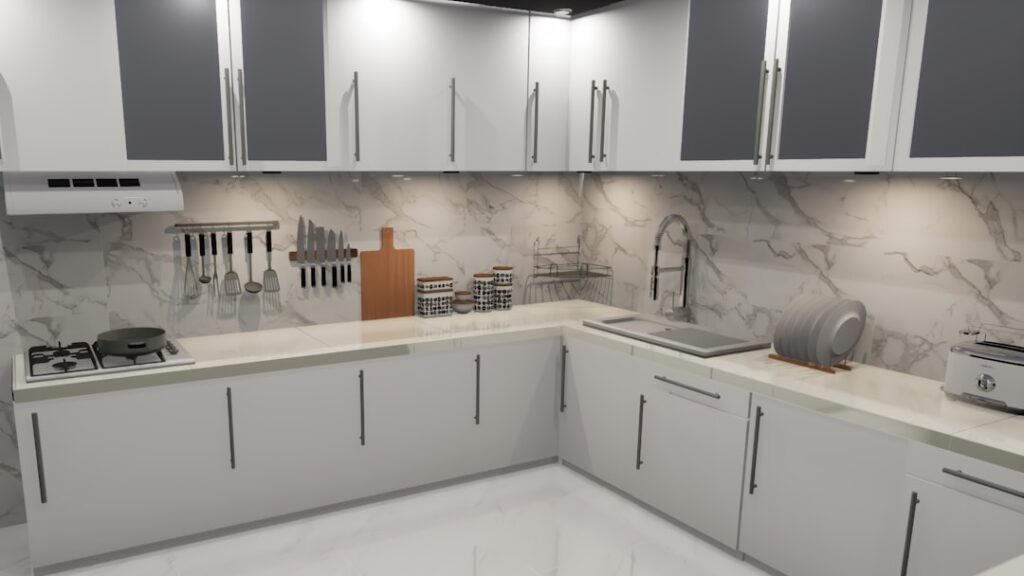
Your uppers should harmonize with the base cabinets, countertops, and backsplash. Matching door styles top and bottom gives a cohesive look, while a contrasting upper color, white uppers over a darker base, for instance, is a popular two-tone trend that adds depth without clutter.
Well-chosen kitchen wall cabinets with doors do the heavy lifting of storage while shaping the entire feel of the room. Map your dimensions first, pick a door style and material that fit your budget and taste, organize the interiors smartly, and mount everything securely into studs. Get those fundamentals right and your upper cabinets will keep the kitchen tidy and functional for decades.