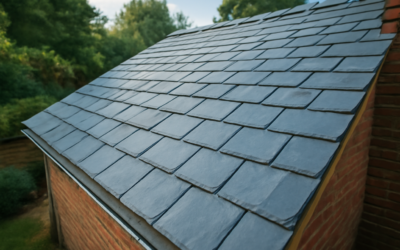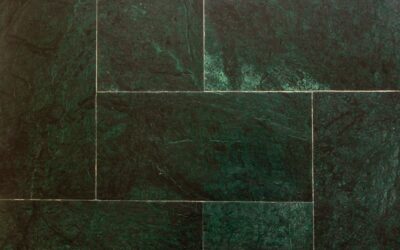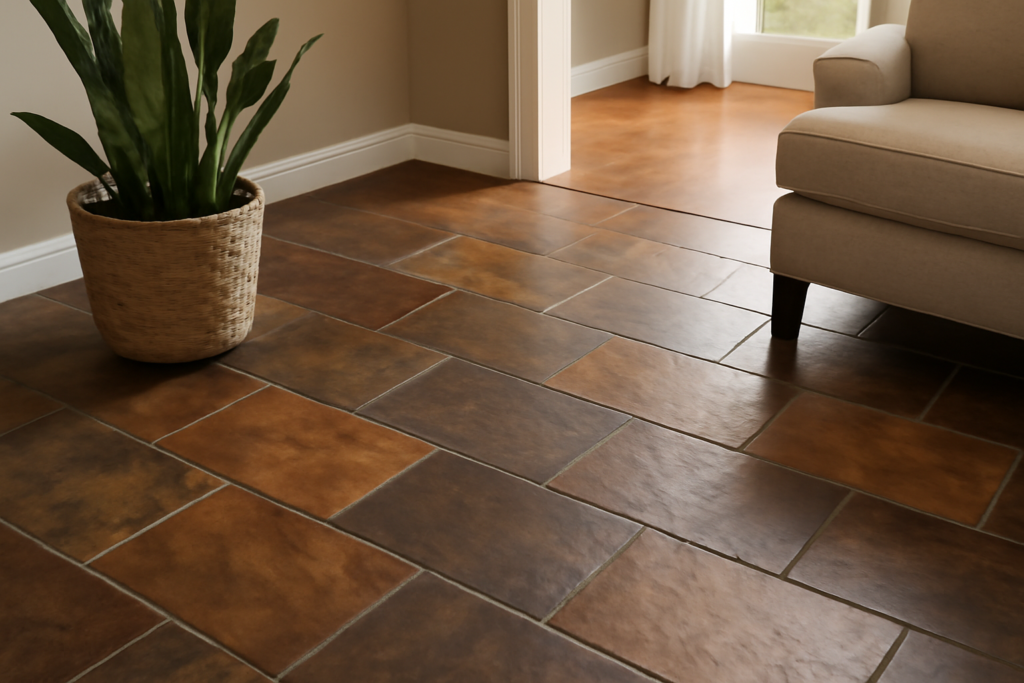
Warm, layered, and impossible to fake convincingly, brown slate tile brings genuine natural stone character to floors, walls, and outdoor spaces. If you want a surface with visible cleft texture and color that shifts from chocolate to rust to soft tan across a single pallet, slate delivers what porcelain look-alikes only imitate. This guide walks you through the real decisions: which slate to buy, what it costs, how to seal it, and how to keep it looking good for decades.
Part of our Tile & Grout guide — explore the full guide →
What Gives Brown Slate Its Color
Slate is a fine-grained metamorphic rock formed when shale and mudstone are compressed under heat and pressure over millions of years. The brown tones come from iron oxides and organic minerals locked into the stone. Because these minerals aren’t distributed evenly, a single tile can move from deep espresso to golden ochre, and a full pallet of the same product code will show far more variation than a manufactured tile.
Most brown slate on the U.S. market originates from India, Brazil, China, and parts of the Appalachian and Vermont deposits. Indian slates like Indian Autumn, Copper Antique, and Multicolor are the most common brown-and-rust options in home centers and stone yards. Vermont slate runs more toward purple, green, and gray, so if you want reliable brown, ask specifically for the origin and see a full box before committing.
Where Brown Slate Tile Works Best
Slate is hard, dense, and naturally slip-resistant thanks to its cleft surface, which makes it a strong choice for high-traffic and wet areas. Consider it for these applications:
- Entryways and mudrooms — hides dirt, tracks, and moisture better than almost any light-colored surface.
- Kitchen floors — warm underfoot tone that pairs with cream, sage, and copper cabinetry.
- Bathroom floors and shower walls — the textured cleft grips wet feet, though it needs diligent sealing.
- Fireplace surrounds and hearths — slate handles heat well and reads as substantial and old-world.
- Patios, pool decks, and walkways — gauged exterior slate stands up to freeze-thaw when properly set and sealed.
The one place to think twice is a kitchen with heavy dropped-glassware risk. Slate is unforgiving to anything that hits it, and while the stone itself survives, your dishes won’t.
Finishes and Surface Textures
The finish you choose changes both looks and maintenance more than most buyers expect.
Natural Cleft
This is slate split along its natural bedding plane, leaving an uneven, ridged surface with high and low spots of about 1/8 inch. It’s the most authentic look and the most slip-resistant, but it collects dust in the low points and needs a slightly thicker grout joint.
Honed
Ground flat to a smooth matte, honed slate is easier to clean and mop, and the brown tones read as more uniform. It’s a good pick for interior floors where you want texture in appearance but not underfoot.
Gauged vs. Ungauged
Gauged tile is calibrated to a consistent thickness on the back, making it far easier to install flat. Ungauged slate varies in thickness and demands a skilled installer troweling extra mortar to level each piece. For a DIY or first-time job, always buy gauged.
Brown Slate Tile Cost
Slate sits in the mid-range for natural stone. Expect these ballpark U.S. material prices in 2026:
- Budget Indian slate (12×12): $3 to $6 per square foot.
- Mid-grade gauged slate (12×12, 16×16): $6 to $10 per square foot.
- Premium or large-format slate (18×18, 24×24): $10 to $18 per square foot.
- Slate mosaic and pebble sheets: $12 to $25 per square foot.
Professional installation typically adds $8 to $15 per square foot depending on subfloor prep, layout complexity, and whether the installer has to level ungauged stone. Budget another $0.50 to $1.50 per square foot for sealer over the life of the floor, since slate needs periodic re-treatment. Order 10 to 15 percent extra to cover cuts, breakage, and future repairs, and buy it all in one lot so the color blends.
How to Install Brown Slate Tile
The process mirrors any natural stone install, with a few slate-specific cautions. Here’s the sequence for a floor:
- Prep the substrate. Slate needs a rigid, flat base. Over wood subfloors, install cement backer board or an uncoupling membrane like Schluter DITRA to prevent cracks from movement.
- Dry-lay first. Slate’s heavy color variation means you should spread out several boxes and arrange tiles to blend light and dark before setting anything permanently.
- Use white thinset. A high-quality polymer-modified mortar such as MAPEI Ultraflex or Custom Building Products VersaBond LFT grips the stone. White mortar keeps colors from muddying at the joints.
- Back-butter each tile. Because cleft slate has an uneven back, back-buttering ensures full coverage and prevents hollow spots that crack under load.
- Seal before grouting. Apply a penetrating sealer first so grout haze wipes off the porous surface cleanly.
- Grout with an unsanded or fine sanded product matched to your joint width, then seal again once cured.
Cut slate with a wet saw fitted with a continuous-rim diamond blade. The stone chips easily on a dry blade, and the wet saw controls the dust, which is heavy and abrasive.
Sealing and Maintaining Brown Slate Tile
Slate is porous and will stain, dull, and absorb water if left unsealed. Sealing is non-negotiable, especially in kitchens, baths, and outdoors.
Use a penetrating (impregnating) sealer for a natural matte look, or a topical enhancing sealer if you want to deepen the browns and add a low sheen. Enhancing sealers like Miracle Sealants 511 Seal & Enhance or Aqua Mix Enrich’N’Seal make brown slate glow with richer copper and rust tones, which many homeowners specifically buy slate to achieve. Reseal interior floors every 1 to 3 years and exterior slate annually, testing by dripping water on the surface. If it darkens or soaks in, it’s time to reseal.
For daily care, sweep or dry-mop grit that would otherwise scratch the surface, and clean with a pH-neutral stone cleaner. Never use vinegar, lemon, or acidic bathroom cleaners, which etch and dull natural stone. A soft mop and warm water handle routine cleaning.
Pros and Cons to Weigh Before Buying
Every material trades something. Here’s the honest balance for brown slate:
Advantages
- Authentic natural stone character that increases perceived home value.
- Excellent slip resistance in cleft finishes for wet and outdoor areas.
- Hides dirt and wear far better than light stone or tile.
- Handles heat, making it ideal near fireplaces and radiant heating.
Drawbacks
- Requires ongoing sealing that porcelain and ceramic don’t.
- Cleft surfaces are harder to keep dust-free and can flake (spall) if low quality.
- Cold and hard underfoot without radiant heat or rugs.
- Heavy, so upper-floor and countertop installs need structural consideration.
Design Ideas With Brown Slate Tile
Brown slate is a natural anchor for warm, organic interiors. Pair it with cream or off-white walls to keep a room bright, or lean into a cozy, cabin-inspired scheme with wood ceilings and copper fixtures. In a shower, a brown slate floor with large-format brown wall tile and a bronze drain reads as a spa retreat. Outdoors, mixed-size slate laid in a modular pattern gives patios an old-European courtyard feel. For contrast, set brown slate against matte black hardware and iron railings, or soften it with sage green and brushed brass in a kitchen.
Final Thoughts on Brown Slate Tile
Choosing brown slate tile means accepting a bit of maintenance in exchange for a floor no manufactured product can truly replicate. Buy gauged stone from a known origin, see a full box before you commit, seal it properly, and protect it from acidic cleaners, and you’ll have a warm, durable surface that only looks better as it ages. Whether you’re covering a mudroom, wrapping a fireplace, or building a patio, slate rewards the homeowner who understands what natural stone asks in return.
Prefer to explore on your own?
See how new flooring looks in your actual room in seconds — free, no signup.
Try the free Floor Studio →