
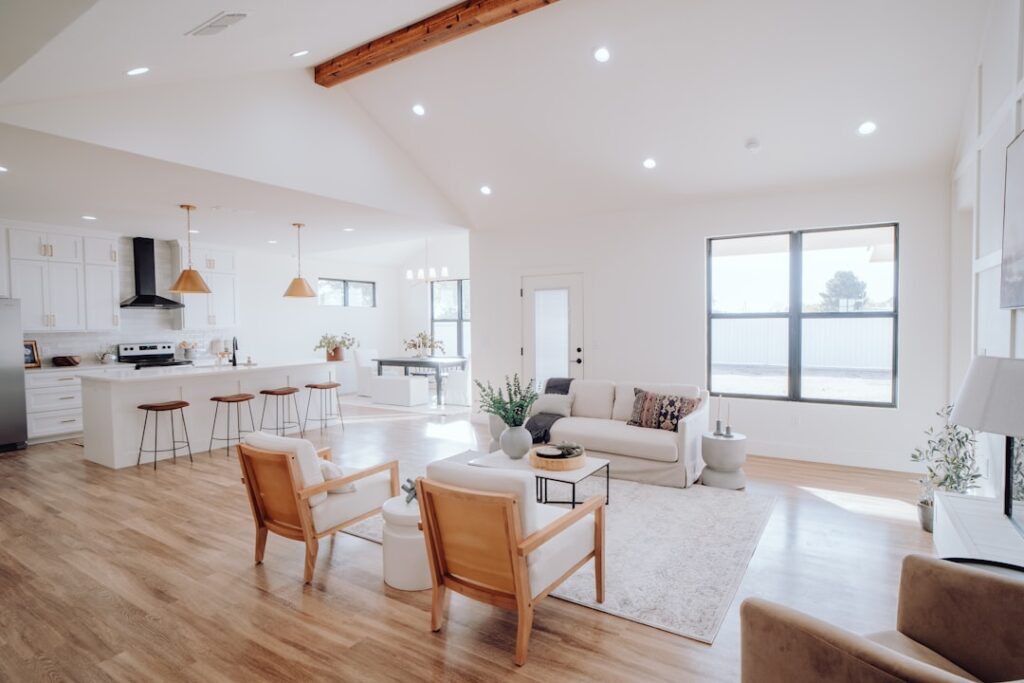
If you have shopped for real wood floors at a big-box home center, you have almost certainly walked past a Bruce display. Bruce solid hardwood flooring is one of the most widely available and recognizable wood floor brands in America, and it has built its reputation on a simple value proposition: genuine solid wood at a budget-to-mid-range price, stocked where most homeowners actually shop. It is not a boutique, artisan flooring line, and it does not pretend to be. Instead, Bruce delivers dependable, mass-produced solid hardwood that suits homeowners who want the authenticity and longevity of real wood without a premium price tag. Here is an honest look at what the brand offers and who it fits.
What Bruce Solid Hardwood Is
Solid hardwood, as the name says, is milled from a single piece of wood through the entire plank thickness — typically 3/4 inch. That solid construction is Bruce’s calling card, and it means the floor can be sanded and refinished multiple times over its life, a decades-long lifespan when maintained. Bruce, a long-established American flooring name now under the AHF Products umbrella, produces both solid and engineered lines, but its solid oak strip and plank flooring is what most people picture when they hear the name.
Wood Species and Sizes
Bruce keeps its species lineup practical and familiar rather than exotic. You will primarily find:
- Oak — both red and white oak dominate the line, prized for their durability, prominent grain, and ability to take stain evenly. This is the heart of the brand.
- Maple — offered for its smoother, more subtle grain and lighter, contemporary look.
- Hickory — available in some collections for buyers who want extra hardness and dramatic grain variation.
Sizes lean toward traditional narrow strip flooring around 2.25 inches wide, with wider plank options in select collections. The classic strip look is a signature of the brand and a good match for traditional homes.
Finishes and Colors
One of Bruce’s strengths is the sheer breadth of prefinished colors. From light natural and honey tones through gunstock, saddle, and deep espresso browns, the range covers most mainstream tastes. The floors come prefinished from the factory with a durable aluminum-oxide urethane coating, which resists scratches and wear far better than a raw finish and eliminates the mess of on-site sanding and sealing. Gloss levels vary by collection, with lower-sheen matte and satin options increasingly available to match current tastes.
The Pros
- Genuine solid wood that can be refinished multiple times, giving a very long lifespan.
- Affordable pricing relative to premium and specialty hardwood brands.
- Wide availability at major home centers and flooring retailers, with stock you can often take home the same day.
- Broad color and finish selection covering most design styles.
- Durable factory finish with aluminum-oxide wear protection.
The Cons
- Solid wood limitations — like all solid hardwood, it is sensitive to moisture and humidity swings and is not recommended for basements or below-grade installation.
- Mass-market quality — as a value brand, it lacks the hand-scraped artistry, wide-plank drama, and rare species of high-end lines.
- Narrower planks in many collections read more traditional than the wide-plank modern look some buyers want.
- Consistency can vary across the more budget-oriented collections.
How It Compares and Where It Fits
Think of Bruce as the reliable mainstream choice rather than the luxury option. Against premium hardwood brands, it trades bespoke character and ultra-wide planks for a much friendlier price and easy availability. Against engineered and vinyl alternatives, it offers the genuine refinishable solid wood that those products cannot fully replicate, at the cost of moisture sensitivity. It is a strong fit for homeowners furnishing a first home, updating a traditional-style house, or covering a lot of square footage on a budget while still insisting on real wood.
Installation Considerations
Because it is 3/4-inch solid wood, Bruce flooring installs the traditional way — nailed or stapled down to a wood subfloor over an appropriate underlayment. This is a more involved installation than a floating engineered or vinyl floor, and it generally calls for a flooring nailer and some experience, though a determined DIYer can tackle it. The planks must acclimate in the room for several days before installation so the wood adjusts to your home’s humidity, and expansion gaps around the perimeter are essential. Solid hardwood is not recommended for installation directly over concrete slabs or in below-grade basements, which rules it out for some spaces where engineered wood or vinyl would be the better pick.
Care and Maintenance
Keeping Bruce floors looking good is straightforward but does require respecting that they are real wood. A few practices go a long way:
- Sweep or dry-mop regularly to keep grit from scratching the finish, and use a hardwood-specific cleaner rather than water or vinegar.
- Never wet-mop or let standing water sit, since moisture is solid wood’s enemy.
- Use felt pads under furniture legs and area rugs in high-traffic zones.
- Maintain indoor humidity in a stable range, roughly 35 to 55 percent, to minimize seasonal expansion and contraction.
- Wipe up spills promptly and keep pet nails trimmed to protect the surface.
When the finish eventually shows wear after many years, the solid construction lets you sand and refinish rather than replace — the key long-term advantage over engineered and vinyl products.
Is the Warranty Worth Noting?
Bruce backs its prefinished floors with finish and structural warranties that vary by collection, typically covering the wear finish for a set number of years under normal residential use. As with any flooring warranty, coverage depends on proper installation, acclimation, and maintenance, and moisture-related damage is generally excluded. Read the specific warranty for the collection you are considering, but the presence of a solid manufacturer warranty from an established brand is part of what makes Bruce a lower-risk choice than an unbranded discount hardwood.
The Bottom Line
Bruce solid hardwood flooring earns its popularity honestly: it is real, refinishable solid wood in familiar oak and maple, offered in a huge range of colors, at a price most families can manage, and stocked where they already shop. It will not satisfy a buyer chasing wide-plank designer floors or exotic species, and it demands the same humidity control and above-grade installation as any solid wood. But for dependable, long-lasting hardwood value, it remains a smart, no-nonsense choice worth putting on your shortlist. Visit a retailer, bring home a few sample planks to view in your own light, and compare the specific collection’s thickness, finish, and warranty against competing brands. For the homeowner who wants authentic, refinishable solid wood without paying a premium, Bruce continues to earn its place as one of the most sensible options on the market.
Prefer to explore on your own?
See how new flooring looks in your actual room in seconds — free, no signup.
Try the free Floor Studio →

