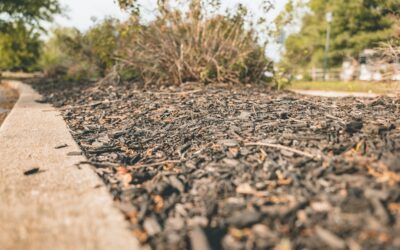
Recycled rubber mulch landed on residential driveways and playgrounds around 2001, and nearly 25 years later it still confuses first-time buyers who compare it against pine bark. Buying bulk rubber mulch is not the same decision as picking up ten bags at a big-box store. Tonnage pricing, color warranty, crumb size, and IPEMA certification all shift dramatically once you cross into pallet and super sack territory.
This guide breaks down what actually changes when you scale up, where the real savings hide, and which suppliers stand behind their color warranties long enough to matter.
What Bulk Rubber Mulch Really Is
Most bulk product is manufactured from post-consumer tires, shredded and magnetically screened to remove 99.9 percent of steel belt wire. The resulting nuggets range from 0.5 to 2 inches and are tumble-coated with pigments that meet ASTM F3012 standards for playground use. A ton of nuggets covers roughly 75 square feet at a 2-inch depth, or 50 square feet at the 3-inch depth most playgrounds require.
Typical bulk pricing in 2026 runs $340 to $480 per ton delivered within 100 miles of a manufacturing plant. Compare that to $9 bags at retail, which works out to about $625 per ton once you count the bag tax and the weekend you lose hauling them home.
Where Bulk Rubber Mulch Makes Sense
Not every landscape bed benefits. Rubber is heavy, it heats up in direct sun, and it is a permanent decision. Plan for 15 to 20 years of service before replacement. The best use cases include:
- Residential playgrounds under swing sets, zip lines, and climbers
- Dog runs where wood mulch would rot and splinter
- Commercial landscape islands in parking lots
- Equestrian footing for round pens and riding arenas
- Shooting ranges as a berm surface
- Rooftop gardens needing lightweight, fire-resistant cover
Avoid vegetable gardens, pollinator beds, and any area where leaves and debris collect heavily. Once organic matter composts down between the nuggets, the only way to clean it is a rake-screen process nobody enjoys.
Depth, Coverage, and Fall Height Math
For playground installations, ASTM F1292 sets the fall-height protection standard. A 6-inch depth of uncompressed rubber mulch protects falls up to 10 feet, a 9-inch depth handles 11 feet, and anything taller typically needs a poured-in-place surface.
For landscape beds, 2 inches is enough to suppress most weeds. At that depth, one ton covers 75 square feet. A standard backyard play area of 15 by 20 feet (300 square feet) at 6-inch depth requires approximately 12 tons. Have your delivery driver confirm drop location before arrival. Super sacks weigh 2,000 pounds and need a bobcat or forklift to position.
Color, Fade, and Warranty Reality
Manufacturers advertise 12-year color warranties, but real-world fading starts around year 4 in high UV zones like Arizona, Nevada, and New Mexico. Darker colors (espresso, cedar red) fade faster than earth tones and black. Warranty claims typically cover replacement pigment, not labor, and require photo documentation every 12 months.
Before signing, ask three questions. Is the pigment mixed throughout or only coated? Is the warranty transferable if you sell the home? Does it cover chalky surface residue or just total pigment loss? Reputable brands like IntelliTurf, Playsafer, and Rubberecycle spell these out in writing.
Pros and Cons Summary
Advantages
- Does not attract termites, carpenter ants, or rodents
- No annual top-up cost after the initial install
- Drains rapidly, reducing mud tracked indoors
- IPEMA-certified products meet ADA wheelchair accessibility
- Reduces mowing edge maintenance
Disadvantages
- Surface temperatures reach 170 degrees F in direct afternoon sun
- Emits a faint tire smell for 6 to 8 weeks after install
- Can leach zinc and rubber byproducts into soil over time
- Difficult to remove once installed, requiring screening or hauling
- Higher upfront cost than wood mulch by a factor of 4 to 6
Installation Best Practices
Start with a clean subgrade. Remove existing sod, compact the soil, and install a woven geotextile weed barrier. Skip non-woven black plastic; it traps water and encourages mold. Edge the bed with 4-inch landscape steel or pressure-treated 2×6 lumber so the mulch stays contained during heavy rain.
Dump and rake in 2-inch lifts, walking each layer to settle it before adding the next. A standard garden rake works for small areas. For installs over 500 square feet, rent a landscape rake or power broom to save three hours of back strain. After the final lift, water the bed lightly to knock down surface dust and accelerate the off-gassing period.
Budgeting the Full Project
A realistic budget for a 300-square-foot backyard play surface in 2026 looks like this: material ($4,500 for 12 tons delivered), weed barrier and edging ($220), subgrade prep including rental ($180), and 6 hours of labor if you DIY. Hiring a landscape crew typically adds $800 to $1,200 for a crew of two working half a day.
Compare that investment against wood chips at $35 per cubic yard. Wood looks identical year one but needs topping off every 14 to 18 months. By year 10, cumulative wood mulch costs cross the rubber break-even line. If your play set will live a decade or more, bulk rubber mulch pencils out as the lower total cost of ownership. If you plan to relandscape in 5 years, stick with wood and save the upfront spend.
For broader outdoor projects consider pairing rubber mulch beds with durable outdoor hardscape materials that complement its matte finish and 20-year service life.
Safety and Environmental Notes
Lead content in older recycled rubber products occasionally made the news between 2008 and 2014, and regulations have since tightened. Modern IPEMA-certified bulk mulch is tested to below the CPSC limit of 100 ppm for lead and screens for total recoverable petroleum hydrocarbons. Always request a current Certificate of Conformance from your supplier and keep it with your homeowner records. If small children will use the play surface, specify color-coated virgin rubber products rather than post-consumer tire crumb, even at the 15 to 20 percent price premium.