If you love the dramatic look of Calacatta marble but not the upkeep or the price, calacatta porcelain tile offers a compelling alternative. It captures the bright white background and bold gray-and-gold veining that makes genuine Calacatta marble so coveted, while delivering the toughness and low maintenance of porcelain. For many homeowners, it is the best of both worlds.
This guide walks you through what makes this tile special, how it compares to real marble, the finishes and formats available, where it works best, and how to keep it looking sharp. Understanding these details will help you decide whether porcelain is the right way to bring that luxury look home.
What Is Calacatta Porcelain Tile
Calacatta porcelain is a ceramic tile made from refined clays fired at high temperatures, with a surface design printed and glazed to imitate natural Calacatta marble. Modern manufacturing uses high-resolution printing to reproduce the distinctive look of the stone, including its luminous white field and the thick, contrasting veins that run across it. The best examples vary the veining from tile to tile so the finished floor or wall does not look repetitive.
It is worth being clear-eyed about what this product is and is not. It is not natural stone, and a discerning eye up close can usually tell. But the realism of quality porcelain has improved dramatically, and from normal viewing distance it convincingly evokes the elegance of true Calacatta marble at a fraction of the cost and care.
Porcelain vs. Real Calacatta Marble
Both materials deliver a luxurious look, but they behave very differently in daily life. Here is how they compare:
- Durability: Porcelain is dense, hard, and resists scratching and chipping better than marble, which is softer and more prone to wear.
- Stain resistance: Glazed porcelain is nonporous and shrugs off spills; natural marble is porous and can stain or etch from acids like wine and citrus.
- Maintenance: Porcelain needs no sealing; marble requires periodic sealing and careful cleaning.
- Cost: Porcelain typically costs significantly less per square foot than genuine Calacatta marble.
- Authenticity: Real marble offers natural depth and unrepeatable veining; porcelain offers a consistent, predictable look.
For high-traffic floors, busy kitchens, and family bathrooms, porcelain often wins on practicality. If authenticity and the irreplaceable character of natural stone matter most, marble may justify its premium and upkeep.
Finishes and Formats
One of the strengths of porcelain is the variety of looks you can choose. Common surface finishes include:
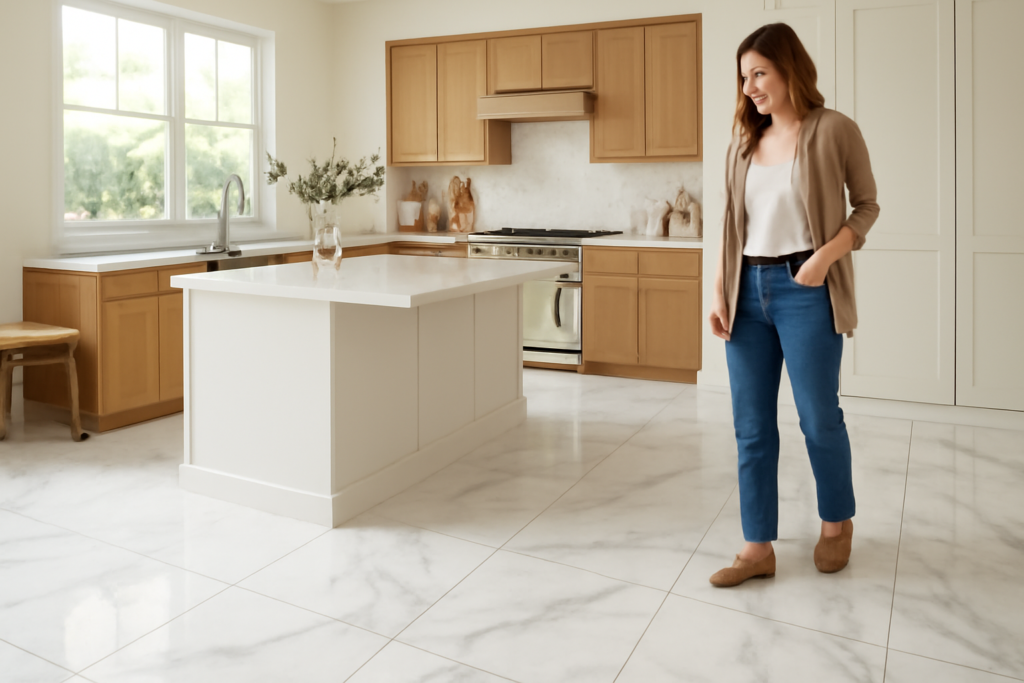
- Polished: A glossy, reflective surface that closely mimics honed-and-polished marble and brightens a room.
- Matte or honed: A softer, low-sheen finish that hides smudges and offers more slip resistance underfoot.
- Textured or anti-slip: Useful for wet areas and floors where grip is a priority.
Formats range from classic squares to large-format slabs and rectangular planks. Large-format tiles are especially popular for this look because fewer grout lines let the dramatic veining read as a continuous expanse, much like a marble slab. You will also find matching trim, mosaics, and bullnose pieces to coordinate a whole space.
Where to Use It
The versatility of porcelain makes it suitable almost anywhere in the home. On floors, it brings an upscale look to entryways, kitchens, living areas, and bathrooms while standing up to traffic and spills. On walls, it shines as a shower surround, a tub deck, or a floor-to-ceiling feature that turns a bathroom into a spa-like retreat.
In the kitchen, it works beautifully as a backsplash and, in slab form, even as a countertop surface that resists the etching that plagues real marble. Because the tile is so water- and stain-resistant, it handles wet and high-use rooms where natural marble would demand constant vigilance. That combination of beauty and resilience is exactly why so many homeowners reach for this material.
Installation Considerations
Porcelain is harder and denser than many tiles, which makes it durable but also more demanding to cut and install. Large-format pieces in particular require a very flat substrate, the right thinset, and careful technique to avoid lippage, where one tile edge sits higher than its neighbor. Specialized tools and leveling systems help achieve a smooth, professional result.
For these reasons, many homeowners hire an experienced tile installer for large-format calacatta porcelain tile, especially on big floors or full shower walls. If you are an experienced do-it-yourselfer, smaller formats are more forgiving. Either way, plan the layout so the veining flows naturally and the pattern does not look obviously repeated across the room.
Cleaning and Maintenance
Easy upkeep is one of the biggest selling points. Because glazed porcelain is nonporous, you never need to seal it the way you would seal marble. Routine cleaning with warm water and a mild, neutral cleaner keeps the surface bright, and you can skip the special stone-safe products that natural marble requires.
Wipe up spills when you see them, avoid harsh abrasives that could dull a polished finish, and keep grout lines clean for the best overall look. If you used epoxy grout, your joints will resist staining and stay crisp with very little effort. With this minimal care, the floor or wall holds its luxury appearance for years.
Is Calacatta Porcelain Tile Right for You
For homeowners who want the unmistakable Calacatta look without the cost, fragility, and constant maintenance of natural stone, porcelain is a smart, practical choice. You get the bright white field and bold veining that make this style so striking, paired with a surface that resists stains, scratches, and water in the busiest rooms of your home.
Weigh your priorities honestly. If you crave genuine natural stone and accept its upkeep, real marble may be worth it. But if you want durability, value, and a finish that still turns heads, calacatta porcelain tile delivers the elegance you are after with far less worry, making it one of the most appealing ways to add a touch of luxury to any space.
Choosing Quality Tile
Not all porcelain that claims the Calacatta look is created equal, so it pays to shop carefully. Examine the realism of the print up close and from across the room, and ask how many distinct face patterns a given series offers. A line with more unique faces will look natural over a large area, while one with only a handful of repeats can betray its pattern on a big floor.
Check the tile thickness and the rating for its intended use, since floor tiles need adequate hardness and slip resistance. Confirm that the manufacturer offers coordinating trim and that the lot you buy is from a single production run, which keeps shading consistent. Order a few extra tiles beyond your measured square footage to cover cuts, breakage, and future repairs, because matching a discontinued run later is difficult.
Design Tips for a Cohesive Look
To get the most from this dramatic material, think about how the veining flows before installation begins. Dry-laying tiles first lets you arrange the pattern so the bold veins move naturally across the space rather than colliding awkwardly at seams. With large-format pieces, thin grout lines in a closely matched color help the surface read as continuous stone.
Pair the tile thoughtfully with the rest of your scheme. The white-and-gray palette plays well with warm wood tones, brushed gold or matte black fixtures, and soft neutral paint. Whether you carry the look from floor to shower walls or use it as a single bold feature, restraint elsewhere lets the marble-look surface be the star it was meant to be.
Prefer to explore on your own?
See how new flooring looks in your actual room in seconds — free, no signup.
Try the free Floor Studio →