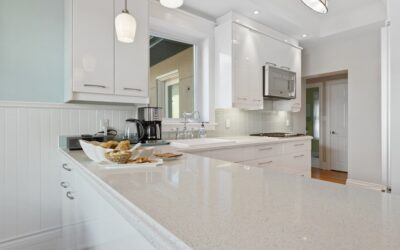
The dramatic white field and bold gray veining of Calcutta marble is one of the most sought-after looks in home design, but real Calcutta is rare, expensive, and high-maintenance. That is exactly why calcutta marble laminate has exploded in popularity. It captures that luxurious veined appearance at a fraction of the cost, with none of the staining and etching headaches that come with genuine marble. For homeowners who love the look but not the upkeep or price, it is a compelling alternative.
Part of our Countertops guide — explore the full guide →
This guide explains what this material is, where it works, how durable it is, and how to install and care for it.
What Calcutta Marble Laminate Is
Laminate is a layered product. A high-resolution printed image of Calcutta marble — complete with its signature white background and thick, flowing gray veins — sits beneath a clear, tough wear layer, all bonded to a dense core board. Modern printing and embossing are good enough that the result convincingly mimics the depth and movement of real stone. You will find it as flooring planks and tiles, countertops, and decorative wall panels, each engineered for a specific use.
Calcutta vs. Carrara: Know the Difference
Shoppers often mix these up. Both are white Italian marbles, but the veining differs. Calcutta features bolder, more dramatic gray and sometimes gold veins against a bright white background, giving it a luxurious, high-contrast look. Carrara is softer and grayer with finer, feathery veining. If you want the striking, statement-making pattern, Calcutta-style laminate is what you are after. Knowing the distinction helps you pick the look you actually want.
Where It Works Best
This material adapts to several applications around the home:
- Flooring — bright, elegant floors for kitchens, bathrooms, and living areas at a wood-laminate price point.
- Countertops — a budget-friendly marble look for kitchens and vanities, far easier to maintain than stone.
- Backsplashes and accent walls — laminate panels create a seamless marble feature without grout lines.
- Furniture and built-ins — tabletops and shelving with a designer finish.
Durability and Performance
Here is where laminate beats the real thing for everyday living. The wear layer resists scratches, scuffs, and the etching that acidic spills cause on genuine marble — no panicking when someone sets down a lemon or a glass of wine. It does not need sealing, holds its color, and stands up to foot traffic. Its main weakness is moisture at the seams; standard laminate can swell if water sits in the joints, so wipe spills promptly and choose a water-resistant or waterproof product for bathrooms and kitchens.
Installation Basics
Most laminate flooring uses a click-lock floating system that snaps together over an underlayment, with no glue or nails needed for the field. Acclimate the planks in the room for 48 hours before installing so they adjust to temperature and humidity. Lay a moisture barrier and underlayment, then click planks together row by row, staggering the end seams and leaving a 1/4 inch expansion gap around the perimeter for the floor to move. For countertops and walls, the panels are typically cut to size and adhered to a substrate.
Cost Comparison
The savings are substantial. Real Calcutta marble flooring or countertops can run $50 to $150-plus per square foot installed, plus ongoing sealing. Calcutta marble laminate flooring typically costs $2 to $6 per square foot for materials, and laminate countertops a fraction of stone. Even after installation, you are usually looking at a small share of the price of natural marble, with far lower maintenance over the years.
Laminate vs. Other Marble-Look Options
Laminate is not the only way to fake marble, so it helps to know where it fits. Porcelain tile with a Calcutta print is more water-resistant and works in showers, but it is harder, colder underfoot, and more expensive to install. Luxury vinyl with a marble look is fully waterproof and softer, making it a strong rival for bathrooms and kitchens. Solid surface and quartz deliver the most convincing countertop marble but cost far more. Laminate’s advantages are its low price, easy floating installation, and warm, comfortable feel underfoot. For living areas, bedrooms, and budget-conscious kitchens, it often hits the best balance of looks, comfort, and cost.
Design Tips for a High-End Look
A few choices make laminate read as genuine marble rather than an obvious imitation. Larger plank or tile formats with continuous veining look more like real stone slabs than small, repetitive pieces where the printed pattern visibly repeats. Pair the bright white-and-gray surface with matte or brushed metal fixtures, warm wood accents, and simple cabinetry so the marble stays the star. In bathrooms, run the laminate up a feature wall or vanity backsplash for the seamless, grout-free look that sells the illusion. Keep grout lines, where present, tight and color-matched so the eye reads a continuous surface.
Handling Moisture and Wet Rooms
Moisture is the one area where laminate demands respect, since its core can swell if water reaches the seams. For bathrooms, kitchens, and laundry rooms, choose a product explicitly rated water-resistant or waterproof rather than standard laminate. Seal the perimeter and any seams near tubs and sinks with the manufacturer’s recommended sealant, and use floor mats in front of sinks and tubs to catch splashes. Wipe spills as soon as they happen and never let water pool on the surface. With a moisture-rated product and these habits, the Calcutta marble look holds up beautifully even in damp rooms where ordinary laminate would fail.
Cleaning and Care
Maintenance is refreshingly simple. Sweep or vacuum to keep grit off the surface, and damp-mop floors with a well-wrung mop and a laminate-safe cleaner — never a soaking-wet mop, since standing water is laminate’s enemy. Skip waxes, polishes, and abrasive scrubbers, which can dull or scratch the wear layer. Wipe spills as they happen, especially near seams. With this easy routine, the surface keeps its bright marble look without sealing or special products.
Final Thoughts
Calcutta marble laminate lets you bring one of design’s most coveted looks into your home without the cost, fragility, or upkeep of real stone. It resists scratches and etching, never needs sealing, and installs as a straightforward floating floor or adhered panel. Choose a water-resistant product for wet rooms, wipe up spills quickly, and you will enjoy that luxurious veined marble appearance for years on a realistic budget.
Prefer to explore on your own?
See how new flooring looks in your actual room in seconds — free, no signup.
Try the free Floor Studio →