
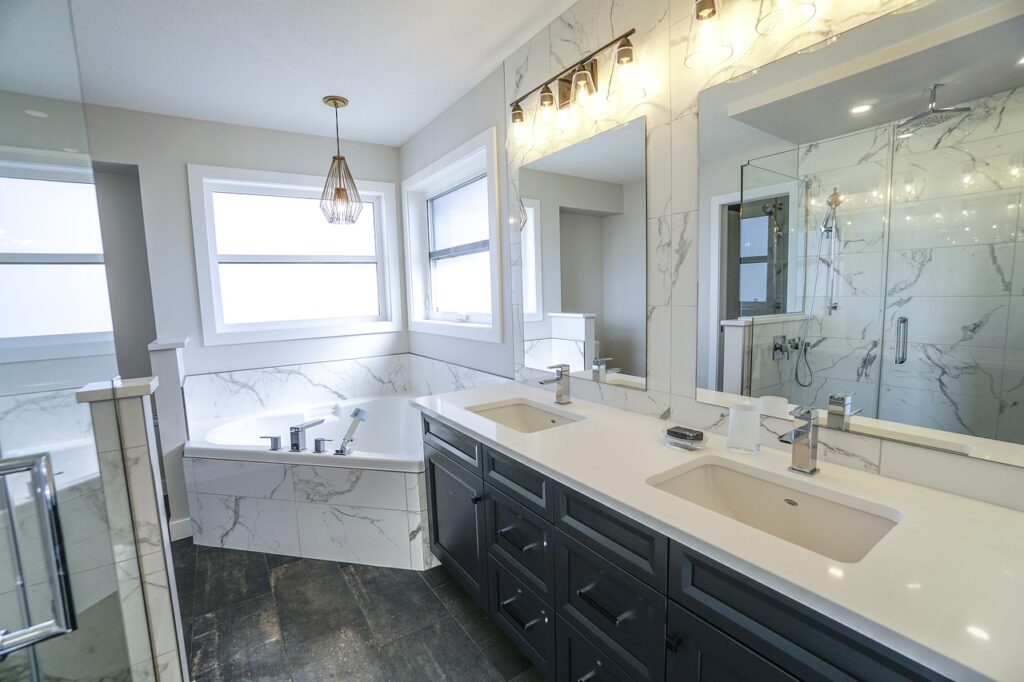
There is a depth, a luminosity, and a presence to natural marble that no engineered product has managed to replicate. Each slab is genuinely unique, formed over millions of years, and that geological history gives marble floors an authenticity that is impossible to manufacture.
Part of our Countertops guide — explore the full guide →
But marble is also one of the most misunderstood flooring materials. Not all marble is created equal — some varieties are hard enough for heavy commercial traffic, while others will etch and scratch in a busy kitchen within months. Choosing the right type of marble for your specific application is the difference between a floor that ages gracefully for decades and one that becomes a maintenance headache. This guide covers the best marble varieties for flooring, honestly compares their strengths and weaknesses, and helps you make the right choice.
Marble Flooring Basics
Marble is a metamorphic rock formed when limestone is subjected to extreme heat and pressure deep within the earth’s crust. The heat and pressure cause the limestone’s calcium carbonate to recrystallize, creating the interlocking crystal structure that gives marble its distinctive translucency and depth. The characteristic veining comes from mineral impurities — iron oxides produce reds and yellows, graphite creates grays and blacks, and serpentine produces greens.
Key Properties for Flooring
- Hardness: Marble rates 3 to 5 on the Mohs hardness scale, making it softer than granite (6-7) but harder than most wood
- Porosity: Marble is a porous stone that absorbs liquids if unsealed, which can cause staining
- Acid sensitivity: Marble reacts to acidic substances (citrus, vinegar, wine, some cleaners), causing etching — dull spots on the surface
- Thermal properties: Marble stays cool to the touch, making it ideal for warm climates and excellent over radiant heating
- Compressive strength: Marble handles weight well, making it suitable for high-traffic flooring applications
Best Types of Marble for Flooring
Carrara Marble
Quarried in the Carrara region of Tuscany, Italy, Carrara is the world’s most popular marble for flooring. It features a white to blue-gray base with fine, feathery gray veining. The veining is typically subtle and consistent, creating an elegant, understated look.
Best for: Bathrooms, entryways, living rooms, and any space where you want classic marble elegance without overwhelming drama.
Durability for flooring: Moderate. Carrara is relatively soft as marbles go and will develop a patina of minor scratches and etch marks over time. Many designers consider this aging process part of the charm. For high-traffic areas, a honed finish is more practical than polished.
Price range: $8 to $20 per square foot for tiles.
Calacatta Marble
Also from the Carrara region but far rarer and more expensive. Calacatta features a brighter, whiter base than Carrara with bold, dramatic veining in gold, gray, or brown. The veining patterns are larger, more expressive, and more varied between slabs. Calacatta is considered the most prestigious white marble.
Best for: Feature areas, master bathrooms, foyers, and spaces where the floor is the primary design statement.
Durability for flooring: Similar to Carrara — moderate hardness with sensitivity to etching. The bold veining pattern actually helps disguise minor wear and imperfections, which is an underappreciated practical advantage.
Price range: $20 to $60 per square foot for tiles, with book-matched slabs even higher.
Statuario Marble
The rarest of the three major Italian white marbles. Statuario has a warm white base with striking, bold gray veining that often includes dramatic directional patterns. It is the marble used by Michelangelo and was historically reserved for the most important buildings and sculptures.
Best for: Luxury residential applications where the floor is a statement piece. Due to cost, it is often used for smaller areas — master bath floors, entry medallions, or accent borders.
Durability for flooring: Moderate, similar to other Italian white marbles. The rarity and cost make any damage more painful to accept, so it is best kept to lower-traffic residential areas.
Price range: $30 to $80+ per square foot for tiles.
Crema Marfil
A Spanish marble with a warm cream to beige base and subtle, flowing veining in lighter cream and gold tones. Crema Marfil is one of the most popular marbles for flooring worldwide because of its warmth, consistency, and excellent availability. It works beautifully with both traditional and contemporary interiors.
Best for: Large areas, hallways, living rooms, and commercial lobbies. Its warm tone hides dirt better than white marbles.
Durability for flooring: Good. Crema Marfil is slightly harder and more consistent than many white marbles. It is widely used in commercial settings, which speaks to its durability. The warm tone also hides etching and wear better than bright white varieties.
Price range: $6 to $15 per square foot for tiles.
Emperador (Dark and Light)
Spanish marble available in dark brown (Emperador Dark) and lighter brown (Emperador Light) with white, cream, or gold veining. Emperador brings warmth and richness without the maintenance visibility of white marble — stains and etching are far less noticeable against the darker background.
Best for: High-traffic areas, kitchens (with proper sealing), foyers, and homes with traditional or rustic decor.
Durability for flooring: Good to very good. Emperador marble tends to be harder than many white marbles and the darker color conceals wear exceptionally well. Emperador Dark is one of the most practical choices for marble flooring in busy households.
Price range: $5 to $18 per square foot for tiles.
Nero Marquina
A striking black marble from the Basque region of Spain with bold white veining. Nero Marquina creates dramatic, high-contrast floors that make a powerful design statement. It pairs beautifully with white marble in checkerboard patterns or as a contrasting border.
Best for: Statement floors, entryways, bathrooms, and accent areas. Best used in smaller quantities unless you want a very dramatic overall effect.
Durability for flooring: Moderate to good. The dense black color hides etching well, but dust and footprints are very visible on polished black surfaces. A honed finish is more practical for daily living.
Price range: $10 to $25 per square foot for tiles.
Thassos White
A pure white crystalline marble from the Greek island of Thassos. Unlike Carrara or Calacatta, Thassos has minimal veining — it is prized for its clean, bright whiteness and slight translucency. It is one of the hardest white marbles available.
Best for: Minimalist and contemporary designs where a clean, bright white floor is desired. Often used in bathrooms and spa-inspired spaces.
Durability for flooring: Good. Thassos is harder than most other white marbles and resists scratching better. However, the lack of veining means any etching or staining is highly visible against the pure white surface.
Price range: $12 to $30 per square foot for tiles.
Travertine (Honorable Mention)
Technically a form of limestone rather than true marble, travertine is worth mentioning because it is frequently considered alongside marble for flooring. It offers warm earth tones, natural pitting that creates textured character, and good durability. Filled and honed travertine is an excellent, more affordable alternative to marble for flooring applications.
Price range: $3 to $12 per square foot for tiles.
Durability Comparison
Here is how the major marble types rank for flooring durability:
- Crema Marfil: Best overall combination of hardness, color forgiveness, and availability
- Emperador Dark: Excellent wear concealment, good hardness
- Thassos White: Hardest white marble, but shows wear due to pure white color
- Nero Marquina: Good hardness, shows dust but hides etching
- Carrara: Moderate hardness, white color shows everything
- Calacatta: Similar to Carrara but bold veining helps mask wear
- Statuario: Similar properties to Calacatta, rarely used in high-traffic areas due to cost
Cost by Marble Type
Tile Costs (per square foot, materials only)
- Crema Marfil: $6 to $15
- Emperador: $5 to $18
- Carrara: $8 to $20
- Nero Marquina: $10 to $25
- Thassos White: $12 to $30
- Calacatta: $20 to $60
- Statuario: $30 to $80+
Installation Costs
- Standard tile installation: $6 to $12 per square foot
- Complex patterns (herringbone, medallions): $10 to $20 per square foot
- Subfloor preparation: $2 to $5 per square foot
- Sealing: $1 to $3 per square foot
Total Installed Cost (500 sq ft room)
- Crema Marfil: $7,500 to $15,000
- Carrara: $8,500 to $17,500
- Calacatta: $15,000 to $37,500
Marble Floor Finishes
Polished
The classic high-gloss finish that most people associate with marble. Polishing brings out the maximum color depth and veining clarity. However, polished marble is more slippery when wet and shows etching, scratches, and wear more readily. Best for formal living areas and spaces with light foot traffic.
Honed
A smooth, matte finish that provides better traction and hides wear far more effectively than polished. Honed marble still looks elegant but in a more understated, contemporary way. This is the most practical finish for flooring, especially in kitchens, bathrooms, and high-traffic areas. The trade-off is that honed marble is slightly more susceptible to staining because the open pores absorb liquids more readily.
Tumbled
A rustic, weathered finish with softened edges and a slightly textured surface. Tumbled marble has an Old World charm that works beautifully in Mediterranean, French Country, and rustic interiors. The textured surface provides good traction and excellently disguises wear. Commonly used with Crema Marfil, travertine, and Emperador varieties.
Brushed/Antiqued
Similar to honed but with a slightly textured surface created by wire brushing. This finish provides the best of both worlds — a contemporary matte look with improved traction and wear concealment. Increasingly popular for modern residential applications.
Best Rooms for Marble Flooring
Entryways and Foyers
Marble in the entryway makes an unforgettable first impression. Choose a durable type like Crema Marfil or Emperador for high-traffic entries, or make a statement with Calacatta or a classic checkerboard pattern in a lower-traffic formal foyer.
Bathrooms
Marble and bathrooms are a classic combination. The stone’s natural beauty pairs perfectly with water elements, and the cool surface feels refreshing underfoot. Use a honed or textured finish for traction, and seal thoroughly to protect against water damage and soap residue.
Living and Dining Rooms
Large marble floors in living spaces create an elegant, cohesive look. Lighter marbles (Carrara, Crema Marfil) make rooms feel spacious and bright. Area rugs can protect high-traffic paths while adding warmth and color.
Kitchens — With Caution
Marble kitchen floors are beautiful but demanding. Acidic foods (citrus juice, tomato sauce, vinegar) will etch unsealed or poorly sealed marble on contact. If you choose marble for a kitchen, select a harder variety, use a honed finish, seal aggressively, and accept that the floor will develop a patina over time. Crema Marfil and Emperador are the most practical kitchen choices.
Pros and Cons of Marble Flooring
Advantages
- Unmatched natural beauty: Depth, translucency, and character that no manufactured product replicates
- Each piece is unique: Natural variation creates a one-of-a-kind floor
- Increases home value: Marble flooring is a genuine luxury upgrade that buyers value
- Cool surface: Ideal for warm climates and works beautifully with radiant heating
- Longevity: Properly maintained marble floors can last centuries
- Can be refinished: Scratched or etched marble can be professionally re-polished or re-honed
- Hypoallergenic: Stone does not harbor allergens, dust mites, or mold
Disadvantages
- High cost: Both material and installation are significantly more expensive than most alternatives
- Soft and scratches easily: Softer than granite, porcelain, and many other flooring materials
- Etches from acid: Contact with acidic substances damages the surface
- Requires sealing: Periodic sealing is essential to prevent staining
- Slippery when wet: Polished marble can be dangerously slippery, especially on stairs
- Cold underfoot: Uncomfortably cold in winter without radiant heating
- Heavy: May require structural reinforcement, especially on upper floors
- High maintenance: Requires more ongoing care than most flooring types
Installation Considerations
Subfloor Requirements
Marble tile requires a rigid, flat subfloor. Any flex or movement will crack the tiles or the grout. Over wood-framed floors, a minimum of 1-1/4 inches of subfloor plus cement board (or equivalent) is required. Concrete slabs must be properly cured and moisture-tested. The subfloor must be flat to within 1/8 inch over 10 feet.
Weight Considerations
Marble tiles weigh approximately 13 to 15 pounds per square foot for 3/4-inch-thick tiles. For large-format tiles (24×24 or larger), slabs, or upper-floor installations, consult a structural engineer to ensure the floor system can handle the weight.
Professional Installation
Professional installation is strongly recommended for marble flooring. The material is expensive, heavy, and unforgiving of mistakes. Proper thin-set selection, trowel technique, grouting, and sealing require experience. A botched marble installation is extremely costly to correct.
Maintenance and Sealing
Sealing Schedule
- Initial seal: Apply a penetrating impregnating sealer within 24 hours of grouting
- Re-seal: Every 6 to 12 months for high-use areas (kitchens, bathrooms), every 12 to 24 months for lower-traffic areas
- Test annually: Place a few drops of water on the surface — if it absorbs within 5 minutes, it is time to re-seal
Daily Care
- Sweep daily to remove grit and sand that can scratch the surface
- Damp mop with a pH-neutral stone cleaner (never vinegar, lemon, or acidic cleaners)
- Blot spills immediately — do not wipe, which can spread the liquid
- Use coasters under plant pots and protective mats at sinks
Professional Maintenance
Every 5 to 10 years, consider professional marble polishing or honing to restore the surface. This process grinds away the top layer of worn, etched marble to reveal a fresh surface beneath. For heavily etched floors, diamond honing followed by re-polishing can make the floor look virtually new.
Buying Tips
- See the actual tiles before purchasing: Marble varies enormously between batches and suppliers — never buy based on a sample or photo alone
- Buy from a single lot: Tiles from different quarry lots can vary significantly in color and veining
- Order 15-20% overage: Marble tiles may have natural flaws that make some pieces unusable, and you need extras for cuts and future repairs
- Inspect every tile: Check for cracks, excessive veining that weakens the tile, and consistent thickness
- Grade matters: Commercial, standard, and premium grades differ in consistency, color uniformity, and fill quality
- Consider book-matching for large areas: Consecutive slabs from the same block create a mirrored veining pattern for maximum visual impact
Frequently Asked Questions
What is the most durable marble for flooring?
For residential flooring, Crema Marfil and Emperador Dark are the most durable and practical choices. Both are harder than most white marbles, hide wear and etching better due to their color, and are widely available at reasonable prices. For the hardest white marble, Thassos is your best option — its crystalline structure makes it denser and more scratch-resistant than Carrara or Calacatta, though its pure white color does show marks more readily.
Is marble flooring high maintenance?
Compared to most other flooring options, yes. Marble requires regular sealing (every 6-24 months), pH-neutral cleaning products, immediate spill cleanup, and periodic professional polishing. It is significantly more demanding than porcelain tile, hardwood, or vinyl. However, many marble floor owners find the maintenance manageable once they develop the right habits. The beauty and longevity of marble reward the extra effort for homeowners who appreciate natural stone.
Can marble flooring be used in kitchens?
Yes, but you need to go in with realistic expectations. Kitchen marble floors will etch from acidic food spills (citrus, tomato, vinegar), may stain from oil or wine if not sealed properly, and will develop a patina of minor wear over time. Choose a honed finish (which hides etching better than polished), seal thoroughly and frequently, and select a harder or darker marble variety. Many professional kitchens use marble — the key is accepting graceful aging rather than expecting a pristine surface.
Does marble flooring increase home value?
Yes, marble flooring is widely recognized as a luxury upgrade and typically adds value at resale. The exact return depends on the marble type, quality of installation, and condition of the floor. Well-maintained marble flooring in entryways, bathrooms, and living areas is a positive selling feature. However, poorly maintained or inappropriate marble (such as a scratched and etched polished marble kitchen floor) can actually deter buyers who perceive it as a maintenance burden.
How long does marble flooring last?
Marble flooring can last for centuries with proper care. Many historic buildings in Europe have marble floors that are hundreds of years old and still functional. In a residential setting, expect 50 to 100+ years of service. The surface can be professionally refinished multiple times, each time restoring the appearance. The biggest threat to marble longevity is not wear but moisture — unchecked water infiltration can cause cracking, staining, and substrate damage.
Prefer to explore on your own?
See how new flooring looks in your actual room in seconds — free, no signup.
Try the free Floor Studio →

