Everybody wants the look of Carrara marble underfoot; almost nobody wants to seal it twice a year, watch a splash of orange juice etch a permanent dull spot, or pay $30 a square foot installed. Synthetic marble flooring exists precisely to close that gap, delivering the veined, luminous appearance of natural stone using engineered materials that cost less and behave far better in a real home. The category covers several very different products, though, and buying the wrong one for your room is an expensive lesson.
Part of our Countertops guide — explore the full guide →
From cast cultured marble to porcelain that photographs stone in high resolution, “synthetic marble” is really an umbrella term. Understanding what each option is actually made of tells you how it will wear, what it costs, and where it belongs.
What Counts as Synthetic Marble
There is no single material called synthetic marble. Instead, several manufacturing approaches all chase the same aesthetic. Cultured marble is crushed natural marble dust bound in polyester resin and cast into slabs or tiles, then coated with a gel finish. Engineered or agglomerate marble presses marble chips into resin under pressure, similar to how quartz countertops are made. Marble-look porcelain and vinyl, meanwhile, are not marble at all; they are printed surfaces that mimic the veining.
These distinctions matter because they cure, scratch, and repair differently. Resin-based cultured and engineered products still contain real stone and can be polished, but the resin can yellow under UV over years. Porcelain and luxury vinyl are wholly synthetic reproductions, more durable in some ways and completely immune to etching. Knowing which family a product belongs to is the first question to ask any salesperson.
Marble-Look Porcelain: The Workhorse Choice
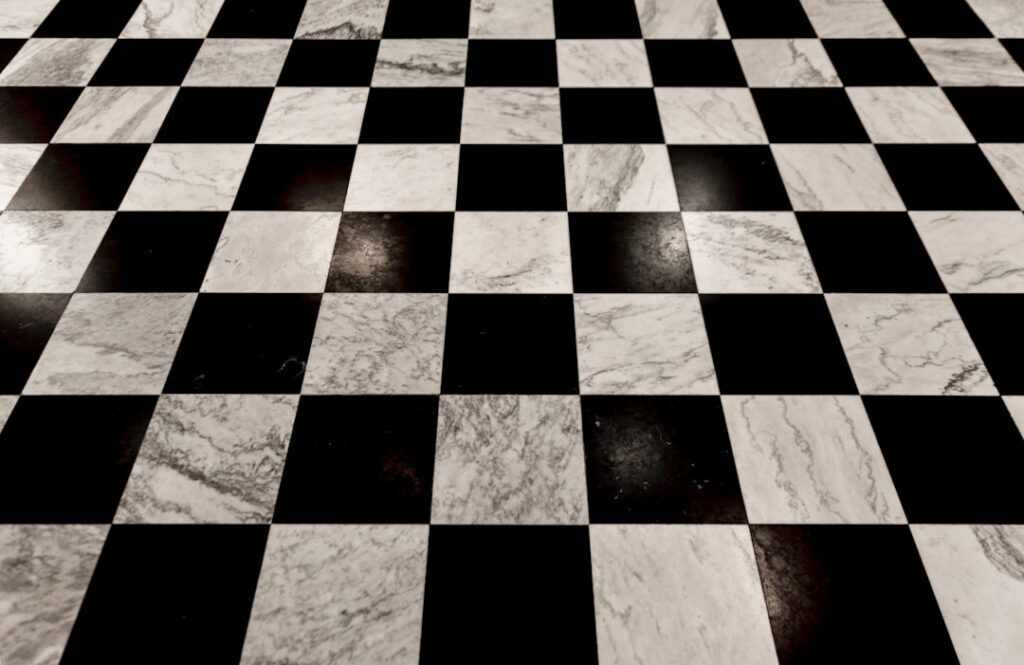
For most homeowners chasing the marble aesthetic on a floor, porcelain tile is the smart answer. Modern digital printing lays down photorealistic veining across large-format tiles, often 24 by 48 inches or larger, so seams and grout lines disappear into what reads as a continuous slab. Because porcelain is fired clay, it is dense, non-porous, and rated for heavy floor traffic.
The practical advantages are hard to beat. Porcelain does not etch when acid hits it, never needs sealing, and shrugs off water, making it ideal for bathrooms, kitchens, and entries. Installed cost typically runs $8 to $18 per square foot, well under real marble’s $15 to $40. The main compromises are that it feels colder and harder underfoot, and that a dropped cast-iron pan can chip an edge. For the look with genuine durability, this is the version most homeowners should choose.
Cultured and Engineered Marble
Cultured marble shines in wet, molded applications, shower pans, vanity tops, tub surrounds, where its seamless casting eliminates grout. As a floor material it is less common but appears in prefabricated shower floors and some commercial installs. Engineered marble tiles, the pressed chip-and-resin type, do get used on floors and offer more consistent color than natural stone at roughly $10 to $25 per square foot.
The catch with resin-based products is the finish. The gel coat on cultured marble can scratch and dull, and while you can buff it, it is softer than porcelain. Prolonged UV exposure can yellow the resin, so a sun-drenched room is a poor fit. These products earn their keep in molded, water-tight applications more than as broad floor fields, so match the material to the specific job.
Marble-Look Luxury Vinyl
Luxury vinyl tile with a marble print rounds out the budget end. It brings a warmer, softer, quieter surface than porcelain, is fully waterproof, and installs as a floating click floor a confident DIYer can handle over a weekend. Prices land around $3 to $8 per square foot for the tile itself, making it the most affordable route to the look.
The trade-off is realism and longevity. Even good LVT reveals its printed nature up close, and the wear layer, typically 12 to 20 mil in residential grade, will eventually scuff in traffic lanes. It is the right pick for a rental, a basement, or a budget refresh where you want the marble impression without stone prices. It is the wrong pick if you want a surface that reads as authentic when someone kneels to look.
Durability and Everyday Care
Here is where synthetics decisively beat the real thing. Natural marble is calcium carbonate, so any acid, lemon juice, wine, vinegar, tile cleaner, etches a dull mark instantly, and the stone stains without regular sealing. Synthetic marble flooring sidesteps most of that. Porcelain and vinyl are impervious to acids and need no sealing at all. Resin products resist etching far better than stone, though not perfectly.
Daily care is correspondingly simple. Sweep or dry-mop grit that would otherwise abrade the surface, and damp-mop with a pH-neutral cleaner. Avoid abrasive pads on gel-coated cultured marble. For porcelain floors, the only real maintenance is keeping grout lines clean, which epoxy grout or a periodic sealer makes trivial. Compared with the ongoing ritual of sealing and babying real marble, synthetics are close to worry-free.
Cost Comparison at a Glance
Budget drives most decisions, so it helps to see the spread. Real natural marble tile runs $15 to $40 per square foot installed, plus sealing costs for the life of the floor. The synthetic alternatives undercut that meaningfully.
- Marble-look luxury vinyl: $3 to $8 per sq ft material; $5 to $12 installed
- Engineered/agglomerate marble tile: $10 to $25 per sq ft installed
- Marble-look porcelain: $8 to $18 per sq ft installed
- Cultured marble (molded units): priced per piece, often $40 to $70 per sq ft equivalent
Factor in lifetime maintenance and the synthetics widen their lead, since you skip the sealing products and the etch repairs that natural stone demands.
Installation Realities to Plan For
How each product installs affects both cost and whether it is a DIY project. Marble-look luxury vinyl is the friendliest to install; most click-lock planks and tiles float over a flat subfloor with no adhesive, and a confident homeowner can lay a room in a weekend with a utility knife and a tapping block. The subfloor must be flat within about 3/16 inch over 10 feet, but no mortar, no grout, and no wet cure time means you walk on it immediately.
Porcelain and engineered marble tile are a different undertaking. They require a solid, flat, decoupled substrate, often cement backer board or an uncoupling membrane over plywood, set in thinset mortar, then grouted and sealed at the joints. Large-format tiles in particular demand a very flat floor and back-buttering to avoid hollow spots and lippage, where one tile edge sits higher than its neighbor. This is skilled work that most homeowners hire out at $5 to $10 per square foot in labor alone. Cultured marble molded units are typically set by the fabricator who templates and casts them. Factor these installation demands into your decision: the material price is only half the story, and a cheaper tile that needs a leveled subfloor and a pro crew can cost more installed than a pricier click floor you lay yourself.
Which One Belongs in Your Room
Match the product to the space and your tolerance for upkeep. For a bathroom, kitchen, or entry that needs to look luxurious and survive water and traffic, marble-look porcelain is the strongest all-around choice. For a basement, rental, or budget bedroom where warmth and softness matter more than close-up realism, marble-look vinyl wins. Reserve cultured and engineered marble for molded shower and vanity applications where its seamless casting is the whole point.
Whatever you choose, remember that synthetic marble flooring is not a compromise so much as an upgrade in daily livability. You get the veining and glow that make marble desirable while dodging the etching, staining, and sealing that make natural stone a chore. Decide how the room will be used, set your budget honestly, and pick the material engineered for that reality.
Prefer to explore on your own?
See how new flooring looks in your actual room in seconds — free, no signup.
Try the free Floor Studio →