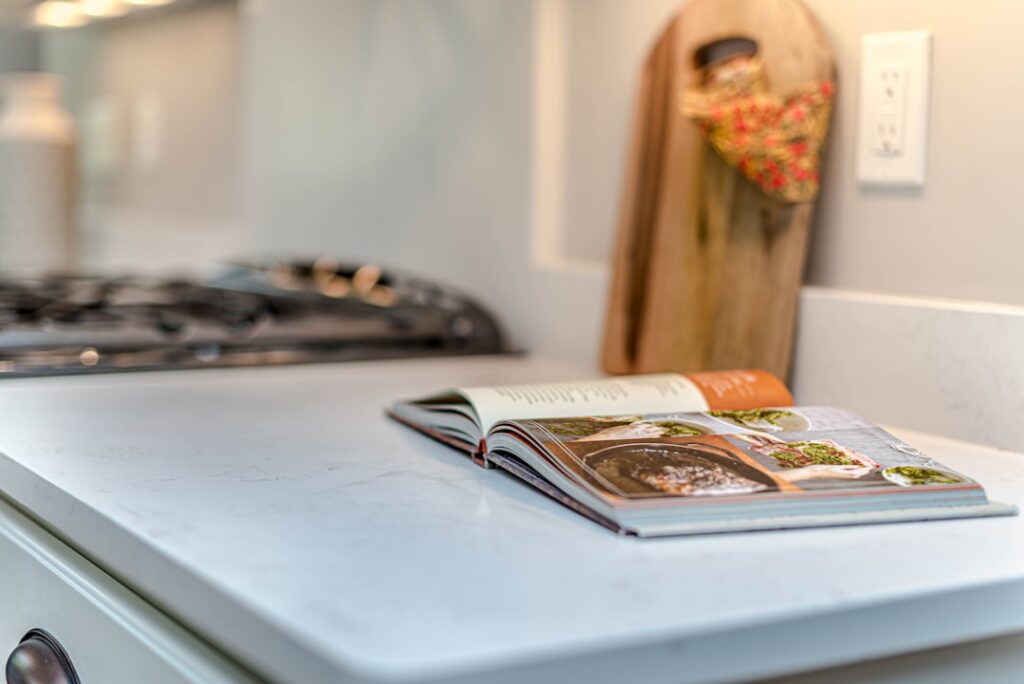
Natural stone is beautiful, but it is porous, needs sealing, and no two slabs are alike, which is exactly why so many kitchens now feature engineered alternatives instead. A synthetic stone countertop delivers the look and durability of quarried stone with more consistency, less maintenance, and often a lower price. The category covers several distinct materials, from quartz to solid surface to sintered stone, each with its own strengths, and understanding the differences is the key to choosing well. This guide breaks down what synthetic stone actually is, how the main types compare, and what you can expect to pay and maintain.
Part of our Countertops guide — explore the full guide →
What Counts as Synthetic Stone
Synthetic stone, sometimes called engineered or man-made stone, refers to countertop materials manufactured rather than cut directly from a natural slab. Most combine natural minerals with resins or undergo high-heat processing to create a hard, uniform surface. The appeal is consistency: because the material is engineered, you get predictable color and pattern across the whole run, no surprise fissures, and usually a nonporous surface that resists stains without sealing.
The trade-off is that some synthetics look slightly more uniform than the real thing, though modern manufacturing has closed that gap dramatically. Today’s premium synthetic stone countertop options mimic marble veining and granite movement convincingly enough to fool most eyes.
The Main Types Compared
Quartz (Engineered Stone)
Quartz is the most popular synthetic stone countertop by far. It is made from roughly 90 to 95 percent ground natural quartz mixed with resins and pigments, then molded into slabs. The result is extremely hard, nonporous, stain-resistant, and available in hundreds of colors and marble-look patterns from brands like Caesarstone, Silestone, and Cambria. It never needs sealing, but it is not as heat-tolerant as natural stone and can discolor under direct UV, making it less ideal for outdoor or sunny installations.
Solid Surface
Solid surface, best known by the Corian brand, is made from acrylic or polyester resins blended with mineral fillers. It is fully nonporous, seamless because pieces can be fused invisibly, and repairable, since scratches and minor burns can be sanded out. It is softer and less heat-resistant than quartz, so it scratches and scorches more easily, but its seamlessness and renewability make it a favorite for integrated sinks and clean, modern looks.
Sintered Stone and Porcelain Slab
The newest category, sintered stone (such as Dekton) and large-format porcelain slabs, is made by compacting mineral particles under extreme heat and pressure. These are exceptionally hard, heat-proof, UV-stable, and scratch-resistant, making them the top choice for outdoor kitchens and heavy-use surfaces. The trade-offs are a higher price, more challenging fabrication, and the risk of chipping at edges if struck hard.
How Synthetic Compares to Natural Stone
Against granite and marble, synthetic stone wins on maintenance and consistency. Quartz and solid surface never need the annual sealing that porous natural stone requires, and they resist the etching that acids inflict on marble. You also get predictable pricing and pattern, so the slab you approve is the counter you get.
Natural stone still holds advantages in heat tolerance and, for many buyers, authenticity. A hot pan can mar quartz or solid surface, while granite shrugs it off. And some homeowners simply prefer the one-of-a-kind character of a real marble slab. For most kitchens, though, the lower upkeep of a synthetic stone countertop outweighs those points.
Cost Expectations
Pricing varies by material and quality, but installed costs generally land in these ranges:
- Solid surface: roughly $40 to $80 per square foot installed
- Quartz: roughly $60 to $120 per square foot installed, with premium designer lines higher
- Sintered stone and porcelain slab: roughly $60 to $150 per square foot installed
Final price depends on edge profiles, thickness, cutouts for sinks and cooktops, and your region’s labor rates. Getting two or three fabricator quotes is always worthwhile, since installation is a significant share of the total.
Care and Maintenance
One of the best reasons to choose synthetic is how little it asks of you. Quartz and sintered stone need only soap and water for daily cleaning and no sealing ever. Wipe spills promptly, avoid abrasive scouring pads that can dull the finish, and use a trivet under hot pots since even heat-resistant surfaces have limits and quartz in particular can scorch or crack from thermal shock.
Solid surface is similarly easy but softer, so use cutting boards to avoid knife marks and let a fabricator or a fine-grit pad buff out any that appear. Across all synthetic stone, harsh chemicals like paint thinner and oven cleaner should be kept off the surface, and cutting directly on any countertop is a bad habit regardless of material.
Which Synthetic Stone Is Right for You
Match the material to how you cook and where the counter lives. For a busy indoor kitchen that wants marble looks with zero sealing, quartz is the natural pick. For seamless designs, integrated sinks, or a repairable surface, solid surface shines. For outdoor kitchens, sun-drenched spaces, or anyone who sets hot pans down without thinking, sintered stone earns its premium.
Edge Profiles and Design Details
The material is only part of the finished look; the edge profile and thickness shape how the counter reads day to day. Standard slabs come in roughly 2- and 3-centimeter thicknesses, with the thicker option feeling more substantial and often not requiring a built-up edge. A simple eased or straight edge suits modern kitchens, a beveled edge adds a subtle detail, and a bullnose softens the counter for homes with young children who might bump the corners. More elaborate ogee and waterfall edges cost more in fabrication but create a high-end, custom appearance.
Seams are another detail worth discussing with your fabricator up front. Solid surface can be joined nearly invisibly, one of its signature advantages, while quartz and sintered stone show a thin seam that a good installer places discreetly and color-matches. Ask where seams will fall, since a seam running across the middle of a busy prep area is more noticeable than one tucked near a corner or a cooktop cutout. Discussing edges, seams, and backsplash options before templating prevents surprises when the finished counters go in.
The Bottom Line
A synthetic stone countertop gives you the beauty of stone with the practicality that natural slabs cannot match: nonporous surfaces, consistent looks, and minimal upkeep. Decide between quartz, solid surface, and sintered stone based on your budget, your tolerance for maintenance, and where the counter will live, then get a few fabricator quotes. Choose thoughtfully and you will end up with a surface that looks like stone, works harder than stone, and asks far less of you in return.