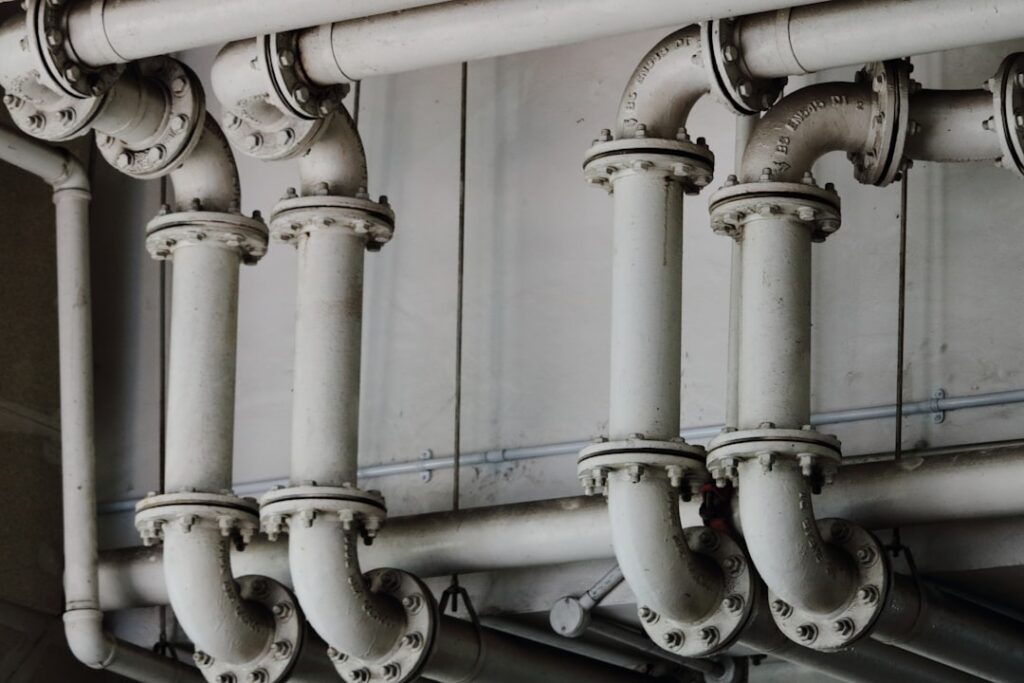
Every winter, homeowners panic at the first sign of a frozen pipe, assuming a flood is inevitable. The reassuring truth is that can pipes freeze without bursting has a clear answer: yes, they absolutely can, and they often do. Freezing alone does not split a pipe. What actually bursts pipes is trapped pressure that builds up between an ice blockage and a closed faucet. Understanding this distinction tells you exactly how to respond to a frozen pipe and how to prevent the far costlier burst.
- Why Freezing Alone Does Not Burst a Pipe
- What Actually Causes Pipes to Burst
- The Key Takeaway: Open a Faucet
- Signs a Pipe Is Frozen
- How to Safely Thaw a Frozen Pipe
- Preventing Frozen and Burst Pipes
- Know Where Your Main Shutoff Is
- The Bottom Line
- Which Pipe Materials Are Most at Risk
- After the Freeze: What to Check
Why Freezing Alone Does Not Burst a Pipe
It is a common myth that water expanding into ice is what cracks the pipe at the spot where it freezes. In reality, while water does expand by roughly 9 percent when it freezes, the ice plug itself rarely ruptures the pipe at its location. Many pipes freeze solid, thaw out, and are perfectly fine, with the homeowner never knowing how close they came, or simply seeing the water flow return.
So a pipe can freeze completely, block water flow, and survive without any damage at all. This happens constantly during cold snaps. The freezing is not the disaster; it is the warning sign.
What Actually Causes Pipes to Burst
The real culprit is pressure. When an ice plug forms in a pipe, it blocks the flow of water. As more water continues to freeze and the ice expands, it pushes the column of liquid water trapped on the other side toward the nearest faucet. If that faucet is closed, the water has nowhere to go. Pressure builds in the section between the ice blockage and the closed faucet.
Water is nearly incompressible, so this trapped pressure climbs rapidly, sometimes to thousands of pounds per square inch. The pipe fails at its weakest point, which is often not where the ice is, but downstream between the blockage and the closed tap. That is the burst that floods basements and ruins drywall.
The Key Takeaway: Open a Faucet
This physics leads directly to the single most effective emergency tip. If you suspect a pipe is freezing, open the faucet served by that pipe. With the faucet open, the rising pressure has an escape route, and even a fully frozen pipe is far less likely to burst because pressure cannot build to a destructive level.
A slow trickle from a faucet during a hard freeze relieves pressure and also keeps water moving, which makes a full freeze harder to form in the first place. Open both the hot and cold sides slightly on at-risk fixtures.
Signs a Pipe Is Frozen
- No water or only a trickle comes out when you open a faucet during cold weather.
- Frost is visible on an exposed pipe.
- A pipe feels extremely cold or has a bulge.
- Unusual smells from a drain (less common, but possible with a blockage).
Pipes most at risk are those in unheated areas: exterior walls, attics, crawl spaces, basements, garages, and under sinks on outside walls.
How to Safely Thaw a Frozen Pipe
- Open the affected faucet so melting ice and relieved pressure can flow out.
- Apply gentle heat to the frozen section, using a hair dryer, a heating pad, towels soaked in hot water, or a space heater kept a safe distance from combustibles. Start near the faucet and work toward the blockage.
- Never use an open flame like a blowtorch; it can damage the pipe and start a fire.
- Keep applying heat until full water flow returns.
- If you cannot locate or reach the frozen section, or if a pipe has already burst, shut off the main water valve and call a licensed plumber.
Preventing Frozen and Burst Pipes
- Insulate vulnerable pipes with foam pipe sleeves or wrap, especially in unheated spaces.
- Let faucets drip during extreme cold to relieve pressure and keep water moving.
- Keep cabinet doors open under sinks on exterior walls so warm room air reaches the pipes.
- Maintain heat at no lower than about 55°F even when away, and never shut the heat off entirely in winter.
- Seal drafts near pipes in crawl spaces, rim joists, and exterior wall penetrations.
- Disconnect garden hoses and shut off and drain outdoor spigots before the first freeze.
- Use heat tape or heat cable on pipes that freeze repeatedly, following the manufacturer’s instructions.
Know Where Your Main Shutoff Is
Before winter, locate your home’s main water shutoff valve and make sure everyone in the household knows how to operate it. If a pipe does burst, shutting off the main quickly is the difference between a wet floor and major water damage. Test that the valve turns freely so it is not seized when you need it.
The Bottom Line
Which Pipe Materials Are Most at Risk
Pipe material affects how a freeze plays out. Rigid copper and older galvanized steel pipes are the most likely to crack under freeze pressure because they have little ability to flex. PEX (cross-linked polyethylene) is more forgiving, since the flexible tubing can expand somewhat and is more resistant to bursting, though it is not freeze-proof and the fittings can still fail. CPVC plastic can become brittle in extreme cold and crack. No material is immune, so the prevention steps apply regardless of what your home is plumbed with. If you are repiping in a cold climate, PEX’s added freeze tolerance is one of its selling points.
After the Freeze: What to Check
Once a frozen pipe thaws and water flows again, do a careful inspection before assuming all is well. Walk the line and look for any small splits, bulges, or pinhole leaks that may seep slowly rather than burst dramatically. Check ceilings and walls below the pipe for water stains over the following days. Watch your water meter or listen for the sound of running water when no fixtures are open, which can signal a hidden leak. If you find any damage, shut off the water and call a licensed plumber, since a stressed pipe can fail later under normal pressure.
Yes, pipes can freeze without bursting, and they frequently do. Freezing itself is not what destroys a pipe; it is the pressure that builds between an ice blockage and a closed faucet. That is exactly why opening a faucet on an at-risk line is the most powerful thing you can do during a freeze. Insulate vulnerable pipes, let faucets drip in extreme cold, keep your home heated, and know where your main shutoff is, and you can keep a frozen pipe from ever turning into a burst one.