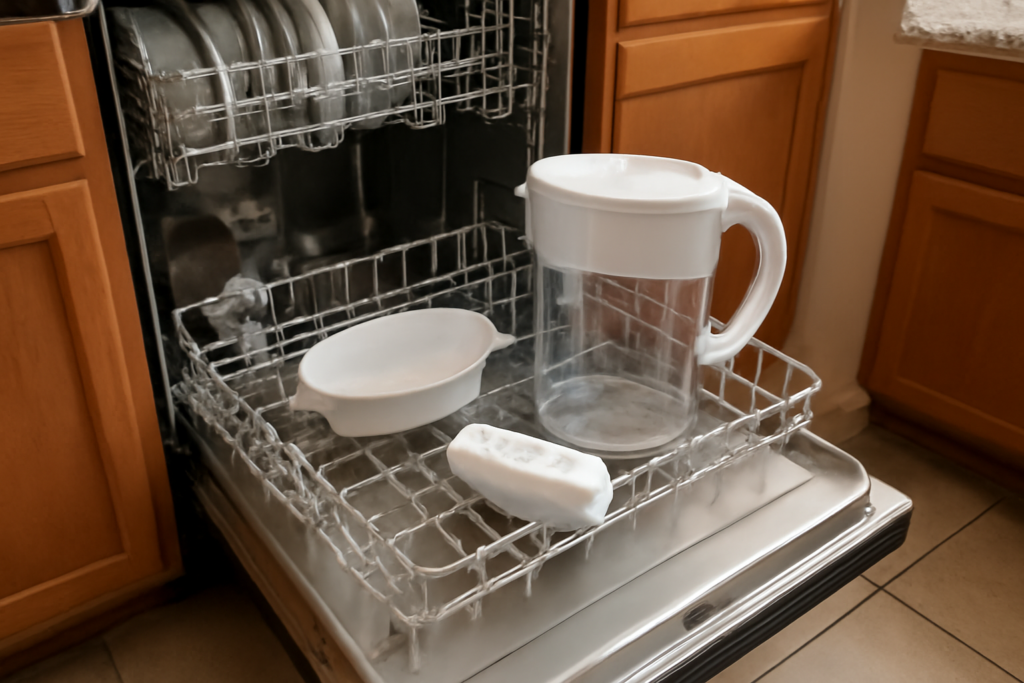
Most people grab their Brita, see grimy hard-water spots inside the lid, and head for the top rack of the dishwasher without checking the manual. The real answer to can you put a Brita in the dishwasher depends on which Brita model you own, where you place it, and what wash cycle runs. Get it wrong and you’ll warp the reservoir, destroy the filter, or void the warranty Brita prints right on the box.
- The Quick Answer Brita Customer Service Gives
- What Heat Does to Brita Plastic
- Which Brita Parts Are Truly Dishwasher Safe
- The Right Way to Hand-Wash a Brita
- Cleaning the Lid and Pour Spout
- How Often You Need to Clean the Pitcher
- What to Do If You Already Ran It Through
- Better Alternatives for Easy Cleaning
- The Bottom Line
The Quick Answer Brita Customer Service Gives
Brita’s official guidance is hand-wash only for pitchers, dispensers, and most lids. The plastic is rated for cold and warm water but not the 130 to 160 degree F heat plus high-pressure spray jets inside a typical Bosch, Whirlpool, or GE dishwasher. Heat damages the polypropylene reservoir and warps the lid so the filter seal leaks.
The one exception is the Brita Stream pitcher, where the reservoir and lid can go on the top rack only, on a low-heat or no-heat dry cycle. Always remove the filter first. Putting a filter through a dishwasher cycle saturates the activated carbon with detergent and ruins the media inside.
What Heat Does to Brita Plastic
Brita pitchers are molded from BPA-free polypropylene rated for continuous use up to about 212 degrees F at boiling, but only briefly. A dishwasher’s drying element on a normal cycle can hit 170 to 180 degrees F for 45 minutes straight. That sustained heat warps the rim where the lid sits, breaks the seat for the filter, and shortens the life of the pour-spout flap.
The carbon-block filter inside the cartridge is the bigger casualty. Hot water and dish detergent pull oils and surfactants into the carbon pores, blocking adsorption sites that are supposed to capture chlorine, mercury, and copper. Even if the filter still pours water afterward, it stops filtering effectively.
Which Brita Parts Are Truly Dishwasher Safe
Across the current Brita lineup, only the Stream pitcher reservoir and lid carry a top-rack-safe label. That includes the 10-cup Stream Rapids and the Stream Plus models sold at Target and Walmart for $24 to $34. Standard Everyday, Grand, and Slim pitchers all carry hand-wash labels.
Bottle and faucet-mount filters are entirely off-limits. The 26-ounce Premium Filtering Water Bottle has electronic components in the lid on some models, and the faucet-mount system includes O-rings that swell under heat.
The Right Way to Hand-Wash a Brita
Empty the pitcher, remove the filter, and set the filter on a clean dish towel to drain. Mix one tablespoon of plain white vinegar into 2 cups of warm tap water and pour it into the reservoir. Use a non-abrasive sponge or bottle brush from brands like OXO Good Grips to scrub the inside walls, paying attention to the corners where biofilm collects.
Rinse with cool tap water until you no longer smell vinegar. Pat the reservoir dry with a microfiber cloth or air-dry upside down on a drying rack. Skip dish soap with strong fragrance because residue lingers in plastic and ends up in your drinking water.
Cleaning the Lid and Pour Spout
The lid is where mineral buildup hides. Hard water leaves a white crust around the fill flap and the air vent. Dunk the lid in a 50/50 white vinegar and water bath for 15 minutes, then scrub with a soft toothbrush. Rinse twice with cool water and shake off excess.
If you see pink or black spots, that’s biofilm from a slow drip and standing water. Soak the lid in a solution of 1 teaspoon unscented bleach per gallon of cold water for 5 minutes, then rinse three times. Avoid mixing bleach with vinegar in the same session because the combination releases chlorine gas.
How Often You Need to Clean the Pitcher
Run a vinegar wash on the reservoir and lid every 2 to 4 weeks for households on municipal water. Switch to weekly cleaning if you’re on well water or in a hard-water region like Phoenix, Las Vegas, San Antonio, or Tampa. Replace the filter every 40 gallons or about every 2 months for the standard Brita pitcher filter, every 6 months for the LongLast+ filter.
A clean pitcher saves you money on filters. Mineral deposits trap dust and reduce flow rate through the cartridge, which makes the filter feel spent faster than its rated life. A 4-pack of standard filters runs $19.99 at most retailers, and the LongLast+ four-pack hits $44.99.
What to Do If You Already Ran It Through
If you accidentally washed a non-Stream pitcher in the dishwasher, inspect the rim for warping by setting the lid in place and pressing down evenly. Any gap larger than 1/16 inch means the seal is broken and the filter will leak past the gasket. Replace the pitcher rather than the filter alone.
Check the reservoir for hazy spots or stress cracks, especially along the corners. Cloudy plastic that didn’t exist before signals heat damage and microscopic cracks where bacteria can colonize. Brita pitchers under one year still in original purchase records may qualify for replacement through customer service at the number on the box.
Better Alternatives for Easy Cleaning
If you want true dishwasher-safe filtration, look at the ZeroWater 10-cup pitcher, which lists top-rack-safe parts, or stainless-steel options like the Pur Plus pitcher. None of these match Brita’s filter availability at retail, but they survive the wash cycle without warping.
- Brita Stream pitcher: top rack only, no heat dry, remove filter first
- All other Brita pitchers and dispensers: hand-wash only
- Brita filtering bottles: hand-wash only
- Brita faucet mounts: wipe down with damp cloth, never submerge
- Brita filters: never wash in any way, replace on schedule
The Bottom Line
For most Brita owners, the answer to can you put a Brita in the dishwasher is no. The Stream model is the only exception, and even then only the top rack with the heat off. A 5-minute hand-wash routine with vinegar and warm water keeps the pitcher pouring clean for years and protects the filter performance you paid for.