If you are staring at a dated kitchen or bathroom floor and wondering can you tile over linoleum instead of tearing it out, the short answer is often yes, but only when specific conditions are met. Tiling over existing linoleum or vinyl can save the mess and labor of removal, but it only works when the old floor is well-adhered, flat, and properly prepped, and when the structure underneath can carry the added weight. Get the prep wrong and you risk cracked tiles and failed grout down the road. This guide explains exactly when it works, how to do it right, and when you must remove the linoleum first.
Part of our Tile & Grout guide — explore the full guide →
The Honest Answer: It Depends
Tile is rigid and unforgiving. It needs a stable, flat, solid base, and any movement or weakness beneath it telegraphs up into cracked tiles and broken grout joints. Linoleum, by contrast, is a flexible sheet good. Tiling directly over it can succeed, but only if the linoleum is essentially acting as part of a sound, immovable floor and you take steps to give the tile a proper bonding surface.
In practice, most professionals prefer to install cement backerboard or an uncoupling membrane over the linoleum rather than bonding tile straight to it, because that creates a reliable substrate the tile can grab. Bonding thinset directly to a slick linoleum surface is risky and not recommended in most cases.
When You CAN Tile Over Linoleum
You can proceed with tiling over linoleum when all of these conditions are true:
- The linoleum is firmly adhered with no loose edges, bubbles, or peeling. A floor that lifts will take your new tile with it.
- It is a single layer over a sound subfloor, not multiple layers stacked over the years.
- The surface is flat and even, with no significant dips, ridges, or damaged areas.
- The subfloor underneath is solid and rigid, with no flex, soft spots, or moisture problems.
- The floor can handle the added height and weight of backerboard and tile without causing transition or door-clearance issues.
Even when these are met, plan to add a proper bonding layer rather than tiling straight onto the linoleum. That extra step is what makes the difference between a floor that lasts and one that fails.
When You Should Remove It Instead
Removal is the right call when the existing floor cannot provide a stable base. Pull up the linoleum first if:
- It is loose, peeling, bubbling, or cushioned (a soft, padded vinyl that compresses).
- There are multiple layers of flooring already stacked up.
- The subfloor is damaged, soft, water-stained, or flexes when you walk on it.
- Adding height would create problems with doors, appliances, or transitions.
- You suspect the old flooring or its adhesive may contain asbestos.
That last point deserves caution. Some older linoleum and vinyl flooring and their adhesives, especially products made decades ago, can contain asbestos, which is hazardous when disturbed. If your floor is old and you are unsure, do not sand or aggressively scrape it. Have it tested and, if needed, removed by a qualified abatement professional.
How to Prep Linoleum for Tile
When the floor passes inspection and you decide to tile over it, careful prep is everything. The general approach, following your materials’ instructions, looks like this:
- Clean thoroughly. Remove all grease, wax, soap residue, and dirt so nothing interferes with bonding.
- Deglaze and scuff. Linoleum often has a glossy finish; scuff-sand or use the method the membrane or backerboard maker recommends to create tooth.
- Repair and flatten. Fix any low spots or damage so the surface is flat and uniform.
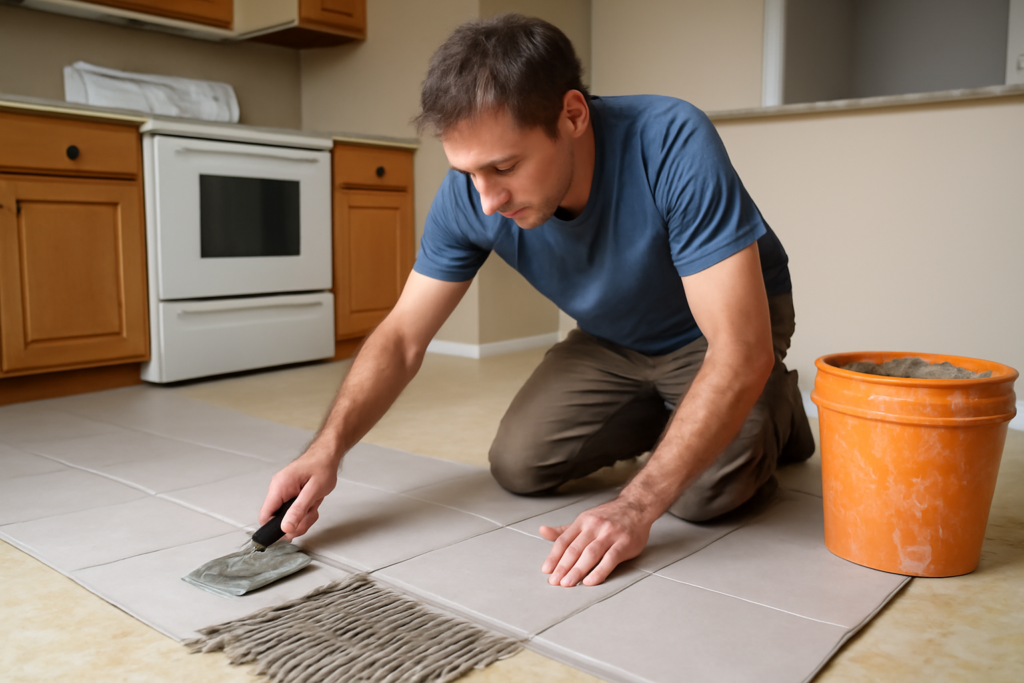
- Install a bonding layer. Set cement backerboard in thinset and fasten it per the manufacturer’s pattern, or apply an uncoupling membrane over the prepped linoleum.
- Treat seams. Tape and mud backerboard seams or follow the membrane’s seam instructions.
- Tile as normal. Spread thinset, set the tile with spacers or levelers, then grout and seal once cured.
Backerboard gives you a proven, rigid bonding surface, while an uncoupling membrane both bonds the tile and helps absorb minor movement to prevent cracks. Either is far more reliable than trusting thinset to grip bare linoleum.
Watch the Floor Height and Weight
Two practical issues catch people off guard. First, every layer you add raises the floor. Linoleum plus backerboard plus thinset plus tile can add an inch or more, which may keep doors from swinging, create awkward transitions to adjoining rooms, or interfere with appliances and toe kicks. Measure before you commit. Second, tile and backerboard are heavy, so confirm the subfloor and joists can carry the load, especially in older homes or on upper floors. When in doubt, consult a contractor.
Tiling Over Linoleum vs. Removing It
It helps to weigh the two paths directly so you choose with clear eyes. Tiling over linoleum saves the considerable labor of scraping up old flooring and stubborn adhesive, avoids the dust and mess of removal, and sidesteps the risk of disturbing an old floor that might contain asbestos. The trade-offs are added floor height, added weight on the structure, and the requirement to install a proper bonding layer so the tile has something reliable to grip.
Removing the linoleum, on the other hand, lets you start from a known, solid subfloor, keeps the finished floor height lower, and gives you a chance to inspect and repair the subfloor before you tile. The downsides are more labor, more mess, and, with older flooring, the possibility of encountering hazardous material that requires professional handling. For many homeowners, the deciding factors come down to the condition of the existing floor, how much added height the room can tolerate, and whether the structure can carry the extra weight. When the linoleum is sound and height is not an issue, tiling over it with backerboard or a membrane is efficient and reliable; when any of those conditions fail, removal is worth the extra effort.
When to Bring in a Professional
This is a project many confident DIYers handle, but a few situations call for help. Get professional input if you suspect asbestos, if the subfloor shows flex or moisture damage, if the floor spans a large area, or if you are unsure whether the structure can handle the added weight. A pro can assess the substrate, recommend the right membrane or backerboard, and ensure the finished floor will last.
The Bottom Line
So, can you tile over linoleum? Yes, when the linoleum is well-adhered, flat, single-layer, and sitting on a solid subfloor, and when you add a proper bonding layer such as cement backerboard or an uncoupling membrane rather than tiling directly onto it. Remove the old floor if it is loose, cushioned, multi-layered, damaged, or possibly asbestos-containing. Respect floor height and weight, prep meticulously, and your new tile will reward you with a durable, professional-looking floor that lasts for decades.
Prefer to explore on your own?
See how new flooring looks in your actual room in seconds — free, no signup.
Try the free Floor Studio →