The most under-used part of most deep cleaners is the little handheld tool clipped to the back. A carpet cleaner with upholstery attachment is really two machines in one: a full-size floor extractor and a portable hand tool that cleans sofas, mattresses, stairs, and car interiors. Homeowners who master that attachment get far more value than those who only push the main head around the living room. This guide explains how the tool works, what to look for when buying, and the exact technique for spotless furniture.
- What the Upholstery Attachment Actually Does
- Where You Will Actually Use It
- What to Look for When Buying
- Popular Models That Include the Tool
- How to Clean Upholstery the Right Way
- Solution, Odor, and Maintenance Tips
- Is It Worth It Over a Floor-Only Cleaner?
- Storing and Getting the Most From the Tool
- Frequently Asked Questions
What the Upholstery Attachment Actually Does
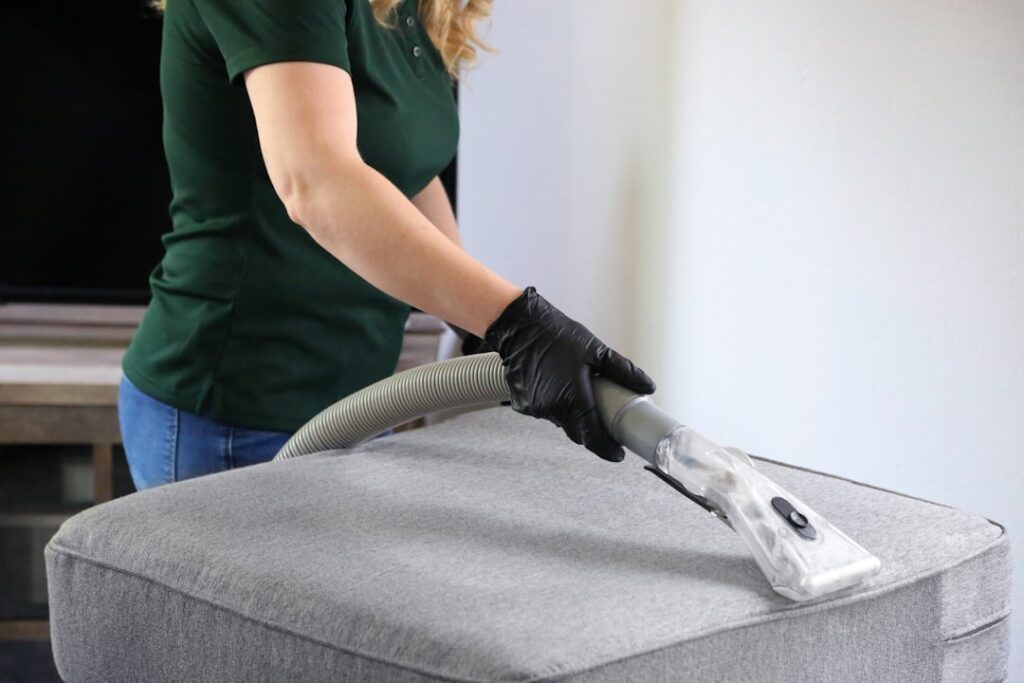
The upholstery tool is a handheld nozzle that connects to your carpet cleaner by a flexible hose. When you press its trigger, it sprays the same hot-water-and-solution mix your floor head uses, then a small suction slot immediately pulls the dirty water back into the machine’s recovery tank. It brings the deep-clean power of the full unit to surfaces you could never roll a floor head across.
Because the spray, scrub, and extraction happen at your hand rather than on a big rotating brush, you get precise control. That makes it ideal for vertical surfaces like sofa backs, tight spots like stair edges, and delicate zones like car upholstery where a full machine simply will not fit.
Where You Will Actually Use It
Once people try the tool, they find uses everywhere. The most common jobs include:
- Sofas and armchairs: lift years of body oils, food spills, and pet dander from cushions and arms
- Staircases: clean carpeted treads and risers the big head can’t safely tackle
- Mattresses: extract sweat stains and freshen the sleeping surface
- Car interiors: seats, floor mats, and cargo areas come out looking detailed
- Area rug edges and corners: spots where the main machine leaves a border
- Vehicle and boat carpet: tight footwells and trunk liners
That versatility is the entire reason to prioritize a model that includes the attachment rather than buying a floor-only cleaner and a separate spot device.
What to Look for When Buying
Not all attachments are equal, and the hose and tank design matter as much as the machine’s motor. Focus on a few practical factors before you pick a model.
Hose Length and Reach
A hose of at least six feet lets you clean an entire staircase or reach across a sectional without dragging the base unit constantly. Short hoses turn furniture cleaning into an awkward shuffle. Some premium models offer eight-foot hoses that reach a second-row car seat from the driveway.
Tool Size and Bristles
A wider nozzle covers a sofa faster, while a narrower one gets into stair corners and seat seams. Built-in bristles or a scrubbing edge help agitate ground-in stains on the pull stroke, which matters on textured upholstery.
Heated Cleaning and Tank Separation
Models with a heated cleaning feature keep the water warm for better stain release, and true dual-tank separation means you are never spraying recycled dirty water back onto your couch. Both features noticeably improve results on set-in stains.
Popular Models That Include the Tool
Several mainstream machines ship the upholstery attachment in the box. Bissell’s ProHeat 2X series and Little Green portable are perennial favorites, with the Little Green being purpose-built as a compact upholstery and spot cleaner. Hoover’s SmartWash and Power Scrub Elite lines include pet and upholstery tools, and full-size units from both brands typically bundle a hand tool with the floor cleaner. Rental machines from grocery and hardware stores also come with an upholstery hand tool, so you can test the workflow before buying.
Expect to spend $120 to $300 for a capable full-size cleaner with a good attachment, or $90 to $150 for a dedicated portable spot-and-upholstery unit like the Little Green. The portable’s smaller tank means more refills, but it weighs a fraction of a full machine and stores on a shelf.
How to Clean Upholstery the Right Way
Good technique separates a fresh sofa from a soggy, over-wet mess. Follow a deliberate sequence rather than blasting solution everywhere.
- Check the fabric tag for a cleaning code. “W” means water-based cleaning is safe, “S” means solvent only, “S/W” allows both, and “X” means vacuum only, no wet cleaning.
- Vacuum first to pull off loose crumbs, hair, and surface dust so they don’t turn to mud.
- Spot-test the solution on a hidden area to check for color transfer before you commit to the whole piece.
- Spray lightly and extract, pressing the trigger for a short burst, then releasing and pulling back to suck the moisture up. Do not soak the cushion.
- Do dry passes with the trigger off to remove as much water as possible, which is the key to fast drying.
Keep the fabric slightly damp, never saturated. Over-wetting upholstery pushes moisture into the foam, where it dries slowly and can grow mildew. A fan aimed at the piece cuts dry time to a few hours.
Solution, Odor, and Maintenance Tips
Use a formula rated for upholstery, and choose a pet-enzyme version for accidents on furniture or car seats. Avoid heavy detergent doses; residue left in fabric attracts dirt and leaves a crunchy feel. For odors, an enzyme spray applied before extraction does far more than repeated water passes.
After every session, run clean warm water through the hand tool to flush the spray jet and suction path, then let it dry with the cap off. A clogged upholstery jet is the most common failure, and it is almost always dried solution rather than a broken part. Wipe the nozzle’s clear window so you can watch the dirty water flow, which tells you when a spot is truly clean.
Is It Worth It Over a Floor-Only Cleaner?
For nearly every household, yes. The attachment adds little to the price but roughly doubles what the machine can do. If you have furniture, stairs, or a vehicle you care about, the upholstery tool pays for itself the first time you rescue a stained couch cushion instead of replacing it.
Storing and Getting the Most From the Tool
Because the upholstery attachment lives clipped to a full-size machine, it is easy to forget you own it. Make a habit of pulling it out during every deep-clean session, not just when a stain appears. Running the hand tool over the sofa and stairs while the tanks are already full and warm costs you ten extra minutes and doubles the value of the water you have mixed.
Keep the attachment and its hose fully dried between uses so no mildew develops inside the tube. Coil the hose loosely rather than kinking it tight, since a permanent kink restricts both spray and suction. If your machine’s hose is on the short side, working from a stair landing or repositioning the base unit halfway through a sofa keeps you from straining the connection. A quick pre-vacuum of the furniture each time also protects the tool’s suction path from clogging with pet hair.
Frequently Asked Questions
Can I use the upholstery attachment on all fabric types?
Only on fabrics coded “W” or “S/W” for water-based cleaning. Check the furniture tag first; “S” fabrics need solvent cleaners and “X” fabrics should only be vacuumed, never wet-cleaned.
Will the attachment work on car seats?
Yes, cloth car seats and floor mats clean up well with the hand tool. Use light spray bursts and thorough dry passes so moisture doesn’t sit in the seat foam.
How long does upholstery take to dry after cleaning?
With proper dry passes and a fan, most sofas and seats are dry in two to six hours. Over-wetting is the main cause of slow drying, so extract more than you spray.
Do I need special solution for the upholstery tool?
Use a formula rated for upholstery or a general carpet-and-upholstery cleaner. For pet stains and odors, an enzyme-based pet formula gives the best results.
Is a portable spot cleaner or a full machine with an attachment better?
A full machine handles whole rooms plus furniture, while a portable like the Little Green is lighter and easier for frequent spot and upholstery jobs. Choose based on how much wall-to-wall carpet you also need to clean.