Carpet shopping overwhelms people because the showroom hides the specs that actually matter behind a wall of soft, pretty samples. Good carpet selection isn’t about which sample feels nicest under your palm; it’s about matching fiber, pile, and density to how a specific room gets used. A plush you love in the store can flatten into a footprinted mess in a busy hallway, while a humble level-loop quietly outlasts it for years. Here’s the framework that keeps you from choosing on feel alone.
Start With Fiber Type
Fiber is the foundation of carpet performance, and four dominate the market. Each has a clear personality:
- Nylon: The most durable and resilient; bounces back from crushing. Best for high-traffic areas and stairs.
- Polyester (PET): Soft, stain-resistant, and colorful at a lower price. Great for bedrooms and family rooms.
- Olefin (polypropylene): Cheap, moisture- and fade-resistant, but crushes easily. Suits basements and indoor-outdoor use.
- Wool: Natural, luxurious, and naturally flame- and stain-resistant, but the priciest option.
Understand Pile Styles
Pile is how the yarn is looped or cut, and it dramatically changes both looks and durability. Cut-pile styles like plush and saxony feel soft and formal but show footprints and vacuum marks. Loop-pile styles like Berber and level-loop are tougher and hide traffic, making them ideal for busy spaces.
Textured cut-pile, sometimes called “trackless,” splits the difference: it’s soft underfoot yet hides footprints well, which is why it’s the most popular all-around choice for living areas. Patterned and cut-and-loop styles add visual interest but cost more.
Face Weight and Density
Two technical numbers predict how long carpet lasts, and showroom staff often gloss over them. Face weight is the ounces of yarn per square yard; higher generally means more durable, with 40 ounces or more indicating a solid quality carpet. Density measures how tightly the fibers are packed; press your fingers into the pile, and if you easily reach the backing, it’s loosely tufted and will wear faster.
Don’t chase face weight alone. A dense 40-ounce carpet outperforms a loosely tufted 50-ounce one. Density and fiber resilience together tell the real durability story.
Match Carpet to the Room
The right carpet for one room is wrong for another. Tailor your pick to traffic and function:
- Bedrooms: Soft plush or textured polyester for comfort; traffic is light.
- Family rooms: Durable textured nylon that hides footprints and resists crushing.
- Stairs and hallways: Dense, resilient nylon in a loop or low-pile style for maximum wear.
- Basements: Moisture-resistant olefin or solution-dyed polyester.
Padding Is Part of the Selection
Padding is invisible but it determines how your carpet feels and how long it survives. A quality pad of 6 to 8 pound density and roughly 7/16-inch thickness supports the carpet fibers, absorbs impact, and prevents premature crushing. The wrong pad voids many carpet warranties.
Resist the urge to cut costs here. Spending an extra $0.20 to $0.40 per square foot on better padding can add years to your carpet’s usable life, making it one of the best values in the whole project.
Color, Texture, and Practicality
Looks still matter, but choose with maintenance in mind. Mid-tone and flecked colors hide dirt and stains far better than solid pale beige or dark charcoal, both of which show every speck. Multicolor and patterned styles disguise traffic and spills, which is why they’re popular in family spaces.
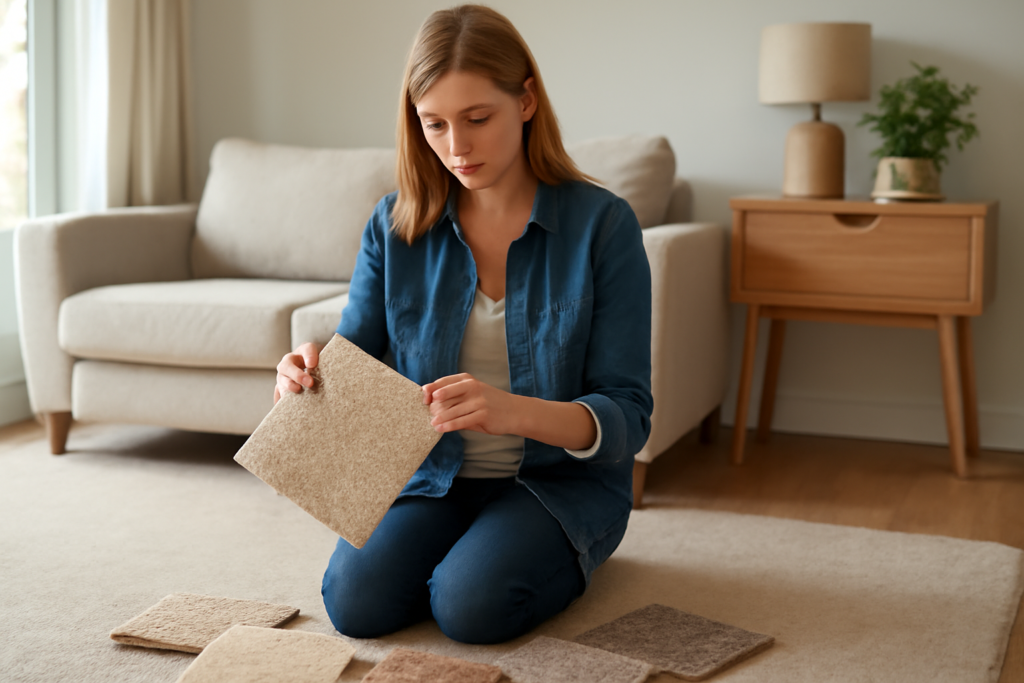
Order large samples and view them in your room’s actual lighting at different times of day. Carpet color shifts noticeably between fluorescent showroom light and natural home light.
Budgeting the Full Cost
Plan for the complete job, not just the carpet. Realistic line items include carpet at $1.50 to $8.00 per square foot, padding at $0.30 to $0.90, installation at $0.50 to $1.50, and removal of old flooring at $1 to $2. For a 500 sq ft area, a full project commonly runs $1,500 to $4,500 depending on quality.
Get two written quotes on identical scope so you’re comparing the same carpet, pad, and labor rather than mismatched bundles.
Stain and Wear Treatments
Modern carpet often comes with built-in performance treatments worth understanding. Solution-dyed fibers have color locked into the strand itself, so they resist fading and bleach far better than topically dyed carpet, a big advantage in sunny rooms and homes with kids. Factory stain-resist coatings, sold under various brand names, help spills bead up long enough to blot away.
Be aware that topical treatments wear off over time and with cleaning, while solution-dyed protection is permanent. If pets or children make spills a daily reality, prioritize a solution-dyed polyester or nylon, then maintain it with prompt blotting and periodic professional cleaning to keep the warranty valid and the carpet fresh.
Warranty Fine Print
Carpet warranties sound generous until you read the conditions. Most cover specific defects like excessive wear, matting, and staining, but only if you meet the maintenance requirements. Those typically include using the manufacturer-specified pad, keeping receipts for professional cleanings every 12 to 18 months, and installing the carpet professionally.
Pay attention to how terms are defined. “Texture retention” warranties may require the pile to lose more than 50 percent of its appearance before they pay out, which is a high bar. Read the exclusions before you buy so you know exactly what protection you’re actually getting.
Bringing It Together
Strong carpet selection works in order: pick the fiber for the room’s traffic, choose a pile style that hides wear, verify face weight and density, and pair it with a quality pad. Match each room to the right combination, choose a forgiving color, and budget the full installed cost. Follow that sequence and you’ll walk out with carpet that still looks good long after the showroom sample is forgotten.