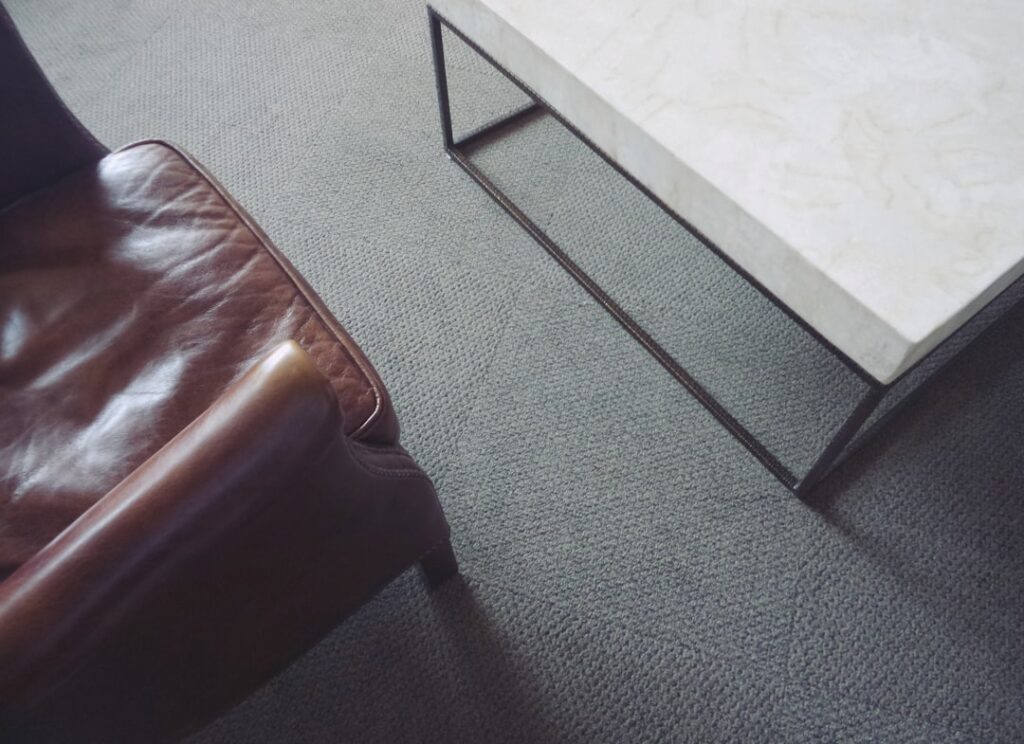
Modular carpet tiles have quietly become one of the smartest flooring choices for basements, offices, playrooms, and rentals, because you can replace a single stained square instead of recarpeting an entire room. If you are searching for carpet tiles nearby, you have more options than you might think, from big-box home centers to flooring specialty stores to online retailers that ship to your door. The right source depends on whether you want to feel the texture in person, get the lowest price, or have the widest selection. Knowing what to look for in the product matters even more than where you buy it.
Part of our Tile & Grout guide — explore the full guide →
Where to Buy Carpet Tiles
You have several practical avenues, each with trade-offs:
- Home improvement stores: Home Depot and Lowe’s stock peel-and-stick and interlocking tiles you can take home same-day.
- Flooring specialty stores: Local carpet retailers carry commercial-grade brands and offer installation.
- Office and commercial suppliers: Best for heavy-duty modular tiles in bulk quantities.
- Online retailers: FLOR, Milliken, and warehouse sites offer the widest color and pattern range, shipped to you.
For a small DIY project, a local store lets you match colors in person; for a designer look or a large quantity, online specialty brands win on selection.
What Carpet Tiles Cost
Pricing spans a wide range based on quality and backing. Budget peel-and-stick tiles start around $1 to $2 per square foot, mid-range residential tiles run $2 to $4, and premium designer or commercial-grade modular tiles reach $4 to $8 per square foot. Because a standard tile is 18 by 18 inches or 24 by 24 inches, it is easy to calculate exactly how many you need and to buy a few spares for future repairs.
Types of Carpet Tiles
Not all modular carpet is the same. The backing and installation method determine how the tiles perform:
- Peel-and-stick: Adhesive backing for quick DIY installs over clean, dry subfloors.
- Glue-down: Set with releasable adhesive for a permanent, shift-free floor.
- Interlocking: Puzzle-edge tiles that snap together, ideal for basements and play areas.
- Cushioned-back: Built-in padding for comfort and warmth underfoot.
For a basement that occasionally sees moisture, look for tiles with a waterproof or moisture-resistant backing so a minor flood does not ruin the whole floor.
Best Brands to Look For
When you shop carpet tiles nearby or online, a few names stand out. FLOR is the go-to for residential design, offering bold patterns and a modular system you can rearrange. Shaw and Mohawk dominate the mid-range with durable, stain-resistant options widely available at flooring stores. Milliken and Interface lead the commercial space with heavy-duty tiles engineered for high-traffic offices. Mannington and Tarkett round out the field with solid mid-tier choices.
How to Install Them Yourself
One of the biggest draws of carpet tiles is how DIY-friendly they are. The process is straightforward:
- Clean and dry the subfloor completely, removing any old adhesive or debris.
- Find the center of the room and snap chalk lines to keep your layout square.
- Dry-lay a few rows from the center outward to confirm spacing before sticking anything down.
- Peel and press, or apply releasable adhesive, working out from the center.
- Cut border tiles to fit with a sharp utility knife and a straightedge.
A typical 12-by-12-foot room takes a few hours and requires no special tools beyond a knife, a straightedge, and a chalk line.
Where Carpet Tiles Shine
Carpet tiles solve problems that broadloom carpet cannot. In a basement, the modular format and moisture-resistant backings handle the occasional damp spell. In a home office or playroom, you can pull and replace a single damaged tile in minutes. In a rental, the low cost and easy installation make them practical. They also let you mix colors for custom patterns, borders, and rugs without buying a fully custom floor.
Carpet Tiles Versus Broadloom
It helps to understand how modular tiles stack up against traditional wall-to-wall carpet. Broadloom comes in wide 12-foot rolls and gives a seamless look, but a single bad stain or burn can mean replacing the whole room. Carpet tiles trade a slightly more visible seam grid for unmatched repairability and easier DIY installation.
- Repairs: tiles win; swap one square instead of recarpeting
- Installation: tiles are far more DIY-friendly, no stretching or seaming tools
- Waste: tiles produce less offcut waste in odd-shaped rooms
- Seamless look: broadloom edges out tiles in a formal living room
For basements, offices, kids’ rooms, and rentals, the practicality of tiles usually outweighs broadloom’s smoother appearance.
Caring for Carpet Tiles
Modular carpet is easy to maintain, which adds to its appeal. Vacuum regularly as you would any carpet, and treat spills promptly by blotting rather than rubbing. The real advantage shows up with stubborn stains: if a square will not come clean, you simply lift it out and drop in one of the spares you bought, restoring the floor to like-new in minutes. For glue-down tiles, releasable adhesive lets you pop a tile up and re-press it. Rotating tiles from low-traffic to high-traffic areas occasionally also evens out wear and extends the floor’s life.
Buying Tips Before You Commit
A little planning prevents headaches. Always order 5 to 10 percent extra for cuts, waste, and future repairs, and keep the spares in the same dye lot. Check the tile’s traffic rating, since a residential tile will not hold up in a busy commercial entry. Feel the pile and backing in person when you can. And confirm the return policy before a big online order, because matching colors across separate shipments can be tricky. With the right product and a clean subfloor, finding quality carpet tiles nearby and installing them yourself is one of the easiest flooring projects a homeowner can tackle.