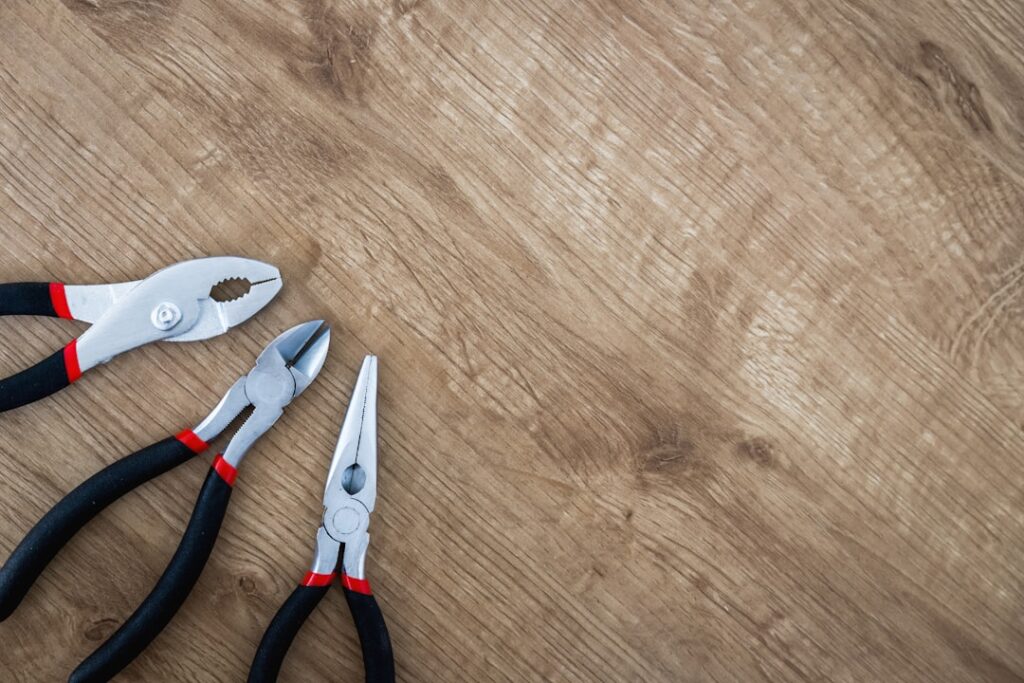
Carpet installation looks simple until you try it with the wrong gear and end up with wrinkles, gaps, and frayed edges. The right carpet tools are what let installers stretch carpet drum-tight, cut clean seams, and tuck edges so the floor looks professional and lasts for years. Whether you plan a full install or just a patch repair, knowing which tools do what helps you decide what to buy, what to rent, and where a pro is worth the call.
The Core Installation Tools
A handful of specialized tools handle the heavy lifting of stretching and securing carpet. None of them are exotic, but each does a job an ordinary toolbox cannot.
- Knee kicker: A padded tool you bump with your knee to grip and push carpet toward a wall. Essential for small rooms and closets. Around $30 to $70 to buy.
- Power stretcher: A pole-and-lever system that stretches carpet across a full room so it stays tight and wrinkle-free. Renting at $25 to $40 a day is common.
- Carpet tucker (stair tool): Used to push carpet edges neatly into the gap along tack strips.
- Wall trimmer: Trims excess carpet precisely along walls for a clean edge.
Cutting and Seaming Tools
Clean cuts and invisible seams separate amateur work from professional results. A sharp blade and a steady method matter as much as the tool itself.
- Carpet knife and utility knife: For trimming and rough cuts. Keep extra blades; dull blades tear backing.
- Row cutter and loop-pile cutter: Cut between fiber rows so seams line up without slicing through tufts.
- Seam iron and seaming tape: The iron melts heat-activated adhesive on the tape to bond two carpet edges into one continuous surface.
- Seam roller: Presses the joined edges into the adhesive for a flat, durable seam.
Tack Strips, Pad, and Fasteners
Before carpet goes down, the perimeter needs tack strips, thin wood strips studded with angled pins that grip the carpet backing. You nail these around the room about a half inch from the wall. Over them goes the padding, secured with staples on a wood subfloor or adhesive on concrete. A heavy-duty staple hammer or pneumatic stapler speeds this step considerably.
Repair Tools for Small Jobs
You do not need a full kit to patch a burn, snag, or pet-damaged spot. A few inexpensive items handle most repairs.
- Cookie-cutter patch tool: Cuts a clean circle so you can drop in a matching plug from a scrap.
- Double-sided carpet tape: Secures small patches and area-rug edges.
- Carpet adhesive and a heat patch kit: Bonds a replacement piece invisibly when you save offcuts from the original install.
What to Buy vs What to Rent
For a one-room project, buying a knee kicker, a quality carpet knife, and a tucker makes sense since they are cheap and reusable. The power stretcher and seam iron are pricey and bulky, so renting them for a weekend is the smart move unless you install carpet often. A full power stretcher can cost $150 to $400 to own, hard to justify for a single room.
A Typical Tool Sequence for a Room Install
Seeing how the tools work together clarifies why each one matters. A standard carpet install follows a logical order, and skipping a tool at any stage shows up in the finished floor.
- Prep: Nail tack strips around the perimeter with a hammer, leaving a quarter-inch gap from the wall.
- Padding: Roll out the pad and secure it with a staple hammer, then trim to the tack strips with a utility knife.
- Rough placement: Lay the carpet loosely, then make rough cuts with a carpet knife, leaving extra at the walls.
- Seaming: Join pieces with seaming tape and a seam iron, then press with a seam roller.
- Stretching: Anchor one wall, then stretch toward the others with the power stretcher, using the knee kicker for corners and small areas.
- Finishing: Trim along walls with a wall trimmer and tuck the edges into the tack strips with a tucker.
Maintaining Your Carpet Tools
Quality tools last for years with basic care. Keep carpet knives and trimmers fitted with fresh blades, since dull blades tear backing and force you to push harder. Wipe down the seam iron after use so adhesive does not build up on the plate, and store it where the cord will not kink. Check the teeth on the knee kicker and stretcher heads for damage, as worn teeth slip and fail to grip. Store everything dry to prevent rust on the metal components.
Safety and Pro Tips
Carpet knives are razor sharp, so always cut away from your body and retract the blade between cuts. Replace blades often; a dull edge requires more force and slips more easily. When stretching, anchor the carpet on one wall first, then stretch toward the opposite wall and corners in sequence so tension stays even. Acclimate the carpet in the room for a day before installing so it relaxes and stretches consistently.
When to Call a Professional
Some carpet projects reward DIY effort, and others are better left to a pro with the full tool kit. A small bedroom or closet, where the knee kicker can do most of the stretching, is well within reach of a determined homeowner. But large rooms with long seams, stairs, and tricky transitions demand a power stretcher and seam iron used with real skill, and mistakes there, visible seams, loose carpet that wrinkles within months, frayed edges, are expensive to fix. If your project involves stairs or more than one large seam, getting a quote from an installer is worth it. The tools in trained hands produce a tight, seamless floor that lasts the life of the carpet.
The Bottom Line
The right carpet tools turn an intimidating project into a manageable one. Buy the small, reusable items, rent the expensive stretchers and seam irons, and keep blades sharp. For large rooms with long seams or stairs, weigh the rental and effort against a professional install, where these same tools in experienced hands deliver a flawless, long-lasting floor.