
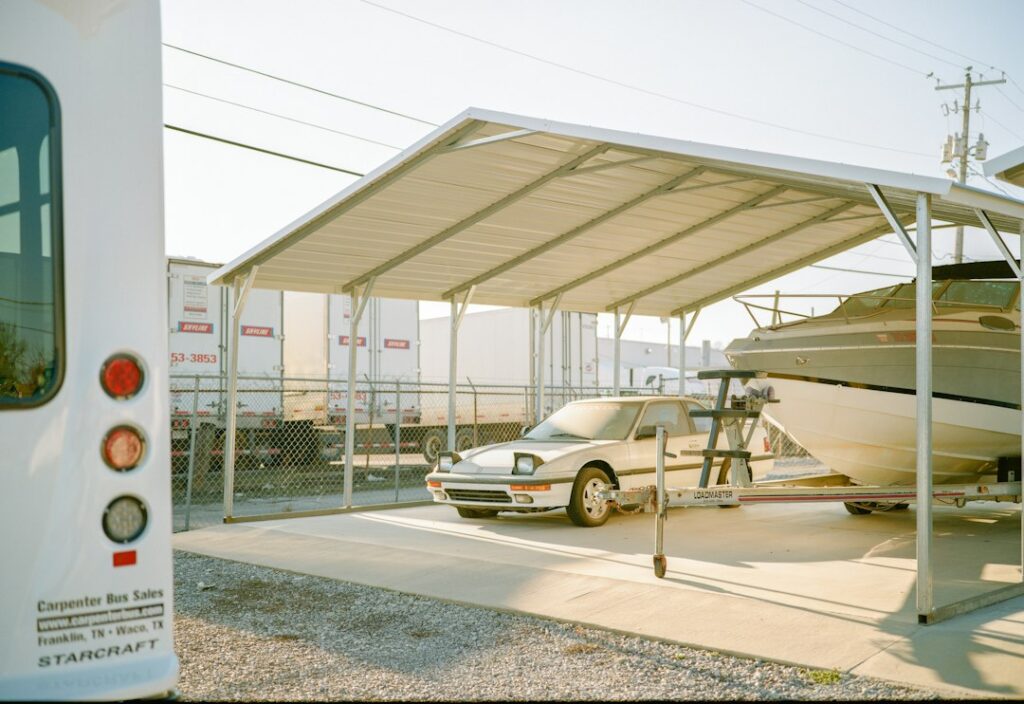
Bought a new truck or camper that no longer clears your carport? Carport extension legs can add 1 to 4 feet of height to many metal carports without replacing the roof. The method is straightforward: slide or bolt rated leg extensions onto the existing posts, brace them, and re-anchor the frame. The risk is in the lift. A carport roof is heavy and awkward, and raising it is the moment when serious injuries happen, so use the manufacturer’s leg kit, proper lifting equipment and enough helpers to control the frame at every step.
Raising a carport also changes how it behaves in wind. A taller structure catches more wind and puts more leverage on its anchors, so the original wind rating may no longer apply. Check with the manufacturer before you buy parts, and plan for stronger anchoring when you finish.
- How Carport Extension Legs Work
- Measuring for the New Height
- Tools and Materials
- Step-by-Step: Raising a Carport With Extension Legs
- Wind Rating After Raising
- Troubleshooting
- Extension Legs vs Replacing the Carport
- Safety Checklist Before Any Lift
- General Cost Ranges
- When to Call a Licensed Professional
- Frequently Asked Questions
How Carport Extension Legs Work
Most metal carports use square steel tubing for legs, commonly 2.5 by 2.5 inches. Metal carport extension legs are tubes sized to sleeve inside or over the existing legs, or base sections that bolt between the leg and the base rail. Some kits replace the original legs entirely with longer ones. Each approach transfers load differently, so only use extensions sold or approved for your carport model and tubing size.
Avoid homemade extensions made from random tubing, pipe or lumber. Mismatched wall thickness, poor overlap or a single bolt can create a weak joint that buckles in wind or under snow. A rated leg kit specifies the overlap length, bolt count and bracing needed for the new height.
Measuring for the New Height
- Measure what needs to fit. Measure the tallest point of your vehicle, including roof racks, antennas, AC units on a camper or a boat on a trailer.
- Add clearance. Leave at least 12 inches of space over that height to the lowest point of the frame or truss, more if the driveway slopes.
- Measure current leg height. Measure from the base rail or ground to the bottom of the roof frame at the side, and note the peak height.
- Note the tubing size and gauge. Check whether legs are 14-gauge or 12-gauge and the exact outside dimensions.
- Calculate the extension. The difference between the needed clearance and the current height tells you which kit length to order.
A 12 foot tall carport side height is a common target for RVs and taller trucks. Going that high on a frame originally designed for 6 or 7 feet is a big change, and the manufacturer may require additional legs, heavier bracing or a full re-certification.
Tools and Materials
- Manufacturer-approved carport extension leg kit with bolts and braces
- Rated jacks, a telehandler, scaffolding towers or another proper lifting method recommended by the maker
- Temporary supports or cribbing rated for the load
- Socket set, impact driver and wrenches
- New anchors (augers or concrete wedge anchors) rated for the taller structure
- Level and tape measure
- Stable ladders or work platforms
- Hard hats, gloves, eye protection and steel-toe boots
- At least four helpers for a typical one- or two-car carport
Step-by-Step: Raising a Carport With Extension Legs
- Get approval and permits. Confirm with the manufacturer that the new height is allowed and ask what bracing and anchors are required. Many areas need a permit to modify a permanent structure.
- Clear the site. Move vehicles and stored items out. Remove side panels if the instructions call for it, since panels add weight and catch wind.
- Pick a calm day. Do not attempt a lift in any wind. A raised roof acts like a sail.
- Disconnect anchors. Remove anchors from the legs you will lift, leaving the others in place until each side is ready.
- Lift evenly with proper equipment. Raise one side a little at a time using rated lifting equipment, keeping the frame as level as possible. Never stand under a lifted frame. Set rated supports beneath it before anyone works near the legs, and keep hands and feet clear of pinch points.
- Install extensions. Slide or bolt each extension in place with the required overlap and every bolt specified. Do one leg at a time if the instructions allow, or support the whole side before attaching extensions.
- Lower onto the new legs. Lower slowly and confirm each leg seats fully on its base rail or plate.
- Repeat on the other side. Keep the frame square by checking diagonals.
- Add bracing. Install the knee braces and cross braces the kit calls for. Taller legs need more bracing to resist racking.
- Re-anchor. Install new anchors at every leg, rated for the taller height. Call 811 before driving new augers or digging footings.
Wind Rating After Raising
Height increases wind load and leverage on every connection. A carport certified for a certain wind speed at 7 feet may not carry that same rating at 10 or 12 feet. Ask the manufacturer for the rating of the new configuration in writing, especially if your area requires certified structures. In high-wind regions, the taller version may need extra legs, 12-gauge tubing or a slab with engineered anchors. If the maker cannot rate the change, a structural engineer can evaluate it, or replacement with a purpose-built tall carport may be the safer and simpler answer.
Troubleshooting
- Extensions do not fit: The tubing size or gauge does not match. Stop and order the correct kit rather than forcing or modifying parts.
- Frame wobbles after raising: Bracing is missing or bolts are loose. Add every brace in the kit and tighten all hardware.
- Roof is out of level: Legs were cut or set unevenly, or the ground is sloped. Adjust with rated base plates or correct the base rail.
- Panels no longer reach the ground: Order taller side panels or a filler strip to match the new height.
Extension Legs vs Replacing the Carport
Carport extension legs make the most sense when the existing frame is in good condition, the roof panels are sound and you only need a modest height gain. In that situation, a rated kit preserves the roof you already paid for and usually costs less than a new structure. It also keeps the same footprint, so setbacks and slab placement do not change.
Replacement is often the better call when the frame shows rust at the base, the tubing is a light gauge, or you need to go from a low side height to something like a 12 foot tall carport for an RV. Large height increases on a light frame tend to require so many extra legs, braces and anchors that the cost approaches a new unit, and a purpose-built tall carport comes with its own certified rating. A new build also lets you choose vertical roof panels, closer leg spacing and a wider span sized for the vehicle you own now.
Get quotes for both before committing. Ask each supplier for the wind and snow ratings of the finished structure so you are comparing like for like.
Safety Checklist Before Any Lift
- Manufacturer approval for the new height is in hand, in writing if possible.
- The forecast is calm, with no gusts expected during the work window.
- Lifting equipment and supports are rated well past the weight of the roof.
- Every helper knows the signals for lift, hold and lower, and one person is in charge.
- Nobody will stand or reach under the frame while it is raised.
- Any wiring to lights or outlets has been shut off at the breaker and confirmed dead with a non-contact voltage tester, or disconnected by an electrician.
- New anchors and all bracing are on site before the old anchors come out.
General Cost Ranges
Extension leg kits for a small carport commonly run from a few hundred dollars to over a thousand, depending on height, tubing size and the number of legs. Add anchors, taller side panels and equipment rental. Professional raising usually adds labor costs in the hundreds to low thousands. For large height increases, replacing the carport with a taller model can cost less than heavy modifications.
When to Call a Licensed Professional
Hire the manufacturer’s crew or a licensed contractor for any carport larger than a single-car unit, any lift over a couple of feet, or a structure attached to a building. Professionals bring rated lifting equipment and enough trained hands to control the frame safely. If the carport has lighting or outlets, have a licensed electrician disconnect and reconnect the wiring. Check with your building department, since modified heights may need a new permit, setbacks and updated engineering.
Frequently Asked Questions
Can you raise an existing metal carport?
Many metal carports can be raised with manufacturer-approved carport extension legs, plus extra bracing and new anchors. Confirm compatibility and the new wind rating first.
How much height can extension legs add?
Kits commonly add 1 to 4 feet. Larger increases may require additional legs, heavier tubing or a new structure.
Is it safe to raise a carport myself?
Only with rated lifting equipment, several helpers and calm weather. Never stand under a lifted frame. For larger carports, hire professionals.
Does raising a carport affect its wind rating?
Yes. Taller structures face higher wind loads, so the original certification may not apply. Ask the manufacturer or an engineer to rate the new height.
Do I need a permit to raise a carport?
Often, especially for permanent carports. Check with your local building department before starting.


