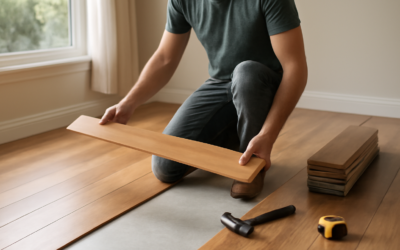
If you have been comparing local flooring shops, you have probably run across the name more than once. Casa flooring is a brand-style name used by various flooring providers and product lines, and because the name is not tied to a single national standard, what you actually get depends entirely on the specific company or collection behind it. The smart approach is to treat the name as a starting point and evaluate the underlying products, installation, and service the way you would any flooring purchase. This guide explains what a casa flooring provider typically offers, the pros and cons of buying from a regional flooring company, and exactly what to check before you commit. For current products, pricing, and locations, confirm details with the official source directly.
What Casa Flooring Typically Refers To
Names that include “casa,” Spanish for house or home, are popular across the flooring industry because they signal warmth and domesticity. In practice, a casa flooring business usually operates as a regional flooring retailer and installer, carrying a mix of hardwood, laminate, luxury vinyl, tile, and carpet from established manufacturers. Some sell a private-label product line under the casa name; others simply use it as a storefront brand while stocking recognizable national brands.
Because the term spans many independent businesses, you should never assume two casa flooring companies offer the same products, warranties, or quality. The first job is identifying exactly which company you are dealing with, where it operates, and which actual flooring lines it sells. From there, the evaluation is the same as for any flooring purchase.
What a Regional Flooring Provider Usually Offers
Most casa-style flooring companies bundle product sales with measuring and installation, giving you a single source for a project. Understanding the typical menu helps you ask the right questions.
- Material selection: A showroom or sample range covering several flooring categories and price tiers.
- In-home or in-store consultation: Help matching a product to your room’s traffic, moisture, and style.
- Measuring and estimates: A professional measure and an itemized or bundled quote.
- Installation: Crews, often local subcontractors, who handle removal, prep, and laying the new floor.
- Warranty support: A blend of the manufacturer’s material warranty and the installer’s labor warranty.
The advantage of a one-stop provider is coordination: one company owns the result from sample to finished floor. The risk is that quality varies between firms and even between crews, so the brand name alone tells you little about the workmanship.
The Pros of Buying from a Casa Flooring Company
Regional flooring providers offer real advantages over buying materials yourself and hunting for a separate installer. Local knowledge is the big one. A company that has worked in your climate knows which products handle your humidity swings and which subfloor issues are common in your area’s housing stock.
You also get accountability under one roof. If a plank fails or a seam lifts, you have a single point of contact rather than a finger-pointing match between a big-box store and an independent installer. Many regional shops carry mid-range and premium lines that big-box retailers do not stock, and their installers tend to be more experienced with specialty work like stair nosing, intricate tile layouts, and transitions. For homeowners who want guidance and a managed project, that hand-holding is worth something.
The Cons and Things to Watch
The trade-offs mirror those of any smaller flooring business. Pricing is often higher than big-box stores because regional companies carry showroom and staffing overhead, though they may justify it with better service and product. Without an itemized quote, it can be hard to tell how much is material and how much is labor.
Installation quality is the variable that matters most, and it depends on the specific crew, not the brand. A company can sell excellent product and still send an inexperienced subcontractor. Selection may also be narrower than a national chain, and a private-label “casa” product can be harder to research because it lacks a widely reviewed manufacturer name behind it. None of these are dealbreakers, but each is a reason to verify rather than assume.
How to Evaluate a Casa Flooring Provider
Run any flooring company through the same checklist before you sign. A few minutes of due diligence saves thousands in regret.
- Confirm the exact company: Get the legal business name, location, and license number, and verify it is in good standing.
- Identify the real products: Ask for the manufacturer, collection, and specs. For vinyl, get the wear layer in mils; for wood, the species, thickness, and finish.
- Demand an itemized quote: Material, labor, old-floor removal, disposal, and prep listed separately.
- Compare bids: Get at least one competing quote from another local store or a big-box installer for the same or equivalent product.
- Separate the warranties: Know what the manufacturer covers (the material) versus what the installer covers (the workmanship), in writing.
- Read recent reviews: Look specifically for comments on installation quality and post-sale service, not just the showroom experience.
If a private-label product is involved, ask who actually manufactures it and whether the warranty is backed by that maker or only by the retailer. A warranty is only as strong as the company standing behind it.
Is Casa Flooring Right for You?
A casa flooring provider can be an excellent choice if you value local expertise, a managed start-to-finish project, and access to product lines beyond the big-box selection, and you are comfortable paying a modest premium for that service. If your priority is the lowest possible price and you are willing to source materials and an installer separately, a national chain or independent contractor may cost less.
Either way, the winning strategy is the same. Identify exactly which company and which products you are evaluating, get an itemized quote, compare it against a competing bid, and put both warranties in writing before any work begins. Treat the casa flooring name as a label, not a guarantee, and judge the provider on the verifiable specifics. For the most accurate and current information on a particular casa flooring company or product line, always go straight to its official source.
Prefer to explore on your own?
See how new flooring looks in your actual room in seconds — free, no signup.
Try the free Floor Studio →