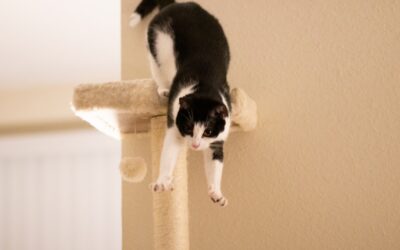
Cats love to disappear, and a cat condo gives them a place to do it without taking over your closet or the bottom of a bookshelf. Unlike an open tower with flat perches, a condo is built around enclosed cubbies: small rooms with an entry hole where a cat can curl up out of sight. Getting one right is mostly about sizing those cubbies, choosing a footprint that fits the room, and picking materials you can actually keep clean.
The short version: measure your cat stretched out, then pick cubbies with interior floors at least a few inches longer than that and entry holes of 7 to 9 inches for most adult cats. Choose a corner cat condo for small rooms, a freestanding unit for open floor, and a style with removable or wipeable liners if you want easy cleaning. Anchor anything tall to a wall stud.
- What a Cat Condo Is and How It Differs From a Tower
- Sizing Cubbies and Entry Holes
- Styles: Corner, Indoor Freestanding, Feeding Station and More
- Materials and Cleaning Carpeted Interiors
- Assembly and Anchoring
- Troubleshooting Common Problems
- Costs and When to Build or Hire
- Frequently Asked Questions
What a Cat Condo Is and How It Differs From a Tower
A condo is any structure with at least one enclosed box or tube. Some are simple single-cube hideaways that sit on the floor. Others stack two or three cubbies with a perch on top, which is what people often call a cat condo tree or a cat castle tower. Open towers, by contrast, are mostly posts and flat platforms built for climbing and lookout.
Many cats use both. The condo is the bedroom, the tower is the jungle gym. If your cat hides under beds or in boxes, an enclosed unit usually gets more use than another tall perch. If your cat patrols windows, a combination unit with a cubby low and a perch high covers both habits.
Sizing Cubbies and Entry Holes
Undersized cubbies are the most common reason a condo sits empty. Most cats want to lie in a loose curl or partly stretched, and they will ignore a box that forces a tight ball.
- Interior floor: 14 by 14 inches works for small and average cats; 16 by 18 inches or larger for big breeds.
- Interior height: at least 10 to 12 inches so a cat can turn around comfortably.
- Entry hole: 7 to 9 inches across for most adults, 10 inches or more for large cats. Two openings on different sides help a cat feel less cornered.
- Wall thickness: 1/2 to 3/4 inch board keeps the box rigid and quiet when a cat jumps in.
Measure your cat from nose to base of tail and compare that to the interior floor. Add 2 to 4 inches for comfort. For multi-cat homes, one cubby per cat plus one spare reduces standoffs.
Styles: Corner, Indoor Freestanding, Feeding Station and More
Corner cat condo
Corner units have a triangular or L-shaped footprint that tucks into a 90-degree corner. They save floor space in bedrooms, apartments and home offices, and the two walls make anchoring easy. Look for units with a cubby low and shelves stepping up so a cat can climb without a big jump.
Freestanding indoor condo
A standard cat condo indoor unit sits in open floor space or against one wall. These offer the most layouts, from single cubes to multi-level houses. Taller freestanding units need a wide base and a wall strap.
Cat condo with feeding station
Some designs build a bowl shelf into the lower level or tuck a feeder cubby beside the sleeping box. This helps in small spaces and keeps bowls off the floor. Keep food and water a short distance from any sleeping cubby rather than inside it, and choose a feeding shelf with a wipeable surface such as laminate or sealed wood.
Wicker, wood and cat play house styles
A wicker cat condo or a wood cat tree house looks more like furniture and blends into living rooms. Wicker is lightweight and breathable but can snag claws and is hard to deep clean. Solid wood and plywood with removable cushions are the most durable. A cat play house with tunnels and multiple rooms suits active cats and multi-cat households, while a luxury cat condo often adds finished cabinetry-style panels and washable pads.
Wire-front enclosed units
Enclosed units with wire fronts are used for short-term confinement, such as fostering, travel prep or recovery periods your vet recommends. They are not a substitute for everyday space. Follow your vet’s guidance on how long and when to use one.
Materials and Cleaning Carpeted Interiors
Carpeted interiors are cozy and grip well under paws, but carpet holds hair, dander and the occasional hairball. Plan cleaning into the purchase decision.
- Removable liners: washable fleece or cushion inserts are the easiest to keep fresh.
- Short-pile carpet: releases hair more readily than plush or shag.
- Sealed interior floors: some units use laminate or sealed plywood floors with a loose mat on top.
- Sisal wraps: good for scratching, but keep them on posts and exterior panels, not inside sleeping boxes.
Step-by-step: cleaning a carpeted cubby
- Remove any loose pads and wash them per the label.
- Vacuum the interior with a crevice tool and a rubber pet hair brush, working into the corners.
- Lift remaining hair with a damp rubber glove or a lint roller.
- Spot-clean stains with a pet-safe enzyme cleaner, blot, and avoid soaking the board underneath.
- Leave the cubby open to air dry fully before your cat uses it again, usually a few hours with a fan.
Avoid strong scented cleaners, bleach and ammonia inside cubbies. Cats have sensitive noses and may avoid a space that smells harsh. Always follow the cleaner label and rinse or blot residue.
Assembly and Anchoring
Most condos arrive flat-packed. Tools you will want:
- Hex keys and a socket or nut driver
- Cordless drill and stud finder
- Anti-tip strap or small L-brackets
- 2 1/2 to 3 inch wood screws for stud mounting
- Level and rubber floor mat for hard floors
- Assemble the base and lowest cubby first, tightening bolts in a crisscross pattern.
- Add each level and fully tighten before moving up.
- Place the unit, level it, and press the base down firmly on carpet.
- Locate a stud behind the upper level and screw the strap bracket into the stud center.
- Attach the strap to a solid panel or post on the condo and remove slack.
Any condo taller than about 4 feet should be anchored. Corner units can be strapped to one wall or both. Drywall anchors alone are not enough for the sideways pull when a cat leaps out of a top cubby.
Troubleshooting Common Problems
The cat ignores the new condo. Place it near where your cat already naps, add a worn blanket or shirt inside, and give it a week. Very bright or high-traffic spots can put cats off.
Cubbies smell musty. Pull the liner, vacuum, spot-clean and let the unit dry with good airflow. Move it away from exterior walls or basements where humidity builds.
The unit wobbles. Retighten every bolt, check for a cracked panel, and add or tighten the wall strap. On thick carpet, a plywood sheet under the base spreads the load.
Carpet is shredding at the entry. Cats often scratch around holes. Add a sisal wrap nearby or apply a replacement carpet remnant with staples on the outside edges only.
Costs and When to Build or Hire
Simple single-cube condos often cost $30 to $70. Multi-level carpeted units usually run $70 to $200, and furniture-grade wood or cabinetry-style condos can reach $200 to $600 or more. Replacement pads and carpet panels are typically $10 to $30.
Building your own is a good weekend project with 3/4 inch plywood, a jigsaw for the entry holes, wood glue and screws. Round over every edge and hole with sandpaper, and use low-VOC finishes that cure fully before a cat moves in. If you want a built-in unit under stairs, inside a closet or across a wall of shelves, a finish carpenter can frame it into studs so it never shifts.
Frequently Asked Questions
What size entry hole does a cat condo need?
Most adult cats fit through a 7 to 9 inch opening. Large breeds are more comfortable with 10 inches or more, and two openings help cats feel less trapped.
Is a corner cat condo stable?
Corner units are usually very stable because two walls sit behind them, which also makes anchoring easy. Still strap any unit taller than about 4 feet to a stud.
How do I clean a carpeted cat condo?
Vacuum with a crevice tool, lift remaining hair with a rubber glove or lint roller, spot-clean with a pet-safe enzyme cleaner, and let it dry fully before use.
Should food go inside a sleeping cubby?
Keep bowls on a separate feeding shelf or nearby surface rather than inside the sleeping cubby. That keeps bedding cleaner and spills off the carpet.
Can I build my own enclosed cat house?
Yes. Plywood boxes with sanded entry holes, carpet or fleece liners and a low-VOC finish make a solid condo. Anchor tall builds to a wall stud.