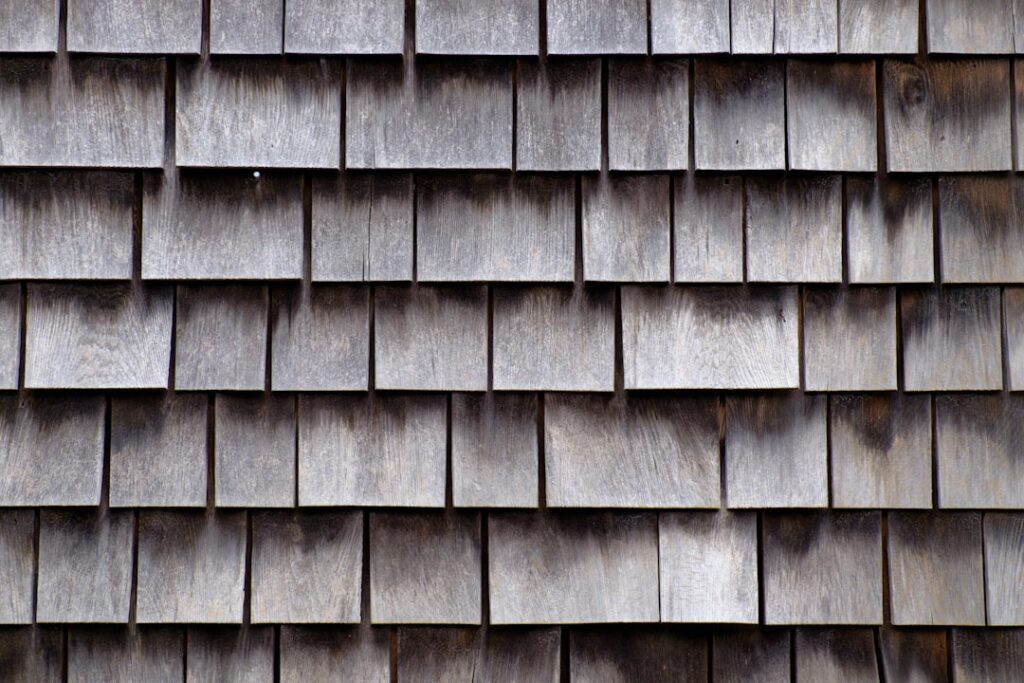
A cedar shake roof is the most beautiful roof most houses can wear, and the most demanding. Installed from premium-grade material and maintained on schedule, it lasts 30 to 50 years, insulates better than asphalt, and weathers to the silver-gray that defines Cape Cod and mountain-lodge architecture. Neglected, the same roof can be curling and mossy at year 15. Between the material cost — roughly two to three times asphalt — and the upkeep, cedar is a deliberate choice, not a default. Here’s what it costs, what determines whether you get 30 years or 50, and the care schedule that protects the investment.
Shake vs. Shingle: The Distinction That Sets the Price
Both are wedges of cedar, but they’re different products:
| Attribute | Cedar shake | Cedar shingle |
|---|---|---|
| Manufacture | Split (hand or machine) from the log, often sawn one side | Sawn both sides |
| Face texture | Rustic, irregular, deep grain | Smooth, uniform, tailored |
| Butt thickness | 1/2 in. (“mediums”) to 3/4 in.+ (“heavies”) | ~3/8 in. |
| Typical look | Lodge, rustic, storybook | Cape Cod, colonial, crisp coastal |
| Installed cost/square | $800–$1,400 | $600–$1,100 |
| Extra requirement | Felt interlay between courses (splits can channel wind-driven rain) | Standard underlayment |
(A “square” = 100 sq ft of roof.) Shakes’ split faces are why they look the way they do — and why installation is fussier: an 18-inch felt interlay must be woven between every course to block wind-driven rain from riding the irregular channels. A crew that skips or misplaces interlay is building a 12-year roof at 40-year prices.
Grades and Species
Western Red Cedar dominates (Alaskan Yellow Cedar is the premium upgrade — denser, more decay-resistant, ~20 percent more money). Grading, certified under Cedar Shake & Shingle Bureau rules:
- Premium / #1 (Blue Label): 100 percent edge grain, 100 percent clear heartwood. The only grades that belong on a roof. Edge grain resists cupping and splitting; heartwood carries cedar’s natural decay-fighting extractives.
- #2 (Red Label): allows flat grain and some sapwood — acceptable on walls, a downgrade on roofs.
- #3 and below: sheds and starter courses only.
Insist on the grade label on delivered bundles, not just the estimate. Substituting flat-grain #2 into a roof quoted as #1 is the classic cedar shortcut, and you can’t spot it from the driveway.
Cost: Real Numbers
- Installed range: $800–$1,400 per square for #1 shakes on a straightforward roof; complex cut-up roofs, steep pitches, and high-cost metros push $1,500–$2,000.
- Whole-house: a typical 2,200 sq ft home with a 25–30 square roof lands at $20,000–$40,000.
- Comparisons: architectural asphalt $450–$700/square installed; standing-seam metal $900–$1,600. Cedar sits between good asphalt and premium metal — the full field of alternatives is laid out in the roof styles overview and the asphalt roof guide.
- Hidden line items: tear-off of old wood roofs ($100–$200/square), skip sheathing or vent-mat installation for airflow, copper or stainless fasteners and flashing (galvanized reacts with cedar’s tannins and streaks), and fire-treatment premiums below.
Lifespan: What Separates 30 Years from 50
- Ventilation under the shakes. Cedar must dry from both faces. Installation over skip sheathing (spaced boards) or a modern vent mat (Cedar Breather type) doubles effective life vs. shakes nailed tight to solid, papered decking. This is the single biggest lifespan variable.
- Grade and thickness. Heavies outlast mediums; edge-grain heartwood outlasts everything else on the pallet.
- Climate and shade. Cedar thrives in dry and cold climates. Hot-humid Southeast exposure and heavy tree shade (constant damp, debris, moss) can halve lifespan. A shaded north slope under oaks is the hardest duty cedar faces.
- Pitch. Steeper roofs shed water faster and last longer; cedar shakes want 4:12 minimum, and they’re happiest at 6:12 and up.
- Maintenance. See below. A maintained roof reaching year 40 is normal; an ignored one failing at 18 is too.
The Care Schedule
- Twice yearly: blow or brush off leaves and needles, especially valleys and behind chimneys. Debris holds moisture; moisture is the entire enemy.
- Every 1–2 years: inspect from a ladder — look for curled, cupped, split, or slipped shakes and flashing gaps. Replace individuals ($15–$40 per shake repaired) before they leak. Catching problems small is what the roof repair habit is for.
- Moss and algae: treat with a cedar-safe cleaner or zinc/copper sulfate solution — never pressure-wash at close range, which strips soft earlywood and years of life. Zinc or copper strips near the ridge bleed ions that suppress regrowth downslope.
- Every 5–7 years (climate-dependent): professional cleaning and re-treatment with a penetrating oil/water-repellent, optionally with UV pigment. Cost: $750–$2,500. This is the recurring bill asphalt owners don’t pay — budget it honestly.
- Gutters: keep them flowing; backed-up water wicks into butt ends.
Fire Treatment: Not Optional Anymore
Untreated cedar is combustible, and untreated wood roofing is now banned or restricted across wildfire-prone jurisdictions — most of California’s WUI zones, parts of Colorado, and growing lists elsewhere. The answer is pressure-impregnated fire retardant:
- Class B treated: the common spec, adds roughly $40–$80/square.
- Class A (with underlayment system): required in the strictest zones; adds $100–$200/square and specific assembly details.
- Treatment must be factory pressure-impregnated and warranted for the roof’s life — spray-on field coatings weather off and don’t satisfy code.
- Check both your building department and your insurer before committing: some carriers surcharge or decline wood roofs regardless of treatment, and that quote belongs in your cost comparison. Where fire rules or insurers kill the cedar plan, shake-profile metal and composite shakes deliver the look — see the metal roofing guide for the closest stand-ins.
Is Cedar Right for Your House?
Strong yes: dry or cold climate, 6:12+ pitch, sun exposure, architecture that rewards texture (shingle-style, lodge, storybook, coastal), owner who will fund the maintenance line.
Think twice: humid Southeast, deep shade, wildfire zone with hostile insurers, or a budget that ends at installation day. A cedar roof without the maintenance budget is an expensive way to buy a 2040 tear-off.
Hiring the Right Crew
Cedar is a specialty trade, and the roofer who does excellent asphalt work may never have woven a felt interlay in his life. Vet candidates on specifics: ask how they ventilate under the shakes (the answer should be skip sheathing or a vent mat, unprompted), what fasteners they use (stainless or hot-dipped galvanized ring-shank, two per shake, never staples or electro-galvanized nails), how much they keyway between shakes (3/8 inch gaps for expansion), and how far up the interlay felt sits on each course. Ask to see a cedar roof they installed ten years ago — a crew proud of its cedar work has addresses to give you, and a decade-old roof tells the truth about their detailing. Certification through the Cedar Shake & Shingle Bureau’s installer program is a genuine signal, not marketing. Expect the bid to itemize grade, thickness (mediums vs. heavies), fastener spec, underlayment system, and flashing metal; a one-line “cedar shake roof — $32,000” bid hides every decision that matters. Regionally, expect to interview more candidates than you would for asphalt — in cedar-heavy markets (Pacific Northwest, Mountain West, coastal New England) good crews book out months; in the Southeast you may be flying details in by specification and inspecting them yourself. The premium for a proven cedar crew over a general roofer is typically 10–15 percent, and it is the best-spent money in the whole project.
FAQ
How long does a cedar shake roof really last?
30–40 years is the honest median for #1 heavies, ventilated and maintained; 50+ happens in ideal dry climates. 15–20 years is what neglect and bad installation buy.
Can I walk on it?
Carefully and sparingly — dry shakes are brittle underfoot and wet ones are slick. Hire cedar-experienced roofers for repairs; their foot placement is half the trade.
Do cedar roofs leak more?
A properly interlaid shake roof sheds ferociously. Most “cedar leaks” trace to flashing, valleys, or missing interlay — installation quality, not the material.
Natural silver or preserved color?
Left alone, cedar silvers in 1–2 years — the classic look, and fine for longevity if the roof stays clean and dry. Pigmented treatments keep the honey-brown but commit you to the recoat cycle.
A cedar shake roof is a relationship: premium grade in, ventilation under, debris off, treatment on schedule. Honor those four terms and it will outlast two asphalt roofs while making every other house on the street look like it’s wearing vinyl.