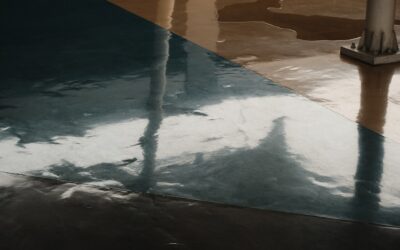
Walk into almost any modern garage, brewery, or hospital corridor and the glossy, seamless surface underfoot is likely a cement epoxy floor — a concrete slab coated with a two-part resin that cures rock-hard. It is one of the most durable, low-maintenance finishes you can put over concrete, and at $3 to $12 per square foot installed, it costs a fraction of tile or polished stone. That combination of toughness and value is why epoxy has jumped from the factory floor into home garages, basements, and even kitchens.
Part of our Epoxy, Concrete & Garage Floors guide — explore the full guide →
This guide breaks down what an epoxy coating actually is, what it costs, where it shines, and where it falls short, so you can decide whether it belongs in your project before you commit a weekend and a few hundred dollars to it.
What a Cement Epoxy Floor Really Is
Epoxy is not paint. It is a thermosetting resin made by mixing a base resin with a hardener, which triggers a chemical reaction that bonds the coating permanently to prepared concrete. Once cured, you get a rigid plastic-like layer typically 2 to 40 mils thick — a mil being one-thousandth of an inch — that fuses to the slab rather than simply sitting on top of it.
There are several formulas. Water-based epoxy is the thinnest and most DIY-friendly, solvent-based sits in the middle, and 100 percent solids epoxy is the thickest and most durable, building a single coat up to 20 mils. Homeowners usually reach for a water-based or solids kit, while warehouses and auto shops specify high-solids or novolac epoxy for maximum chemical resistance.
The Pros of a Cement Epoxy Floor
Durability is the headline benefit. A properly installed cement epoxy floor shrugs off dropped tools, forklift traffic, and hot tire pickup, and a quality coating can last 10 to 20 years in a residential garage. Because the surface is seamless, there are no grout lines or seams for dirt, oil, or bacteria to hide in, which makes cleanup as simple as a mop or a hose.
- Chemical resistance: Withstands gasoline, motor oil, brake fluid, road salt, and most household cleaners without staining or etching.
- Easy maintenance: A dust mop and occasional damp mopping keep it clean; no waxing or sealing on a normal schedule.
- Brightness and safety: A high-gloss finish reflects light, brightening a dim garage or basement, and anti-slip aggregate can be broadcast in for traction.
- Design range: Solid colors, metallic pours, and decorative flake systems let you match almost any look for $2 to $5 per square foot in materials.
For many homeowners, the deciding factor is that epoxy turns a dusty, staining concrete slab into a finished, wipeable surface. If you are weighing surface options across the house, our flooring guides compare epoxy against tile, sealed concrete, and interlocking tiles.
The Cons You Should Know
Epoxy is not flawless, and the biggest weakness is moisture. If your slab has hydrostatic pressure pushing water vapor up from below, the coating can bubble, peel, or delaminate within months. A simple plastic-sheet moisture test — taping a 2-by-2-foot square of plastic to the slab for 24 hours and checking for condensation — should come before any purchase.
Preparation is also unforgiving. Epoxy only bonds to clean, profiled concrete, which means acid etching or, better, mechanical grinding to open the pores. Skip that step and the coating peels in high-traffic lanes. Other drawbacks worth weighing:
- Slippery when wet: A smooth gloss surface gets slick with water or oil unless you add anti-slip aggregate.
- Cure time and odor: Solvent and solids formulas off-gas strong fumes and need 24 to 72 hours before you drive on them.
- UV yellowing: Standard epoxy ambers in direct sunlight, so exterior or sun-drenched spaces need a UV-stable polyaspartic topcoat.
- Repairs show: Because it is seamless, patching a chip or gouge rarely blends perfectly.
What Does It Cost?
A DIY water-based kit covering a standard two-car garage of about 450 square feet runs $150 to $600 depending on brand and whether flakes are included. Add a grinder rental at roughly $50 to $90 a day, plus rollers, spiked shoes, and a moisture test, and a self-installed floor lands near $1 to $3 per square foot.
Professional installation with proper surface prep, a high-solids build coat, decorative flake, and a polyaspartic topcoat typically costs $5 to $12 per square foot, or $2,250 to $5,400 for that same two-car garage. Metallic and multi-layer systems can push past $15. The premium buys diamond grinding, thicker mil build, and a warranty the DIY route cannot match.
Installation Steps in Brief
Whether you hire out or tackle it yourself, the sequence is the same and the prep matters more than the pour. Rushing the grind or coating a damp slab causes the vast majority of failures.
- Test and repair: Run a moisture test, then fill cracks and spalls with an epoxy patch and let them cure.
- Profile the slab: Diamond-grind or acid-etch to a CSP-2 profile, then vacuum every trace of dust.
- Prime: Roll a penetrating epoxy primer to lock down the surface and improve adhesion.
- Apply the base coat: Mix only what you can spread in the pot life — often 20 to 40 minutes — and roll in even passes, broadcasting flake into the wet coat if desired.
- Topcoat and cure: Seal with a clear or polyaspartic topcoat, then wait 24 hours for foot traffic and up to 72 hours before parking a vehicle.
Epoxy Versus Other Concrete Finishes
Epoxy is not the only way to finish a slab, and knowing the alternatives helps you spend wisely. Polished concrete grinds and densifies the existing slab to a natural sheen for $3 to $8 per square foot, but it offers less chemical resistance and no color options beyond dyes. It suits homeowners who want an industrial look without a coating that can eventually peel.
Polyaspartic coatings, sometimes marketed as a garage floor upgrade, cure far faster — often walkable in a few hours — and resist UV yellowing, but the material costs more at $5 to $8 per square foot and demands quick, skilled application because of its short pot life. Many pros use epoxy as a base coat and polyaspartic as the topcoat to combine epoxy’s thickness with polyaspartic’s speed and UV stability. Interlocking PVC or polypropylene tiles are the fully DIY, no-prep option at $2 to $5 per square foot; they snap down over an imperfect slab and lift out for repairs, but they never deliver the seamless, poured look of resin.
Quick Comparison
- Epoxy: Seamless, chemical-resistant, mid-cost, needs thorough prep and a dry slab.
- Polished concrete: Lowest maintenance long term, no coating to peel, limited color and stain resistance.
- Polyaspartic: Fastest cure and UV-stable, higher material cost, best as a topcoat.
- Interlocking tiles: Easiest DIY, forgiving of a rough slab, but seams and a less premium look.
Is a Cement Epoxy Floor Right for You?
Choose epoxy when you want a hard-wearing, easy-clean surface over concrete and your slab is dry and structurally sound — garages, basements, laundry rooms, workshops, and mudrooms are ideal candidates. Look elsewhere if the slab has chronic moisture problems, if you need a warm, soft surface underfoot, or if the space bakes in unfiltered sunlight without a UV-stable topcoat.
Bottom line: a well-prepped cement epoxy floor delivers industrial toughness and a clean, modern look for less than most tile or stone, and it will serve a home garage or basement for a decade or more. Nail the moisture test and the surface prep, budget for a quality topcoat, and you will get a floor that pays back its modest cost many times over. For adjacent projects and material comparisons, browse our home improvement resources before you buy.