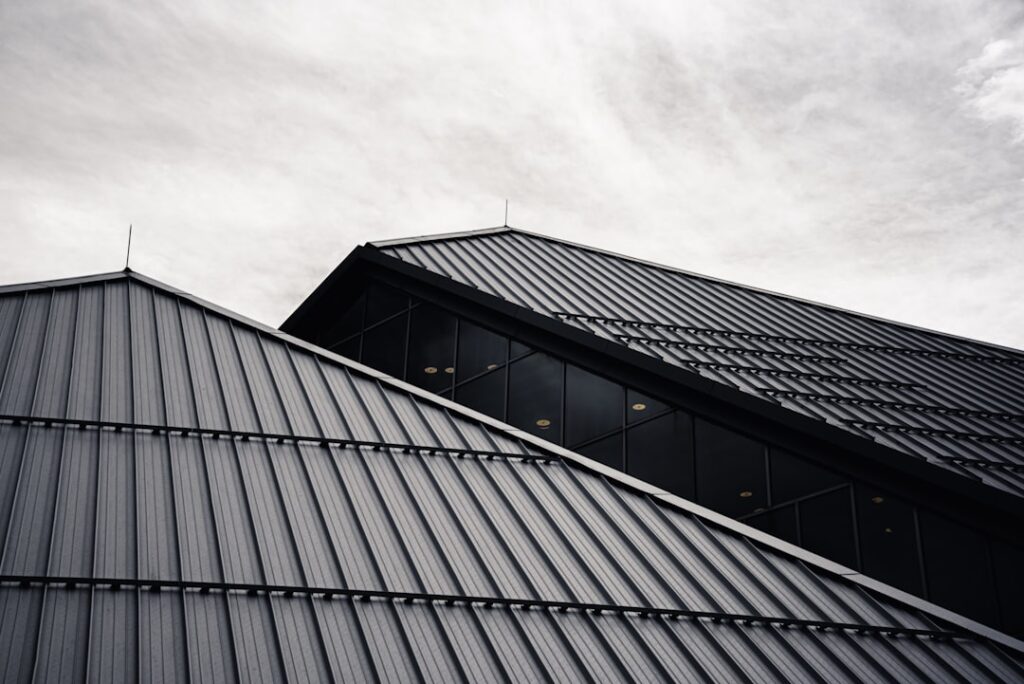
Ask any metal roofing distributor which color moves the most panels and you will hear the same answer: charcoal. A charcoal gray metal roof consistently ranks as the best-selling metal roof color in the United States, ahead of black, and it is not close in most regional markets. Charcoal delivers nearly all of black’s visual drama while hiding dust, pollen, and panel oil-canning better, running slightly cooler, and pairing with a wider range of siding and brick. If you are shortlisting colors for a standing seam or exposed-fastener roof, charcoal deserves the first sample order.
Part of our Roofing guide — explore the full guide →
- Why Charcoal Outsells Every Other Metal Roof Color
- Brand Color Names That Mean Charcoal
- Siding Pairings That Work
- Brick and Stone Pairings
- Charcoal vs Black: Heat and Solar Reflectance
- Finish Choices: Matte vs Gloss, PVDF vs SMP
- How Charcoal Ages and Fades
- Cost and Ordering Notes
- Trim, Gutters, and the Details Around the Roof
- Bottom Line
Why Charcoal Outsells Every Other Metal Roof Color
Charcoal sits in the sweet spot between statement and safety. Black reads bold but shows chalking and dust streaks as it ages; light grays and tans read builder-grade on many architectural styles. Charcoal — typically an 80 to 85 percent black value with a hint of blue or brown undertone depending on the manufacturer — photographs like black at a distance yet softens in direct sun, so it flatters both modern farmhouse and traditional colonial elevations.
There is also a practical resale logic. Appraisers and agents describe charcoal as the most “neutral premium” roof color: it does not date a house the way the green and burgundy metal roofs of the 1990s now do. Distributors report charcoal accounting for 25 to 35 percent of residential panel orders, with black second at roughly 20 percent. If you plan to sell within ten years, charcoal is the low-risk pick.
Brand Color Names That Mean Charcoal
Manufacturers rarely use identical names, so bring this cheat sheet when comparing quotes:
- Sherwin-Williams coil coatings: Charcoal Gray (the industry reference chip, used by dozens of regional roll formers)
- McElroy Metal: Charcoal
- Central States: Charcoal
- ABC (American Building Components): Charcoal
- Drexel Metals: Charcoal Gray
- Englert: Slate Gray runs slightly lighter; their Dark Bronze reads charcoal-brown in shade
- Sheffield Metals: Charcoal Gray (SMP and PVDF lines)
Iron Gray — popularized by James Hardie on siding — is a close cousin, and several roll formers offer an Iron Gray match. It carries a touch more blue than most Charcoal chips. Order physical panel samples, not printed cards; coil coatings shift noticeably between print and metal.
Siding Pairings That Work
Charcoal is close to a universal donor, but some pairings clearly outperform others:
- White or off-white siding: The modern farmhouse standard. Arctic White, SW Alabaster, or Benjamin Moore White Dove with charcoal standing seam is the single most requested combination in residential metal roofing. Add black window frames to complete the look.
- Light gray siding (Hardie Light Mist, Gray Slate): A tonal, quiet scheme. Keep trim white to avoid a battleship effect.
- Warm neutrals (Khaki Brown, Monterey Taupe, clay tones): Works because charcoal is nearly neutral; choose a charcoal with a brown undertone rather than blue.
- Navy and deep blue siding: Handsome but check undertones — a blue-leaning charcoal can make navy look muddy. Sample both on the wall.
- Cedar, board-and-batten stained wood: Excellent. Charcoal grounds honey and walnut-toned wood without the harshness black brings.
- Sage and olive greens: A rising 2020s pairing; charcoal keeps it earthy instead of Christmas-themed the way black-green combos can read.
Brick and Stone Pairings
Roof color mistakes are most expensive on brick homes because the brick is not changing. Red and orange-red brick pairs better with charcoal than with black, which can look severe against warm masonry. Painted white brick and limewashed finishes take charcoal beautifully. For gray fieldstone or gray-blend brick, keep at least three shades of separation between the stone’s dominant value and the roof so the elevation does not flatten — charcoal over medium-gray stone works; charcoal over dark gray stone rarely does. Brown and buff brick prefers a brown-undertone charcoal or a dark bronze instead.
Charcoal vs Black: Heat and Solar Reflectance
Color affects roof temperature less on metal than on asphalt because metal sheds heat quickly and most panels carry reflective pigment technology, but the difference is still measurable. Typical initial solar reflectance values for PVDF-coated steel:
| Color | Solar Reflectance (SR) | SRI (approx.) |
|---|---|---|
| Matte Black | 0.25–0.27 | ~25–28 |
| Charcoal Gray | 0.28–0.31 | ~29–33 |
| Slate/Medium Gray | 0.33–0.37 | ~37–42 |
| Regal White | 0.65–0.70 | ~78–85 |
In practice a charcoal panel runs roughly 5 to 8°F cooler than black on a 95°F afternoon — a modest but real edge for attic temperatures and shingle-over-purlin retrofits. Most charcoal offerings use infrared-reflective “cool” pigments, so a modern charcoal can outperform a decade-old medium gray. Verify the specific SKU’s SR value on the manufacturer’s spec sheet if you are chasing ENERGY STAR-era performance or a local cool-roof requirement.
Finish Choices: Matte vs Gloss, PVDF vs SMP
Two decisions shape how charcoal actually looks on your roof. First, sheen. Low-gloss and matte charcoal (10–25 gloss units) is the current design standard — it mimics slate, hides oil-canning on wide standing seam pans, and photographs without hot glare. Standard-gloss charcoal (30–40 units) looks brighter and slightly lighter in full sun and is more common in exposed-fastener ag panels.
Second, paint chemistry. PVDF (Kynar 500/Hylar 5000) is the premium resin: superior fade and chalk resistance, typical 30 to 40-year finish warranties, and the only chemistry worth buying for dark colors facing south or at high altitude. SMP (silicone-modified polyester) costs $0.30 to $0.60 less per square foot installed and is acceptable for barns and outbuildings, but dark SMP colors chalk visibly within 10 to 15 years. On a house, spec PVDF charcoal in 24-gauge for standing seam; the upcharge on a 2,000 sq ft roof is usually $600 to $1,200 and pays for itself in retained color.
How Charcoal Ages and Fades
All pigmented coatings fade; the question is how gracefully. Charcoal is among the best-behaved dark colors because it is built primarily from stable inorganic pigments (carbon black and iron oxides) rather than the organic reds and blues that shift fastest. PVDF charcoal typically loses fade at under 1 ΔE per decade — imperceptible without a side-by-side chip. Chalking, the white oxidation dust that plagues aged dark roofs, appears on charcoal SMP around year 10 to 12 but is hard to detect on quality PVDF even at year 25. One aging behavior to expect on any dark panel: slight non-uniform sheen where foot traffic or installation handling burnished the finish. Matte finishes hide this; gloss shows it.
Cost and Ordering Notes
Charcoal carries no color premium — it is a stock coil color at virtually every roll former, which means faster lead times (often 1 to 2 weeks versus 4 to 6 for custom colors) and easier future repair-panel matching. Installed pricing follows the profile, not the color: expect roughly $4.50 to $7.00 per sq ft for exposed-fastener charcoal panels and $9.00 to $14.00 per sq ft for 24-gauge PVDF standing seam, varying by region and roof complexity. Order matching charcoal trim, ridge, and touch-up paint from the same coil lot when possible; dye-lot variation between mills is subtle but visible on long fascia runs.
Trim, Gutters, and the Details Around the Roof
Charcoal gives you two workable trim strategies. Matching charcoal fascia, rake trim, and gutters produces the crisp monolithic edge that modern designs favor — most gutter suppliers stock a Musket Gray or Tuxedo Gray aluminum that lands close enough. Alternatively, white or bone trim against a charcoal roof sharpens traditional elevations and hides gutter tiger-striping better than dark gutters do. Snow-country note: charcoal panels shed snow aggressively, so budget for snow guards ($3 to $8 each, installed in staggered rows above doors and walkways) — an item quotes routinely omit and homeowners discover the first February. If solar panels are in your future, charcoal is also the most panel-friendly roof color; black-framed modules visually disappear on it in a way they never do on lighter roofs.
Bottom Line
Charcoal earns its best-seller status honestly: near-black curb appeal, better dust and chalk forgiveness, a few degrees of heat advantage, and compatibility with almost every siding and brick palette in American housing stock. Choose a matte PVDF finish, sample it against your actual siding in morning and afternoon light, and confirm the undertone — blue-leaning next to cool palettes, brown-leaning next to warm ones. Do that, and a charcoal gray metal roof is about the safest 50-year color decision you can make on a house.