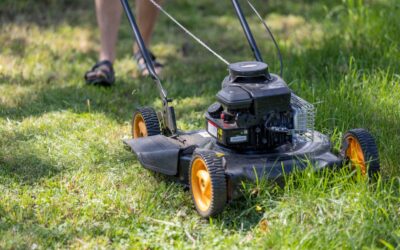
You do not need to spend $600 to cut grass well. A cheap lawn mower in the $80 to $300 range will keep a small-to-midsize yard looking sharp for years, provided you match the machine to your lot and skip the models built to fail. The trick is knowing which corners are safe to cut and which ones will cost you a mower by the second summer.
Below is how to choose the right budget mower without overspending.
- What Your Money Buys at Each Price Point
- Deck Size and Yard Fit
- Where the Trade-Offs Actually Hurt
- What to Avoid at This Price
- Best Value Picks
- When It’s Worth Spending More
- Maintenance That Protects a Cheap Mower
- Engine Size and Deck Features That Matter on a Budget
- New Versus Used: When to Buy Secondhand
- Common Budget-Mower Mistakes
What Your Money Buys at Each Price Point
Budget mowers fall into three clear tiers, and each one fits a different yard. Understanding the trade-offs up front saves you from buying too little machine or paying for power you will never use.
- Push reel mower ($80 to $150): No motor, no gas, no cord. You provide the power. Cuts cleanest of all on a well-kept lawn but stalls on tall or wet grass. Best for flat yards under 2,000 square feet.
- Corded electric ($120 to $180): Plug in and go, near-silent, zero maintenance. Tethered to a 100-foot cord, so it suits yards up to about 5,000 square feet within reach of an outlet.
- Gas push mower ($180 to $260): The workhorse of the budget class. A 140cc to 160cc engine and a 20- to 21-inch deck handle up to a quarter-acre of any grass. No cord, no battery anxiety.
Notice that battery mowers are largely absent under $300 unless you buy a stripped 16- or 18-inch model with a tiny 2.0Ah pack. Good cordless mowers still start around $350, so if your budget is firm at $300, gas or corded electric gives you far more capability.
Deck Size and Yard Fit
Deck width is the single biggest factor in how long mowing takes. Budget mowers run 14 to 21 inches. A 21-inch deck cuts a quarter-acre in about 35 to 45 minutes; a 16-inch deck doubles that time. Do not buy a narrow deck to save $30 if you will pay for it every week all summer.
- Under 2,000 sq ft, flat: Reel mower or 16-inch corded electric.
- 2,000 to 6,000 sq ft: 20-inch corded electric or a 20-inch gas push.
- 6,000 sq ft to 1/4 acre: 21-inch gas push mower, ideally with rear-wheel drive if you have slopes.
- Over 1/4 acre: Honestly, save up. A cheap push mower will make you miserable on a big lot.
Where the Trade-Offs Actually Hurt
Cheap mowers cut real costs, but some of those cuts show up in ways you feel every week. Knowing them in advance lets you decide what you can live with.
Budget gas mowers usually come with a basic engine, a single cutting-height lever per axle instead of one central adjuster, and a smaller grass bag. The wheels are often plastic-bushed rather than ball-bearing, so they wear and get wobbly after a few seasons. The cut quality is fine; the convenience features are what you sacrifice.
Corded electric mowers save on maintenance but trap you within a cord radius, and managing that cord around trees and beds gets old fast. Reel mowers demand a genuinely level, debris-free lawn and frequent cutting, since they cannot handle grass over about 3 inches without leaving stragglers.
What to Avoid at This Price
Some budget mowers are false economy. Steer clear of these:
- Off-brand gas engines with no parts network. Stick with Briggs & Stratton, Honda, or a recognized house engine. A $30 carburetor you can actually buy beats a $180 mower you cannot fix.
- Tiny-battery cordless “deals.” A 16-inch cordless mower with a single 2.0Ah battery gives you maybe 15 minutes of runtime. You will spend more of your Saturday charging than mowing.
- Decks under 16 inches for anything but a tiny lot. The time penalty is brutal.
- Mowers with no mulching or side-discharge option. Bag-only units force you to empty constantly and buy bags for clippings.
Best Value Picks
These models consistently deliver the most mower per dollar in the budget class. Exact pricing shifts with the season, but these ranges hold in spring.
- Great States / American Lawn Mower reel mower (~$90 to $130): The gold standard for a small, flat lawn. Nearly indestructible, no maintenance beyond an occasional blade sharpen.
- Sun Joe MJ401E corded electric (14 in, ~$120): Featherweight and dead simple for a tiny yard within cord reach.
- Greenworks 20-inch corded electric (~$170): A real deck size at a corded price, good for yards up to 5,000 sq ft.
- Yard Machines 20-inch gas push, 140cc Briggs (~$220): The classic no-frills gas mower. Reliable engine, easy parts, handles most quarter-acre lots.
- Craftsman M105 21-inch, 140cc (~$260): Wider deck and a familiar brand at the top of the budget range. The default recommendation for a first gas mower.
When It’s Worth Spending More
A cheap lawn mower makes sense until your yard or your knees say otherwise. Spend up if you have more than a quarter-acre, significant slopes, or a bad back that makes pushing a chore. Self-propelled drive alone is worth the jump to $350 to $450, because it removes most of the physical effort on hills and long runs.
Cordless mowers in the $400 range have also matured to the point that they rival gas on small and midsize lots, with no oil, no pull cord, and instant starting. If quiet operation and zero maintenance matter to you, that is where the next dollar goes.
Maintenance That Protects a Cheap Mower
The difference between a budget mower that lasts two seasons and one that lasts eight is maintenance. Cheap machines have less margin, so basic care matters more, not less.
- Change the oil. For gas models, change oil after the first 5 hours, then once a season. This single habit outlives most mowers.
- Sharpen the blade twice a year. A dull blade tears grass, browns the tips, and makes the engine work harder. A file or a $15 sharpener does the job.
- Clean under the deck. Scrape caked clippings after each mow so airflow stays strong and the deck does not rust out.
- Stabilize or drain the fuel. Old gas gums up cheap carburetors faster than anything. Add fuel stabilizer or run the tank dry before winter storage.
- Check the air filter. A $5 filter keeps grit out of the engine and preserves compression.
Do those five things and a $220 gas mower will cut cleanly for the better part of a decade. Budget hardware rewards good habits, and that is the real secret to buying cheap without buying twice.
Engine Size and Deck Features That Matter on a Budget
Two mowers at the same $220 price can perform very differently, and the spec sheet tells you which is which. On gas models, engine displacement is the headline number. A 140cc Briggs & Stratton is fine for a flat quarter-acre of typical grass; a 150cc to 160cc engine gives you the extra torque that keeps the blade spinning in tall or damp grass without bogging.
- 125cc to 140cc: Adequate for small, flat, well-kept lawns. Expect to slow down in thick spring growth.
- 150cc to 160cc: The budget sweet spot. Handles a quarter-acre of most grasses and recovers quickly from a heavy patch.
- 3-in-1 deck (mulch, bag, side-discharge): Worth insisting on. A mulch-only or bag-only deck limits how you handle clippings and forces you to buy bags all season.
Also check the cutting-height range. A good budget mower adjusts from about 1.5 inches up to 3.75 inches. Cutting cool-season grasses like fescue and Kentucky bluegrass at 3 inches or higher shades out weeds and holds moisture, so a mower stuck at a low maximum height quietly works against your lawn.
New Versus Used: When to Buy Secondhand
A well-kept used mower is often the best value of all, because the steepest depreciation happens the moment a mower leaves the store. A $260 Craftsman two years old and lightly used can sell for $100 to $120. The trick is knowing what to inspect so you do not inherit someone else’s neglect.
- Pull the dipstick. Milky or gritty oil, or oil that smells like raw gas, signals a neglected or flooded engine. Clean amber oil is a good sign.
- Check the blade and deck. Surface rust is fine; a deck rusted through or a blade ground down to a stub means real wear.
- Start it cold. A budget engine that fires within two or three pulls from cold has good compression and a clean carburetor. Hard starting usually means a gummed carb, though that is a cheap fix if the price reflects it.
- Rock the wheels. Wobble means worn plastic bushings, which is common and livable but worth a lower offer.
Skip any used mower with a cracked deck, a bent crankshaft (a blade that visibly wobbles as it spins), or a seller who will not let it run. Those are the failures that cost more to fix than the machine is worth.
Common Budget-Mower Mistakes
Most complaints about cheap mowers trace back to how the machine is used, not the price tag. Avoid these and a budget mower easily outperforms its cost.
- Mowing wet grass. It clumps under the deck, strains a small engine, and leaves a ragged cut. Wait for the lawn to dry.
- Scalping the lawn. Never remove more than a third of the blade height at once. On a budget mower with limited power, taking too much at once bogs the engine and stresses the grass.
- Ignoring the fuel over winter. Ethanol gas left in the tank is the number-one killer of cheap engines. Stabilize it or run the tank dry.
- Running a dull blade. A torn cut browns the tips within a day and makes the whole lawn look sick, no matter how good the mower.
Buy the right tier for your lot, insist on a real parts network and a 3-in-1 deck, and keep up the five-minute maintenance habits. Done that way, a cheap lawn mower is not a compromise; it is simply the correct amount of machine for the job.