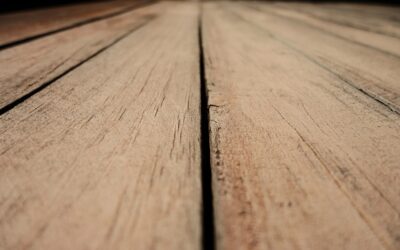
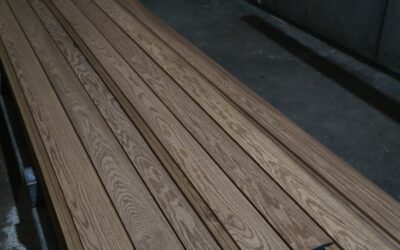
Oak is the default American hardwood for a reason — durable, refinishable, available in red and white varieties, and far cheaper than walnut or hickory. Cheap oak flooring does not mean junk; it means budget-tier solid or engineered oak that costs less than $4 per square foot for material while still delivering the look and longevity that defines oak. The trick is knowing where the savings come from (mill grade, plank length, distribution channel) versus where corners are cut on construction (wear layer thickness, finish quality).
- What “Cheap” Actually Means in Oak
- Real Budget Oak Price Tiers
- Brands Selling Affordable Oak
- Red Oak vs. White Oak at Budget Prices
- Solid vs. Engineered at the Budget Tier
- Where Budget Oak Cuts Corners
- Installation Costs and DIY Reality
- Warranty Reality at Budget Prices
- Where to Save and Where to Spend
- Final Recommendation
- Site Finishing vs. Factory Finish
- Buying Closeout Oak Without Getting Burned
What “Cheap” Actually Means in Oak
Three things drive low-end oak pricing down: lower mill grade (more knots, color variation, shorter boards), thinner construction (3/8 inch instead of 3/4 inch solid, or 2 to 3 mm wear layer engineered), and big-box distribution that strips out designer markup. None of these are inherently bad — they just shift the product into the “cabin grade” or “rustic grade” aesthetic.
Avoid oak under $1.50 per square foot. At that price you are usually buying near-end-of-life closeout, mismatched dye lots, or off-brand imports with no warranty support.
Real Budget Oak Price Tiers
- Builder-grade engineered oak, 3 mm wear: $1.99 to $2.99 per square foot
- Mid-grade engineered oak, 2 mm wear: $3 to $4.50 per square foot
- Solid 3/4 inch red oak, select-and-better: $3.50 to $5 per square foot
- Rustic-grade solid oak, character: $2.50 to $3.99 per square foot
- Closeout and overstock: $1.50 to $2.99 per square foot when available
Brands Selling Affordable Oak
Bruce, Mullican, Lauzon, and Mohawk Solidtech all sell solid and engineered oak in the $3 to $5 range through national retailers. Home Depot’s TrafficMaster and LifeProof private labels offer engineered oak at $2 to $3.50 per square foot. Lumber Liquidators (now LL Flooring) carries Bellawood and Builder’s Pride lines at competitive prices.
For deep discounts, check Floor and Decor closeouts, Home Depot return pallets, and regional distributor clearance events. A patient buyer can find premium oak at builder pricing.
Red Oak vs. White Oak at Budget Prices
Red oak (Janka 1290) costs less than white oak (Janka 1360) at the same grade because red oak grows more abundantly. Red oak has a warmer pink-amber tone and more pronounced grain; white oak reads cooler with tighter grain and accepts gray stains far better.
For modern gray or whitewashed looks, white oak is worth the $0.50 to $1 per square foot premium. For traditional warm honey looks, red oak delivers the same character at less cost.
Solid vs. Engineered at the Budget Tier
Solid 3/4 inch oak sands and refinishes 5 to 7 times over its life — a 70 to 100 year horizon. Engineered oak with a 2 mm wear layer sands once or twice; a 1 mm wear layer screens and recoats but does not sand. If you plan to live in the home 15 plus years and want longest-term value, solid wins.
If you have concrete subfloor (slab home, basement, condo), engineered is the only oak option that makes sense. Solid hardwood does not bond reliably to concrete.
Where Budget Oak Cuts Corners
Finish quality is the first thing to suffer at low price points. Budget oak often has 3 or 5 coats of factory polyurethane versus 7 to 10 on premium lines, which means earlier wear-through in high-traffic paths. Bevel quality also varies — sloppy micro-bevels show through after refinishing.
Plank length distribution skews shorter at budget grades. A box of cheap oak averages 14 to 24 inches per board; premium grades average 36 to 60 inches. Shorter boards mean more visible seams and a busier visual.
Installation Costs and DIY Reality
Professional install runs $3 to $6 per square foot for nail-down solid, $2.50 to $5 for click-lock engineered, plus subfloor prep. Demolition of existing flooring adds $1 to $2 per square foot. Stair install runs $40 to $75 per tread.
DIY install of click-lock engineered oak is realistic for a handy homeowner with a miter saw and a tapping block — a 500 sq ft floor takes 2 to 4 weekends. Solid hardwood nail-down requires a pneumatic floor nailer (rent for $40 to $60 per day) and more skill.
Warranty Reality at Budget Prices
Most budget oak carries 15 to 30 year residential warranties, but read the exclusions carefully. Common gotchas: humidity outside 35 to 55 percent voids the claim, pet damage and chair-roll wear are excluded, and water damage from any source (including a leaking dishwasher) is not covered.
Where to Save and Where to Spend
Save on: plank grade (rustic looks gorgeous and hides traffic), distribution (big-box and outlet pricing), and stain (natural or light wipe-on is cheaper than dark or custom). Spend on: wear layer thickness (2 mm minimum on engineered), board length (longer reads more premium), and underlayment (do not cheap out on the 1/8 inch foam).
Final Recommendation
For most homeowners chasing cheap oak, look at mid-grade engineered with a 2 mm wear layer from a national brand in the $3 to $4 per square foot range. You get the oak aesthetic, real refinish potential, and a warranty backed by a company that answers the phone. Buy 10 percent overage and store the leftover for future repairs. That combination delivers 80 percent of the premium oak experience at 50 percent of the cost.
Site Finishing vs. Factory Finish
Site-finished unfinished oak is often cheaper than pre-finished — sometimes by $0.50 to $1.50 per square foot in materials. The catch: site finishing adds $2 to $4 per square foot in labor and 3 to 5 days of dust and odor in the home. The advantage is unlimited custom stains and a seamless, smooth surface without micro-bevels. For homeowners willing to live in a hotel for a week, site finishing budget oak can yield a result indistinguishable from premium pre-finished.
Buying Closeout Oak Without Getting Burned
Closeout pallets at Floor and Decor, Home Depot’s clearance shelf, and LL Flooring’s discontinued sections can deliver $1.50 to $2.50 per square foot oak that retailed at $4 to $5. Verify the entire purchase comes from the same dye lot — closeout pallets sometimes mix shipments. Inspect for end damage and bowing before loading the truck. And buy enough at one time; the SKU will be gone forever after the clearance closes.
Prefer to explore on your own?
See how new flooring looks in your actual room in seconds — free, no signup.
Try the free Floor Studio →