Walk into any tile showroom lately and you’ll see a wave of soft, feminine, pattern-forward collections designed to warm up a room instead of just covering the floor. Chloe tile is one of those names that keeps coming up, a decorative porcelain and ceramic line built around gentle color palettes, encaustic-look patterns, and glazes that read as hand-crafted rather than mass-produced. If you’re weighing it for a kitchen backsplash, a powder-room floor, or a fireplace surround, here’s what you actually need to know before you order a sample.
What “Chloe Tile” Refers To
Chloe isn’t a single product; it’s a collection name used by a handful of tile makers and distributors, most often for a patterned or decorative series aimed at residential design. In practice, you’ll find Chloe-branded tiles in two broad forms: a glazed porcelain or ceramic field tile in muted solids, and a decorative pattern tile that mimics old-world encaustic cement designs without the maintenance headache. Because the name gets reused, always check the technical spec sheet for the exact line you’re buying rather than assuming every Chloe tile shares the same body and rating.
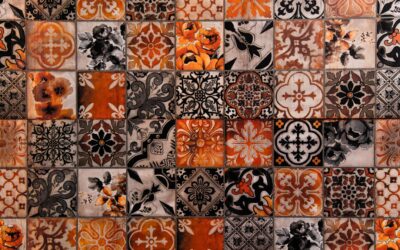
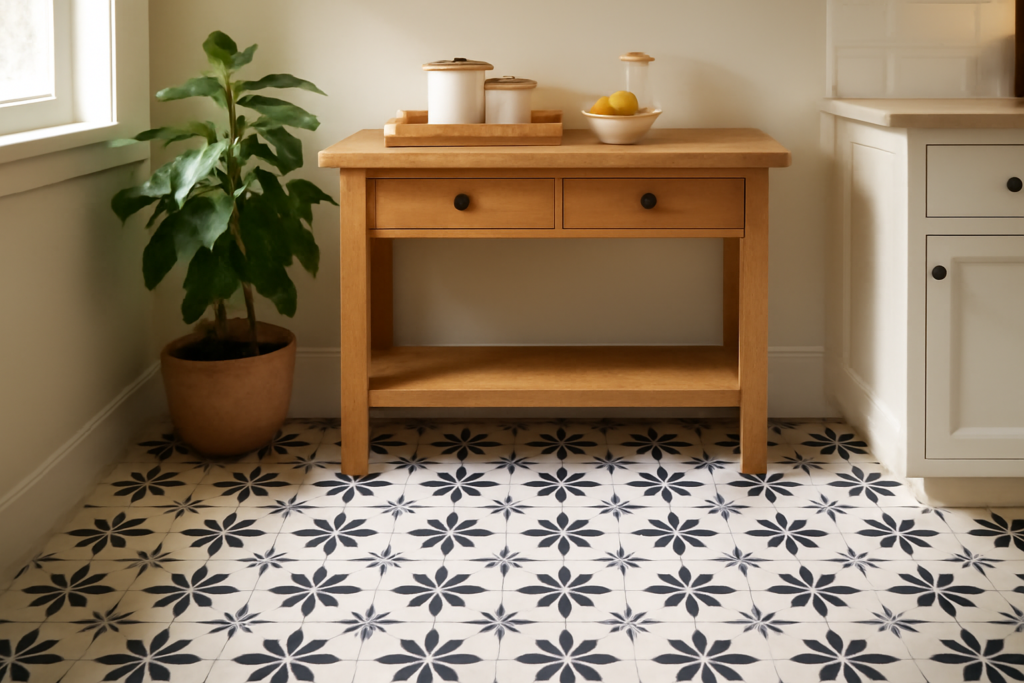
The look is consistent, though. Think chalky matte finishes, dusty blues and greens, warm terracotta blushes, and geometric or floral motifs printed with high-definition inkjet glazing. It’s the kind of tile that gives a small space personality.
Common Sizes and Formats
Decorative lines like this usually land in a few predictable formats. You’ll typically see:
- 8×8 inch pattern squares — the classic size for encaustic-look floors and accent walls.
- 4×4 inch decos — used as a spot accent within a plain field or a backsplash inset.
- 2×8 and 3×6 inch subway shapes — for the solid-color companion pieces.
- Hexagons — a popular format for the patterned versions on floors.
Thickness runs around 3/8 inch for the porcelain versions, which is standard for both floor and wall use. Always confirm whether your specific Chloe tile is rated floor-safe before you use it underfoot.
Reading the Ratings Before You Buy
A pretty tile that scratches or gets slick is a headache you’ll regret daily. Two numbers matter most. The PEI rating measures surface wear: PEI 3 handles normal residential floors, PEI 4 handles heavier traffic like a mudroom or kitchen. For walls and backsplashes, PEI doesn’t apply. The other number is the DCOF, or dynamic coefficient of friction; anything at or above 0.42 is considered acceptable for interior floors that may get wet. If a Chloe pattern is sold as a wall tile only, respect that, glazed wall tiles are often too slippery and too soft for foot traffic.
Water absorption tells you whether it’s true porcelain (under 0.5 percent) or ceramic (typically 3 to 7 percent). Porcelain is denser, more freeze-resistant, and better for a laundry room or a covered patio.
Where Chloe Tile Works Best
This is a personality tile, so use it where personality pays off. A patterned Chloe floor turns a 5×5 foot powder room into the most memorable space in the house without a big budget, you might only need 30 tiles. On a kitchen backsplash, running the pattern behind the range as a framed focal point, with plain subway on the rest of the wall, keeps the look intentional instead of busy.
Other strong applications include a fireplace surround, the risers on a staircase, a laundry-room floor, and the floor of a mudroom drop zone. I’d steer clients away from tiling an entire open-concept great room in a bold pattern; at that scale it fights the furniture and dates quickly. Pattern reads best in a contained, defined area.
Color and Pairing Advice
The muted palette is the whole point, so lean into it. Dusty blue patterns pair beautifully with warm white oak cabinetry and unlacquered brass fixtures. The terracotta and blush tones warm up a north-facing room that gets cool light. If you want the pattern to be the star, keep the grout close in tone, a soft greige grout on a cream-and-blue tile lets the design flow instead of chopping it into a grid.
For a more graphic, modern look, go the opposite way and use a contrasting grout. Just know that a dark grout on a light tile shows every imperfection in your layout, so it’s less forgiving for a first-time DIYer.
Pricing and What to Expect
Decorative patterned tile costs more than plain field tile because of the printing and, in some cases, smaller batch runs. Expect to pay roughly $6 to $15 per square foot for a Chloe pattern tile, with solid-color companions running $3 to $8 per square foot. A small powder room might total $150 to $300 in tile. Order 10 to 15 percent extra for cuts, waste, and future repairs, because reordering a decorative line months later risks a dye-lot mismatch.
Buy a physical sample before committing. Screen colors lie, especially with matte glazes and muted tones, and the pattern scale looks completely different in your hand than it does on a website thumbnail.
Installation and Care Notes
Set decorative tile with a white polymer-modified thinset; gray thinset can ghost through light or translucent glazes. Use tile spacers sized to the look you want, a 1/16 inch joint keeps a patterned floor crisp, while 1/8 inch is more forgiving. Seal the grout after it cures, roughly 48 to 72 hours, to keep a light joint from staining.
Day-to-day care is easy. Sweep or vacuum grit, and damp-mop with a pH-neutral cleaner; skip vinegar and harsh acids, which etch matte glazes and dull the finish over time. Because the pattern is printed under the glaze on most versions, it won’t wear off with normal use, one of the real advantages of a modern Chloe tile over the genuine cement encaustics it imitates, which need periodic sealing and can wear unevenly. Treated well, a decorative porcelain floor like this will look sharp for 20 years or more.
How It Compares to Real Cement Tile
It’s worth understanding what a printed porcelain Chloe tile is imitating. Authentic encaustic cement tiles are made by hand-pouring pigmented cement into a mold, so the pattern runs deep into the body and develops a soft patina over decades. They’re gorgeous, but they’re also porous, need sealing before and after grouting, can etch from a splash of lemon juice, and cost $15 to $30 per square foot before the extra labor. A porcelain look-alike gives you 90 percent of the visual charm with none of that fragility, at roughly half the price, which is exactly why the category has exploded.
If you’re a purist restoring a 1920s bungalow, real cement may be worth the maintenance. For a busy family kitchen or a rental, the porcelain version is the smarter call, and honestly, most guests will never tell the difference underfoot.
Before you place a full order, buy two or three loose tiles and live with them for a week. Set them on the floor in the actual room, look at them under both daylight and your evening lighting, and lay a couple side by side to see how the pattern repeats and aligns. Repeat quality is where cheap decorative tiles fall down, if the motif doesn’t line up cleanly from tile to tile, the whole floor looks off.
Sketch the room to scale and dry-lay a section before you spread any thinset. Center the pattern on the room’s focal point, usually the doorway sightline or the vanity, and balance the cut tiles at the edges so you don’t end up with a sliver on one wall and a full tile on the other. A little planning here is the difference between a floor that looks custom and one that looks like an afterthought.
Prefer to explore on your own?
See how new flooring looks in your actual room in seconds — free, no signup.
Try the free Floor Studio →