
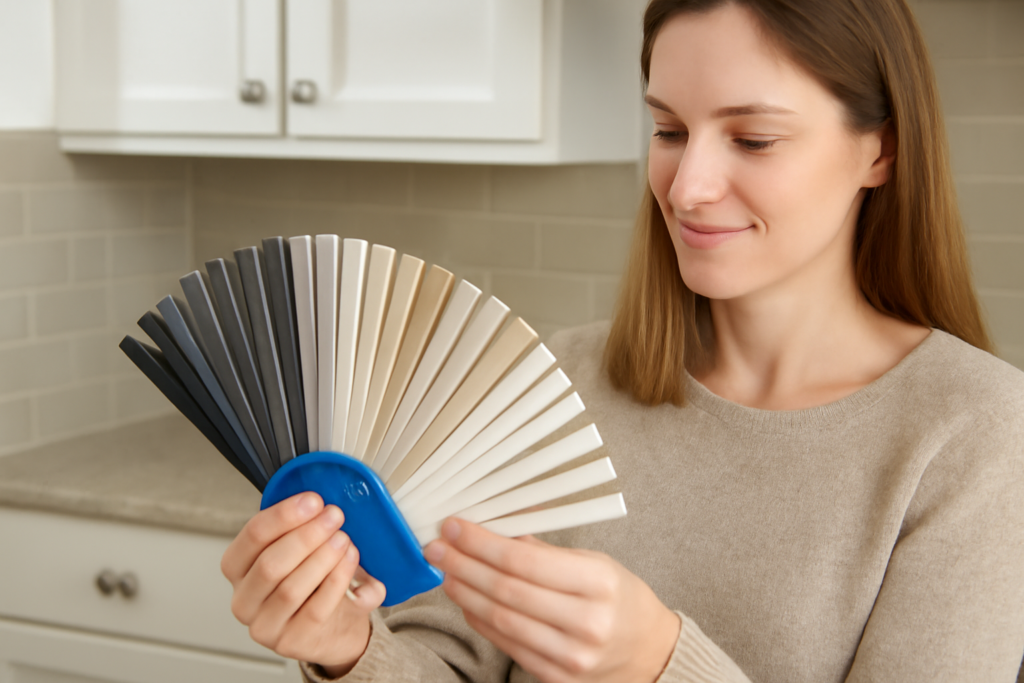
Choosing grout color from a printed brochure is a gamble, because ink on paper never matches cured cement. That is exactly the problem Mapei grout sample sticks were built to solve. Each stick is a small hardened wand of actual grout in a specific Mapei color, so you can lay it against your tile in your own kitchen light and see the true finished shade before you buy a single bag. For a decision that is permanent and surprisingly hard to reverse, that little piece of real grout is worth its weight.
What Mapei Grout Sample Sticks Are
A grout sample stick is a molded strip of genuine cured grout, roughly the length and width of a jumbo popsicle stick, printed or labeled with the color name and number. Mapei produces them for its flagship grout lines, most notably Ultracolor Plus FA and Keracolor, so the color you hold is the color you will trowel into your joints. Because the sample is the real material rather than a photograph, it captures the subtle warmth, coolness, and speckle of the finished grout that a color chart simply cannot reproduce.
Mapei’s grout palette spans roughly 40 colors across the Ultracolor Plus FA range, from bright Warm Gray and Silver to deep Chocolate and Black. The sample sticks let you compare several of these candidates side by side against your tile, which is the single most reliable way to avoid the classic mistake of grout that photographs perfectly but looks wrong on the wall.
Why Grout Color Matters So Much
Grout is usually less than 5 percent of a tiled surface, yet it controls how the whole installation reads. Match the grout to the tile and the field looks seamless and calm; contrast it and every tile edge pops into a defined grid. A white subway tile with white grout melts into a smooth backdrop, while the same tile with charcoal grout becomes a graphic, high-contrast statement. Neither is wrong, but they are wildly different looks, and you commit to one for the life of the tile.
Getting it wrong is expensive to fix. Once grout cures, changing the color means either grinding it all out, which risks chipping your tile, or applying a grout colorant, which is a tedious joint-by-joint job that rarely looks as clean as fresh grout. Spending a few dollars and a few days on Mapei grout sample sticks up front is dramatically cheaper than living with a mismatch or redoing the work.
How to Use the Sample Sticks
The sticks are simple to use, but a little method gets you a better result. Lay your tile flat and set two or three candidate sticks across the joints where the grout will actually sit. Then judge them under the conditions the room really lives in.
- View in multiple lights: check the sample in daylight, under warm kitchen bulbs, and at night, because grout can shift noticeably between color temperatures.
- Go one shade off dead-center: for white or cream tile, a slightly warm gray often looks cleaner over time than stark white, which shows every coffee splash.
- Think about maintenance: mid-tone grays and beiges hide dirt and grease far better than bright white or pure black.
- Photograph your top two: a phone photo reveals contrast levels your eye may filter out in person.
Remember that even a real grout stick can dry a touch lighter or darker than a full installation depending on your mixing water and how you sponge the joints. The sample gets you within one shade, which is close enough to make a confident choice. If you are torn between two adjacent colors, choose the slightly darker one, since freshly cured grout usually lightens as it fully dries.
Where to Get Them and What They Cost
Tile showrooms and flooring dealers that carry Mapei often keep a fan deck or a box of loose sample sticks at the counter, and many will hand you a few for free or for a small deposit. Big-box stores that stock Mapei grout sometimes have a sample display near the grout aisle. Online, you can order individual sticks or full sample sets through tile-supply retailers, typically for $1 to $3 per stick or $20 to $40 for a complete color set that covers the whole Ultracolor Plus FA lineup.
If you are tiling a large project or a whole bathroom, buying the full set is the smart move. Having every Mapei grout color in hand lets you audition options against different tiles throughout your home and reuse the set on future jobs, which quickly pays back the modest cost.
Matching Grout to Common Tile Types
A few reliable pairings save time. For a timeless subway backsplash, Mapei Warm Gray or Silver reads clean without the glare of pure white. For wood-look porcelain plank floors, a beige or tan grout such as Bahama Beige blends the joints so the floor mimics real hardwood. Marble and light natural stone usually look best with a closely matched off-white or pale gray that lets the veining stay the star rather than fighting a bold joint.
Dark floor tile and slate pair well with Charcoal or Black to keep dirt invisible in high-traffic entries and mudrooms. Whatever direction you lean, hold the actual Mapei grout sample sticks against the real tile before you decide, because these material pairings look different in every home’s lighting and against every tile’s exact undertone.
Sanded Versus Unsanded and Color Availability
When you settle on a Mapei color, it helps to understand that the same shade often comes in more than one grout formula, and the sample stick represents the color rather than the exact texture you will buy. Ultracolor Plus FA, Mapei’s popular all-in-one grout, works in joints from a sixteenth of an inch up to three-quarters of an inch, covering most tile jobs with a single product. For very narrow joints you may want an unsanded formula for a smoother finish, while wider floor-tile joints call for a sanded grout that resists cracking. The color palette carries across these choices, so the sample stick you love translates to whichever formula your joint width requires.
It is also worth knowing that Ultracolor Plus FA includes a built-in stain-resistant and efflorescence-free technology, which means the cured color you see on the sample stick stays truer over time than older cement grouts that darken or bloom with white haze. That consistency is another reason the sample sticks are trustworthy: the color you match today is close to the color you will still have years down the road, assuming you keep the grout clean and sealed as recommended.
The Bottom Line
Grout color is one of the highest-stakes, lowest-cost decisions in any tile project, and it is nearly impossible to judge accurately from a chart. Real cured samples remove the guesswork. Spend a few dollars, gather the two or three Mapei colors that feel close, and test them in your own space before you mix a single bag. That small step is the difference between grout you stop noticing because it looks right and grout you notice every single day because it does not.
Prefer to explore on your own?
See how new flooring looks in your actual room in seconds — free, no signup.
Try the free Floor Studio →

