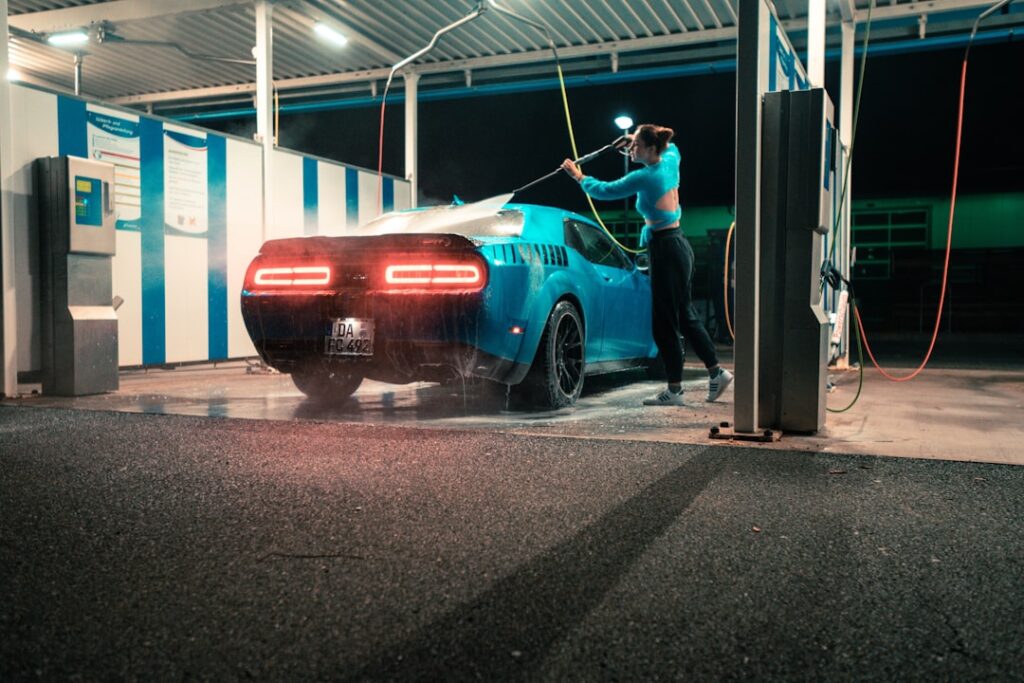
Most people assume serious cleaning power requires a gas engine, but a commercial electric pressure washer can deliver 2,000 to 3,000 PSI with none of the noise, exhaust, or pull-start hassle. For anyone cleaning inside a warehouse, a parking garage, or a food-service kitchen, a commercial electric pressure washer is not just an option, it is often the only legal choice, since gas engines cannot run in enclosed spaces without ventilation risks. These machines are built to run for hours a day, season after season, in a way consumer washers simply cannot.
I have run both gas and electric commercial rigs, and for indoor and repeat-use work, electric wins on convenience every time. Here is how to choose one that will actually survive commercial-duty cycles.
- What Separates Commercial From Consumer Electric
- Understanding PSI, GPM, and Cleaning Power
- Voltage and Power Requirements
- Top Commercial Electric Models
- Cold Water Versus Hot Water Electric
- Accessories That Multiply Productivity
- Maintenance for Long Service Life
- Detergents and Chemical Use
- Safety and Operating Practices
- Is a Commercial Electric Unit Right for You
What Separates Commercial From Consumer Electric
The word “commercial” gets slapped on a lot of marketing, so learn the real differences. A genuine commercial electric unit uses an induction motor, not a universal motor. Induction motors run cooler, quieter, and last thousands of hours; universal motors, common in $150 homeowner washers, are lighter but burn out fast under heavy use.
The pump matters just as much. Commercial machines use a triplex plunger pump with ceramic-coated pistons and a brass or forged head, rebuildable when seals wear. Consumer units use axial cam or wobble pumps that are sealed and disposable. A triplex pump can run 8 hours a day for years; a wobble pump is rated for a few hundred hours total.
- Motor: induction (commercial) versus universal (consumer)
- Pump: triplex plunger, rebuildable, versus sealed axial cam
- Duty cycle: continuous versus 1-2 hours before cooldown
- Frame: welded steel roll cage versus molded plastic
Understanding PSI, GPM, and Cleaning Power
Commercial electric washers typically range from 1,500 to 3,000 PSI and 1.5 to 3.5 gallons per minute. Do not fixate on PSI alone; flow rate does the rinsing. A 2,000 PSI machine at 3.0 GPM cleans large surfaces faster than a 2,800 PSI machine at 1.6 GPM because it moves more water. Multiply PSI by GPM to get cleaning units, the honest comparison figure.
- Fleet washing and floors: 1,500-2,000 PSI, 3.0+ GPM for fast coverage
- Concrete and equipment: 2,500-3,000 PSI with a surface cleaner
- Degreasing kitchens: consider a hot-water electric model at 180°F
Voltage and Power Requirements
This is where buyers get caught. A high-output electric washer draws serious current, and you must match it to your available power. Machines under about 1.6 GPM often run on standard 120V, 15-amp household outlets. But once you climb toward 2.0 GPM and 2,000-plus PSI, you need 120V/20A, and the strongest units require 208V or 230V single-phase or even three-phase power.
A 230V machine cannot simply plug into a normal outlet; it needs a dedicated circuit installed by an electrician, typically costing $200 to $600. Before you buy, confirm what your shop or garage offers. Running a big washer on an undersized extension cord trips breakers and, worse, overheats the motor windings. Use a 10- or 12-gauge cord no longer than 25 feet on high-draw units.
Top Commercial Electric Models
A few brands dominate the professional electric space:
- Simpson WashPro 2000: around $700, 2,000 PSI at 1.7 GPM, 120V, AAA triplex pump, a solid entry point
- Mi-T-M CW Series: $1,200 to $2,500, 1,500-3,000 PSI, 230V options, made in the USA and built for daily abuse
- Landa MHC/PE Series: $2,000 and up, including hot-water electric models with a triplex pump and stainless coil
- Karcher HD Professional: $900 to $2,000, German-engineered, strong dealer support
Expect to spend $700 to $1,500 for a capable cold-water commercial electric unit and $2,500 to $6,000 for hot water. That is real money, but the rebuildable pump and induction motor mean the machine amortizes over a decade rather than a season.
Cold Water Versus Hot Water Electric
Hot water is the secret weapon for grease. Heating water to 180-200°F dissolves oil, fat, and dried food that cold water at the same pressure just pushes around. If you clean restaurant kitchens, automotive bays, or food-processing floors, a hot-water electric unit dramatically cuts labor time and chemical use.
The tradeoff is cost and size. Hot-water electric machines carry a heating element or a fuel-fired burner, weigh more, and cost two to three times a cold-water unit. For general property maintenance, sidewalks, siding, and vehicles, cold water at the right pressure is plenty.
Accessories That Multiply Productivity
The bare machine is only part of the system. A surface cleaner, a rotating disc that houses two spray jets under a shroud, cleans flat concrete four times faster than a wand and leaves no zebra stripes. Budget $150 to $500 depending on width. A downstream chemical injector lets you apply detergent through the machine, and a hose reel with 50 to 100 feet of hose keeps you mobile.
- Surface cleaner: speeds flat work, eliminates streaking
- Turbo nozzle: adds concentrated cutting power for stubborn spots
- Downstream injector: applies soap at low pressure
- Extension wand: reaches gutters and second-story siding
Maintenance for Long Service Life
Commercial electric washers reward simple upkeep. Change the triplex pump oil after the first 50 hours and every 300 hours after that, using the manufacturer-specified non-detergent pump oil. Keep the inlet water filter clean; a clogged screen starves the pump and causes cavitation that destroys valves. Never run the pump dry, even for a few seconds.
If you operate below freezing, run pump antifreeze through the system before storage, because a cracked pump head is the most common and most expensive failure. Inspect the high-pressure hose for bulges and replace it at the first sign of a leak. Treated well, a triplex commercial pump easily outlasts several consumer machines.
Detergents and Chemical Use
Getting the most from a commercial machine means using the right chemistry, not just more pressure. A downstream injector draws detergent after the pump, applying it at low pressure through the soap nozzle, which is the safe way to feed cleaning solution without running harsh chemicals through the pump itself. For heavy degreasing, an alkaline degreaser breaks down oil and grease; for mildew and organic staining on siding and concrete, a sodium hypochlorite (bleach) solution kills the growth, a technique called soft washing.
Always use detergents rated as pressure-washer safe, and rinse chemicals off surfaces and plants promptly. Let a cleaning solution dwell for a few minutes so it can work before you rinse, rather than immediately blasting it away, this dwell time does much of the cleaning and lets you use lower pressure that protects the surface. After using any chemical, flush the injector and pump with clean water to prevent corrosion and buildup that shortens the machine’s life.
Safety and Operating Practices
Commercial machines generate real force, so safe operation matters. Always wear eye protection and closed footwear, and never point the wand at people or pets. Because these are electric, keep the machine, cords, and your hands clear of standing water where possible, use a GFCI-protected circuit, and inspect cords for damage before each use, since a compromised cord around water is a serious shock hazard.
Manage the high-pressure hose to avoid trip hazards and kinks, which spike pressure inside the line. When you stop spraying, engage the trigger lock, and release the trigger periodically rather than holding it continuously against a closed surface, which builds heat in the pump on machines without a thermal relief valve. Following these practices protects both the operator and the equipment, and it is why commercial crews establish consistent routines around every machine they run.
Is a Commercial Electric Unit Right for You
Choose a commercial electric pressure washer if you clean indoors, clean frequently, or need a machine that will not die after one busy season. The quiet operation, zero emissions, and instant start make it ideal for property managers, detailers, restaurants, and serious homeowners with large properties. The rebuildable pump means it is a long-term tool, not a disposable one.
Stick with a consumer washer only if you clean a driveway a few times a year and have easy 120V access. But if pressure washing is part of your work or you value clean, quiet, dependable power, a commercial electric machine is the investment that keeps paying off. Match the voltage to your building, size the GPM to your surfaces, and add a surface cleaner to make every hour count.