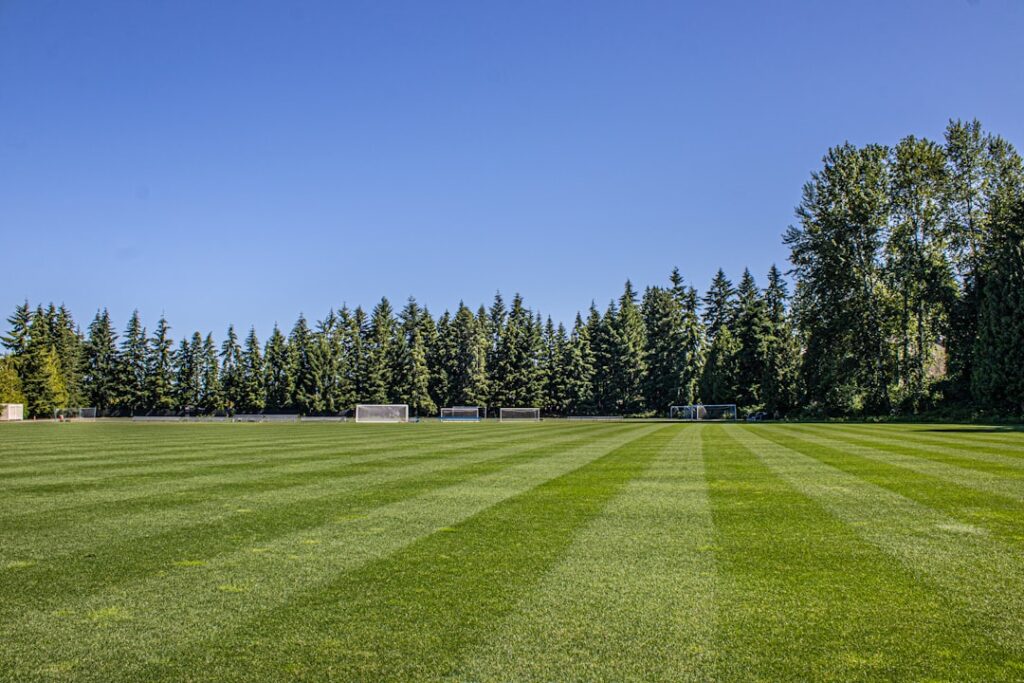
A commercial robotic lawn mower is no longer a novelty for tech-curious estate owners; it is a serious labor-replacement tool for landscaping contractors, HOA managers, sports-field crews, solar-farm operators, and municipalities maintaining acres of turf. Where a homeowner robot handles a fraction of an acre, commercial platforms are engineered to run multiple mowers across five, ten, or more acres, coordinate as a fleet, and cut on a schedule that a human crew simply cannot match without overtime. I have watched a two-person crew that spent three days a week on a single office campus reallocate that time to detail work once robots took over the open turf.
This guide breaks down the platforms that matter in 2026, the specs that separate a professional unit from a consumer toy, and the return-on-investment math that decides whether the purchase makes sense for your operation.
- What Separates Commercial from Consumer Robots
- The Major Commercial Platforms in 2026
- Acreage Capacity and Cut Width
- Boundary-Free Navigation and Fleet Management
- Slope Handling and Difficult Terrain
- ROI Versus Crew Labor
- Battery, Charging, and Runtime Logistics
- Security, Theft, and Site Considerations
- Choosing the Right Machine for Your Operation
What Separates Commercial from Consumer Robots
The gap between a backyard robot and a professional machine is not just size. Commercial units are built for duty cycles measured in thousands of hours, with sealed drivetrains, all-wheel drive on many models, and blade systems tuned for tougher grass and longer sessions. They handle steeper slopes, larger areas per charge, and rougher terrain than residential units.
The bigger difference is navigation and management. Professional robots increasingly use RTK-GPS (real-time kinematic satellite positioning) for boundary-wire-free operation accurate to a couple of centimeters, along with fleet software that lets one manager monitor dozens of mowers, set virtual zones, and receive alerts remotely. That fleet layer is what makes the economics work at scale.
The Major Commercial Platforms in 2026
A handful of manufacturers dominate the professional segment, each with a different strength:
- Husqvarna Automower 520 and 550 EPOS are the workhorses of the category. The EPOS (Exact Positioning Operating System) uses satellite plus a reference station for virtual boundaries, so you draw zones in an app instead of burying wire. They suit complex commercial grounds with multiple separated areas and are widely supported by dealers.
- Kress RTKn targets professional crews with a wireless RTK antenna network (OAS obstacle avoidance on newer units) designed for fast deployment across many sites, backed by commercial battery and charging infrastructure.
- Mammotion Luba 2 is a strong value play, an all-wheel-drive RTK robot that handles slopes up to around 75 percent grade on top models and covers multiple acres, popular with smaller contractors easing into automation.
- Belrobotics (Yamabiko/ECHO) builds dedicated large-area and sports-field robots, including units engineered specifically for soccer pitches, golf, and multi-acre industrial grounds, with fleet-scale support.
- Segway Navimow has pushed hard into higher-capacity models with vision-plus-RTK navigation, bringing boundaryless operation to a competitive price point for mid-size commercial jobs.
Acreage Capacity and Cut Width
Capacity is the first spec to match to your job. Consumer robots top out well under an acre. Commercial units span a wide range: mid-tier professional models handle roughly one to two-and-a-half acres per robot, while dedicated large-area machines from Belrobotics and Husqvarna’s top EPOS units cover five acres or more each, and operators routinely deploy several robots in parallel to blanket ten-plus acres.
Cut width matters less than you might expect because robots mow continuously rather than in a single pass. Many commercial units run relatively narrow decks, often around 8 to 22 inches, but because they operate for hours daily and keep grass at a constant height, total throughput is high. The mulching approach means clippings are cut fine and returned to the turf, which improves lawn health and eliminates bagging labor entirely.
Boundary-Free Navigation and Fleet Management
RTK-GPS is the headline feature of modern commercial robots. Instead of burying a perimeter wire that takes hours to install and breaks with aeration or root movement, you place a reference antenna and define boundaries and no-go zones in software. Repositioning a zone becomes a five-minute app edit rather than a trenching job. Accuracy of one to three centimeters keeps the robot off flower beds, cart paths, and hardscape.
Fleet management is where commercial platforms earn their keep. A single dashboard shows every robot’s location, battery state, cutting progress, and error alerts. Managers get theft notifications, geofence breaches, and maintenance reminders. For a contractor running machines across a dozen client sites, this remote visibility replaces windshield time and lets one person supervise an entire fleet from a truck or office.
Slope Handling and Difficult Terrain
Slope capability is a real differentiator and a safety consideration. Entry commercial units manage grades around 35 to 45 percent, while all-wheel-drive models like the Mammotion Luba 2 AWD and certain Husqvarna and Kress units tackle 70 percent or steeper. For solar farms, retention basins, and highway embankments, high-slope capability is the whole reason to buy a robot, since sending a person with a walk-behind onto a steep wet bank is both slow and dangerous.
Obstacle avoidance rounds out terrain performance. Newer models add camera or LiDAR-based detection to steer around pets, equipment, sprinkler heads, and people without stopping the job. On sports fields and public parks, that avoidance is essential.
ROI Versus Crew Labor
The purchase price for a commercial robotic lawn mower ranges widely, from roughly $3,000 for a capable AWD contractor model to $15,000, $20,000, or well beyond $30,000 for top-tier large-area machines and full fleet deployments with charging infrastructure. That sticker shock is real, so the math has to be run against labor.
Consider a property that takes a two-person crew four hours weekly to mow. At a loaded labor cost of, say, $45 per hour per worker, that is $360 a week, or roughly $14,400 across a 40-week season. A robot that covers the same turf runs on pennies of electricity, needs only periodic blade changes and inspection, and frees that crew for higher-margin work like beds, edging, and hardscape. On many mid-size commercial accounts, a robot pays for itself within one to two seasons, and after that the savings compound.
Other gains are harder to put on a spreadsheet but real: quieter operation that allows overnight mowing near offices and hospitals, consistent turf quality from daily cutting, reduced injury risk on slopes, and zero fuel or emissions. Factor in maintenance, seasonal storage, and the occasional service call, but for open turf at scale the economics increasingly favor automation.
Battery, Charging, and Runtime Logistics
Uptime is everything in a commercial fleet, and it comes down to battery and charging strategy. Most professional robots run lithium-ion packs sized for one to three hours of cutting per charge, then dock automatically to recharge before resuming. On large sites, the smarter approach is to schedule near-continuous operation, letting robots mow, dock, and return in cycles so the turf never grows out. Some operators stage multiple charging docks across a sprawling property to cut travel time back to base.
Plan for seasonal storage as well. Lithium packs should be stored at a partial charge in a cool, dry space over winter, and firmware should be updated before the season starts. Budget for blade replacements too, since commercial robots use small pivoting or fixed blades that wear and are cheap to swap but need regular attention, often every few weeks under heavy duty. A dull blade tears rather than cuts and stresses the motor, so blade discipline directly affects turf quality and machine life.
Security, Theft, and Site Considerations
An unattended robot worth thousands of dollars is a target, so every serious commercial platform bundles anti-theft measures. GPS tracking, geofencing, PIN locks, and instant alerts when a robot leaves its defined area are standard on Husqvarna, Kress, and Segway professional units. Some operators add physical anchoring at docks and tamper alarms for public sites like parks and schools.
Site suitability is worth assessing before you commit. Robots excel on open, contiguous turf and struggle with heavy debris, standing water, and constant obstacle traffic. Fields with goalposts, benches, and irrigation heads need those mapped as no-go zones. Walk each property, note satellite obstructions from buildings and tree lines that can degrade RTK accuracy, and confirm reliable power for docks. The best deployments start with a thorough site survey rather than a hopeful drop-and-go.
Choosing the Right Machine for Your Operation
Start with your hardest site, not your easiest. Measure the largest contiguous acreage, note the steepest slope, and count how many separated zones exist. Match those numbers to a platform’s rated capacity, slope limit, and multi-zone support, then confirm local dealer service, because a commercial robot down for weeks awaiting parts erases its savings. For most contractors, a phased rollout, one or two robots on a proven-friendly site, builds the operational confidence to scale a fleet across the portfolio.