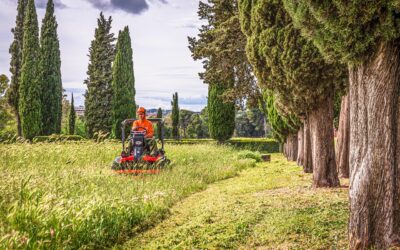
A remote controlled lawn mower is a self-propelled cutting machine you operate from a handheld transmitter, keeping the operator off the deck and away from slopes, blades, and flying debris. Originally built for municipalities and solar farms, these mowers have trickled down to homeowners with steep banks, drainage ditches, and large acreage that a ride-on cannot safely tackle.
- What a Remote Controlled Mower Is
- Types Available Today
- Slope Rating and Traction
- Cutting Width, Height, and Deck Types
- Power Source and Runtime
- How to Choose the Right Machine
- What a Remote Controlled Lawn Mower Costs
- Installation, Setup, and Training
- Operating and Running Costs
- Maintenance Routine
- Troubleshooting Common Problems
- Safety and Mistakes to Avoid
- Common Applications Beyond Steep Lawns
- Battery Management and Cold-Weather Notes
- Renting Versus Buying
- The Bottom Line
What a Remote Controlled Mower Is
Unlike a robot mower that navigates on its own, a remote controlled unit follows your commands in real time over a radio link, typically 2.4 GHz with a range of 300 to 1,000 feet. You steer, adjust cutting height, and control blade engagement from a chest-mounted or handheld controller. This human-in-the-loop design shines on terrain too dangerous or precise for autonomy, letting you stand on stable ground while the machine works a 30-degree embankment.
Types Available Today
Consumer and prosumer models split into three groups. Compact electric units with 20 to 24-inch decks suit residential slopes and run on lithium batteries. Mid-size gas or hybrid mowers with 30 to 40-inch flail or rotary decks handle brush and tall grass on estates. Heavy commercial tracked mowers with 50-inch-plus decks and diesel engines clear rights-of-way and dam faces. Flail decks chop woody growth safely, while rotary decks give a cleaner finish on maintained turf.
Slope Rating and Traction
The headline spec is slope capability. Entry-level wheeled units handle 20 to 25 degrees, while tracked commercial machines conquer 45 to 55 degrees, far beyond the 15-degree limit most manufacturers set for ride-on mowers. Rubber tracks spread weight and grip wet grass, and a low center of gravity prevents rollovers. Because no operator sits aboard, a tip-over damages equipment rather than injuring a person, which is the core safety argument for the category.
Cutting Width, Height, and Deck Types
Cutting width determines productivity. A 22-inch deck mows about 0.5 acre per hour; a 40-inch deck doubles that. Cutting height typically adjusts from 1 to 5 inches, either by electric actuator from the remote or manual spacers. Flail decks use dozens of small pivoting knives that retract on impact, ideal for hidden rocks and dense brush. Rotary decks spin one or two long blades for speed and a manicured look on lawns.
Power Source and Runtime
Electric models carry 48V to 82V lithium packs delivering 45 to 120 minutes of cutting, then need 60 to 180 minutes to recharge. Gas and diesel machines run all day on a tank and produce more torque for thick growth, but they are louder and require engine upkeep. Hybrid units use an engine-driven generator to feed electric drive motors, combining long runtime with precise low-speed control. Match the power source to job length and noise tolerance.
How to Choose the Right Machine
Start with your steepest slope and measure it with a phone inclinometer. If it exceeds 25 degrees, you need tracks. Estimate total area to set deck width and battery or fuel needs. Consider vegetation: manicured turf favors a rotary electric unit, while overgrown ditches demand a flail deck and engine power. Verify controller range covers your farthest work point with obstacles like buildings in the path, since walls degrade the radio signal.
What a Remote Controlled Lawn Mower Costs
Prices span a wide range. Compact residential electric models start around $2,000 to $4,000. Mid-size prosumer flail mowers run $6,000 to $15,000. Full commercial tracked machines with diesel engines and 50-inch decks reach $25,000 to $40,000 or more. Rental is an option for one-off clearing at roughly $300 to $600 per day. For a homeowner with a single dangerous bank, renting or hiring a service often beats ownership on cost.
Installation, Setup, and Training
There is no permanent installation, but expect a learning curve. Charge the battery or fuel up, pair the controller, and practice on flat ground until steering feels intuitive; the reversed left-right perspective when the machine faces you trips up beginners. Walk the site first to flag rocks, stumps, and irrigation heads. On slopes, always position yourself above or to the side of the mower, never directly downhill where a runaway unit could reach you.
Operating and Running Costs
Electric machines cost pennies per hour in electricity. Gas and diesel units burn 0.3 to 0.7 gallons per hour, adding up on large properties. Blades or flail knives wear and need sharpening or replacement every 25 to 50 hours in abrasive conditions. Track and tire wear, hydraulic fluid, and engine oil round out the budget. Overall, running costs stay modest next to the labor and injury risk of hand-clearing a steep bank.
Maintenance Routine
After each use, clear grass buildup from the deck and cooling vents, since packed clippings overheat motors and hide blade damage. Inspect blades or flail knives for cracks and sharpen as needed. Check track tension and look for embedded stones. On gas models, follow the engine’s oil and air-filter schedule, usually oil every 25 hours. Keep the controller battery charged and store the machine dry to protect electronics from corrosion.
Troubleshooting Common Problems
If the mower stops responding, suspect controller signal loss first; move closer and clear line of sight. Loss of drive on one side points to a jammed track or a failed drive motor. Poor cut quality means dull blades or a clogged deck. An electric unit that quits early likely has a heat-tripped controller from thick grass; slow down and lower the load. Always kill the blades and engine before approaching a stalled machine.
Safety and Mistakes to Avoid
Keep bystanders at least 75 feet away because rotary blades can throw debris hard. Never mow across your own downhill path on extreme slopes. Do not exceed the rated slope, skip the perimeter walk, or run the machine beyond radio range where it may keep moving after signal loss. Avoid wet slopes when possible, since traction drops sharply. Engage the blade only when the deck is clear of your feet and cords.
Common Applications Beyond Steep Lawns
While homeowners buy these machines mainly for dangerous banks, the same capabilities suit a range of jobs. Municipalities use them to mow highway medians and roadside rights-of-way without exposing crews to traffic. Solar farms rely on them to keep grass low beneath panel arrays where a rider cannot fit. Property managers clear retention ponds and drainage ditches that flood and stay soft. Land stewards use flail-deck models to reclaim fields overtaken by brush and saplings. For an acreage owner, a single remote controlled mower can handle overgrown pasture edges, orchard rows, and pond banks that would otherwise demand a tractor with a flail attachment or a crew with string trimmers working in the heat.
Battery Management and Cold-Weather Notes
On electric models, battery care directly affects productivity. Lithium packs lose capacity in cold weather and degrade faster if stored fully charged or fully depleted, so keep them around 50 percent for long storage and above freezing when possible. Buy a second pack if your jobs run long, since swapping beats waiting an hour to recharge. Track runtime against your acreage: a 22-inch electric unit clearing half an acre per hour on a 60-minute pack leaves little margin, so match battery capacity generously to the work. Keep charging contacts clean and let a hot pack cool before recharging, because charging a warm lithium battery accelerates wear and shortens the service life you paid a premium for.
Renting Versus Buying
For most homeowners with a single problem slope, the economics favor renting or hiring before buying. Rental yards and specialty dealers offer remote controlled slope mowers for roughly $300 to $600 per day, so an annual weekend of ditch clearing costs far less than owning a machine that sits idle the rest of the year. Hiring a professional slope-mowing service adds skilled operation and eliminates the learning curve entirely. Ownership makes sense only when you maintain steep or hazardous terrain frequently, across a large property, or on a schedule that a rental cannot conveniently cover. Run the numbers on how often you will actually use the machine before committing thousands of dollars to a purchase.
The Bottom Line
A remote controlled lawn mower turns the most dangerous mowing jobs, steep banks, ditches, and overgrown acreage, into a task you handle from solid footing. Choose based on slope, area, and vegetation, respect the range and safety limits, and keep blades and drivetrain maintained. For the right property, it replaces both a risky ride-on and hours of grueling string-trimming with a controllable, operator-safe machine.