Walk into almost any gym, hospital corridor, or busy break room and there’s a good chance you’re standing on rubber without realizing it. Commercial rubber flooring tiles are the quiet workhorse of high-traffic spaces because they take a beating and keep looking presentable. I’ve installed them under free weights, in daycare play areas, and across mechanical rooms, and the same qualities show up every time: grip, resilience, and forgiveness. This guide covers what they cost, where they shine, where they fall short, and how to buy the right ones.
Part of our Tile & Grout guide — explore the full guide →
What Are Commercial Rubber Flooring Tiles?
These are modular squares of dense rubber, typically 2 by 2 feet or 3 by 3 feet, made from either recycled tire rubber or virgin EPDM rubber. Recycled tiles are the black, speckled products you see in weight rooms, prized for durability and low cost. Virgin EPDM tiles come in cleaner colors and finer textures, which makes them a better fit for lobbies and areas where looks matter as much as function.
Thickness is where the real decisions happen. You’ll find tiles from 8mm all the way up to 3/4 inch and thicker. Thin 8mm to 10mm tiles suit general commercial traffic and light equipment. When you’re setting down dumbbell racks, plyo boxes, or dropping loaded barbells, you want 3/8 inch minimum, and serious lifting platforms call for 3/4 inch or a layered system. The thicker the tile, the more impact it absorbs and the more it protects both the subfloor and the equipment.
Installation methods vary too. Interlocking puzzle-edge tiles float over the subfloor and need no adhesive, which makes them fast to install and easy to pull up. Straight-edge tiles usually get glued down with a rubber-flooring adhesive for a permanent, seamless result. For rooms with rolling loads or wet-area risk, I almost always recommend the glued approach so tiles can’t shift or curl at the seams.
Pros of Rubber Flooring Tiles
Durability tops the list. Quality rubber tiles routinely last 15 to 20 years in commercial service, and I’ve seen weight-room installs still going strong past two decades. Rubber resists dents, absorbs impact, and springs back after heavy loads that would crack tile or dent vinyl. That resilience is why it dominates fitness and industrial spaces where the floor takes real abuse day after day.
Safety is the second big win. Rubber offers excellent slip resistance even when damp, which matters enormously in gyms, locker rooms, and entryways. It also cushions falls and reduces fatigue for people standing on it all day, so you’ll find it in commercial kitchens and behind service counters. The sound-dampening quality is a genuine bonus: rubber deadens footsteps and dropped-weight clang far better than any hard surface, which keeps noise from traveling between floors.
Maintenance stays refreshingly simple. Most rubber tiles need nothing more than regular sweeping and damp mopping with a pH-neutral cleaner. They shrug off scuffs, and because color runs through the material rather than sitting on a printed layer, scratches don’t expose a different-colored base. Many products also use recycled content, which helps with green-building goals and LEED points on commercial projects.
Cons and Limitations to Consider
Honesty matters here, so let’s talk drawbacks. The first is smell. Recycled rubber tiles, especially fresh out of the box, give off a distinct rubber odor that can linger for weeks in a poorly ventilated room. It fades over time, but in a closed space like a basement gym it can be strong at first. Virgin EPDM tiles smell far less, which is part of why they cost more.
Certain substances are rubber’s enemy. Petroleum-based products, some solvents, and greases can degrade the material, so rubber is a poor choice for auto shops or areas with oil exposure. It can also stain from certain rubber-backed mats or colored liquids left to sit. And while rubber handles impact beautifully, it can dent under sustained point loads, so a heavy piece of stationary equipment on small feet may leave permanent impressions over years.
The look is the other limitation. Rubber reads as utilitarian, and even the nicer EPDM colors won’t be mistaken for stone or wood. In client-facing lobbies where design leads, rubber often loses to LVT or polished concrete. Weight is a practical consideration too: thick rubber tiles are heavy, which makes large installs a workout and shipping costs real.
Rubber Flooring Tile Costs
Material prices land in a wide band depending on type and thickness. Recycled interlocking tiles start around $2 to $4 per square foot, making them one of the cheapest durable commercial floors available. Mid-range tiles with better color and finer texture run $4 to $8, and premium virgin EPDM or thick lifting-platform tiles reach $8 to $15 per square foot. Rolled rubber can be cheaper per foot than tiles but is harder to handle in large rooms.
Installation adds cost, though less than many floors because the work is straightforward. Interlocking tiles that float need almost no labor beyond layout and cutting, so a capable facilities crew can lay them. Glued straight-edge installs run $1.50 to $4 per square foot in labor, plus adhesive at roughly $0.50 per foot. Budget for subfloor prep, since rubber over a cracked or uneven slab will telegraph problems and seams may not sit flush.
All in, a glued commercial rubber floor typically costs $4 to $12 per square foot installed, while a floating interlocking system can come in as low as $2.50 to $6 if you handle the install internally. For a 1,000-square-foot fitness area, that’s a range of roughly $2,500 to $12,000 depending on tile grade and method, which is competitive against any comparable durable surface.
Best Applications for Rubber Tiles
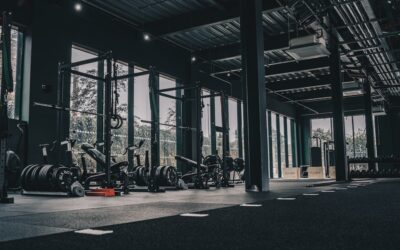
Fitness facilities are the obvious home turf, and for good reason. The impact absorption protects both the subfloor and dropped equipment, the grip keeps lifters safe, and the noise reduction keeps a gym from sounding like a construction site. Commercial rubber flooring tiles also excel in physical therapy clinics, dance and aerobic studios, and any space where people move and equipment lands hard.
Beyond fitness, rubber earns its place in healthcare corridors, commercial kitchens, entryways, mechanical rooms, and children’s play areas. Anywhere slip resistance, standing comfort, and durability outrank pure aesthetics is a strong candidate. Playgrounds use thick rubber tiles specifically for fall protection, with tiles rated to a critical fall height that matches equipment requirements. In those settings the cushioning isn’t a bonus, it’s a code-driven safety feature.
Server rooms and IT spaces are another quiet application, where anti-static and anti-fatigue rubber tiles protect equipment and the technicians who service it. Locker rooms and pool surrounds benefit from the barefoot-friendly grip and warmth compared to cold tile. I’ve even used rubber in commercial garages for tool areas and workbench zones, though never where oil and solvents are in play. The common thread across every good application is heavy use combined with a need for safety underfoot, which is exactly what rubber was built to deliver.
How to Choose the Right Rubber Tiles
Start with your traffic and load. Match thickness to use: 8mm to 10mm for general commercial areas, 3/8 inch for standard gym floors, and 1/2 to 3/4 inch where heavy weights get dropped. Underbuying on thickness is the most common mistake I see, and it shows up fast when a dropped barbell dents a subfloor a thin tile couldn’t protect.
Next, weigh recycled against virgin EPDM. Recycled wins on price and raw toughness, virgin EPDM wins on odor, color options, and finished appearance. If the room needs to look good and stay low-smell, spend the extra. If it’s a back-of-house weight area, recycled is the smart value. Confirm the installation method fits the space, choosing glued tiles for wet or high-shear areas and interlocking for spaces you might reconfigure later.
Finally, buy from a supplier who publishes real specs: thickness, density, warranty length, and slip-resistance rating. Order 5 to 10 percent extra for cuts and future replacements, and always let recycled tiles off-gas in a ventilated space for a few days before heavy use. Do the homework up front and commercial rubber flooring tiles will deliver two decades of tough, safe, low-maintenance service that few other floors can match at the price.
Prefer to explore on your own?
See how new flooring looks in your actual room in seconds — free, no signup.
Try the free Floor Studio →