
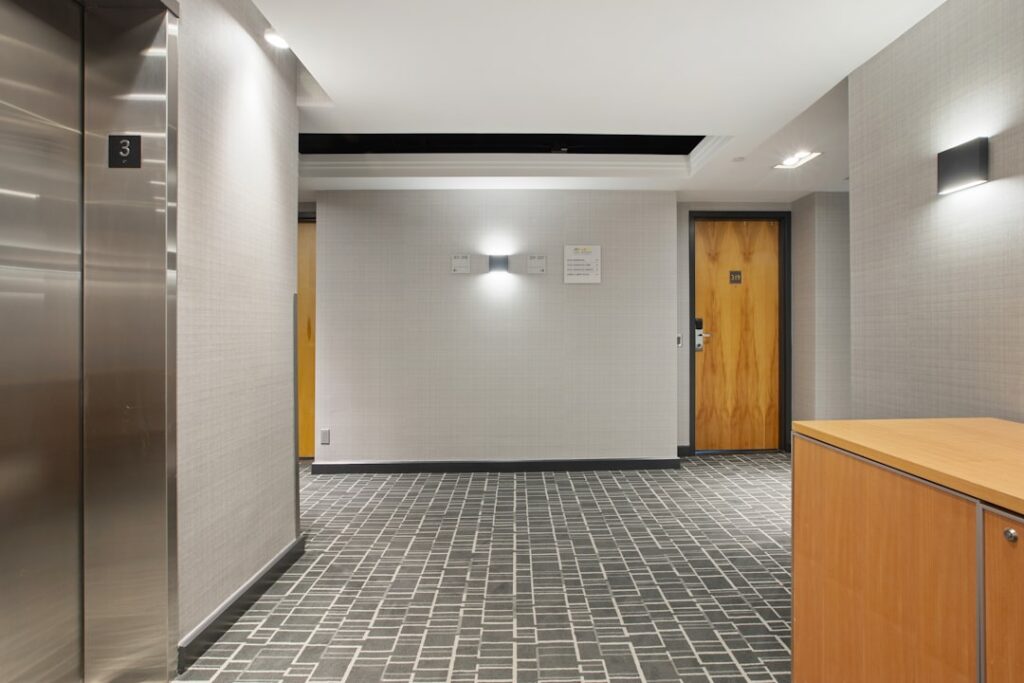
Commercial carpet tiles have revolutionized how businesses approach flooring. These modular squares (typically 18×18 or 24×24 inches) offer the warmth and comfort of carpet with practical advantages that broadloom carpet cannot match. Individual damaged tiles can be replaced in minutes, creative patterns are possible through color mixing, and installation is faster and generates less waste than traditional carpet.
Part of our Tile & Grout guide — explore the full guide →
This guide covers everything businesses and facility managers need to know about commercial carpet tiles, from product types and costs to installation methods and long-term maintenance.
Why Choose Commercial Carpet Tiles?
Easy Replacement
The single biggest advantage of carpet tiles is the ability to replace individual damaged tiles without replacing the entire floor. A stained tile in a conference room or a worn tile in a high-traffic corridor can be swapped out in minutes for a fraction of the cost of broadloom replacement.
Design Flexibility
Carpet tiles allow you to mix colors, patterns, and textures to create custom floor designs. Accent borders, directional patterns, brand colors, and wayfinding strips are all achievable with modular tiles. This design flexibility is impractical with traditional broadloom carpet.
Reduced Waste
Broadloom carpet installation generates 10 to 15 percent waste from cutting and fitting. Carpet tile waste is typically 3 to 5 percent because tiles are small enough to use partial cuts effectively.
Underfloor Access
In offices with raised access flooring (common for data cabling and HVAC), carpet tiles lift out easily to access the space below. This eliminates the need to cut broadloom carpet for maintenance access.
Faster Installation
Carpet tiles can be installed in occupied spaces with minimal disruption. There is no large-roll handling, no stretching, and no power tools. A team can tile an office over a weekend without displacing workers for extended periods.
Sound Absorption
Commercial carpet tiles significantly reduce noise in open-plan offices, call centers, and hospitality venues. They absorb impact sound (footsteps) and airborne sound (voices), improving workplace acoustics and employee comfort.
Types of Commercial Carpet Tiles
By Construction
Tufted Tiles
The most common construction type. Yarn is punched through a primary backing, then a secondary backing (typically PVC, bitumen, or cushion) is applied for stability and durability. Tufted tiles offer the widest range of styles, colors, and price points.
Woven Tiles
Yarn is woven into the backing during manufacturing, creating an integrated structure. Woven tiles are more durable and dimensionally stable than tufted tiles but cost more. They are the premium choice for high-end commercial spaces.
Needle-Punched (Needle-Felt) Tiles
Fibers are mechanically interlocked through punching rather than tufting or weaving. This creates a dense, flat-profile tile that is extremely durable and easy to clean. Common in high-traffic commercial areas like airports, retail stores, and corridors.
By Backing Type
PVC Backing
The most common commercial carpet tile backing. PVC provides dimensional stability, moisture resistance, and durability. Standard PVC tiles are 6 to 7mm thick.
Cushion Backing
Tiles with a foam or rubber cushion layer provide better underfoot comfort and sound absorption. Ideal for offices where employees stand or walk frequently.
Hardback (Non-Cushion)
Thin, rigid tiles without cushioning. Hardback tiles are the most dimensionally stable option and work well in areas with wheeled traffic (rolling office chairs, carts).
Eco-Friendly Backing
Backings made from recycled content (such as Interface’s GlasBac or Shaw’s EcoWorx) appeal to businesses pursuing sustainability certifications like LEED.
Fiber Types for Commercial Carpet Tiles
Nylon 6,6
The premium fiber for commercial carpet tiles. Nylon 6,6 offers superior resilience, stain resistance, and longevity. It maintains its appearance under heavy commercial traffic for 10 to 15+ years. Most high-end commercial tiles use solution-dyed nylon 6,6 for permanent color that resists fading and bleach.
Nylon 6
A more affordable nylon option with good performance. Nylon 6 is easier to recycle than nylon 6,6 but slightly less resilient. Suitable for moderate-traffic commercial areas.
Polypropylene (Olefin)
The budget commercial fiber. Polypropylene resists moisture and bleach but has poor resilience and tends to flatten in high-traffic zones. Best for light commercial use and areas where budget is the primary concern.
PET (Polyester)
Recycled PET carpet tiles appeal to sustainability-focused businesses. PET offers good stain resistance and color clarity but lower durability than nylon. Suitable for low to moderate traffic areas.
Standard Sizes
- 24×24 inches (61×61 cm): The most common commercial size worldwide. Universally available from all manufacturers.
- 18×18 inches (46×46 cm): Common in North America. Provides a slightly different scale for design purposes.
- Plank format (12×48 inches): Growing rapidly in popularity. Creates a linear, wood-plank-like visual effect that adds directional flow to corridors and open offices.
- Hexagonal and custom shapes: Available from premium manufacturers for unique design statements. Higher cost and waste percentages.
Cost of Commercial Carpet Tiles
- Budget tiles (polypropylene/basic nylon): $1.50 to $3.00 per square foot
- Mid-range tiles (nylon 6, standard patterns): $3.00 to $5.00 per square foot
- Premium tiles (nylon 6,6, designer patterns): $5.00 to $10.00 per square foot
- High-end designer tiles (Interface, Milliken): $8.00 to $15.00+ per square foot
- Professional installation: $0.75 to $2.00 per square foot
- Adhesive: $0.15 to $0.40 per square foot
For a 5,000-square-foot office, expect total installed costs of $12,500 to $40,000 depending on product selection and installation complexity.
Installation Methods
Full-Spread Adhesive
Pressure-sensitive adhesive is rolled onto the entire subfloor, allowed to become tacky, and tiles are pressed into place. This provides the most secure installation and is standard for high-traffic commercial spaces. The adhesive remains tacky permanently, allowing tiles to be lifted and repositioned.
Peel-and-Stick (Self-Adhesive)
Some carpet tiles come with adhesive pre-applied to the backing. Peel the release paper and press the tile down. Faster installation but less secure than full-spread adhesive. Best for light commercial and temporary installations.
TacTiles or Connector System
Interface’s patented TacTiles system uses small adhesive squares placed at tile intersections to bond tiles to each other (not to the subfloor). This eliminates wet adhesive, allows easy tile removal, and reduces VOC emissions during installation.
Loose Lay
Heavy carpet tiles with non-slip backing can be laid directly on the subfloor without adhesive. This works in small areas and on raised access floors where tiles need to be lifted frequently.
Installation Patterns
- Monolithic: All tiles aligned in the same direction for a uniform, broadloom-like appearance.
- Quarter turn: Each tile rotated 90 degrees from its neighbor, creating a subtle checkerboard texture pattern. The most popular commercial layout.
- Ashlar (brick): Tiles offset by half, similar to a brick wall pattern. Works especially well with plank-format tiles.
- Random: Tiles placed in random orientations for a casual, varied appearance. Effective with multi-colored tile selections.
Top Commercial Carpet Tile Brands
Interface
The global leader in modular carpet tiles. Known for sustainability leadership (carbon-negative products), innovative designs, and premium nylon 6,6 quality. Their Human Nature and Urban Retreat collections are design industry favorites.
Shaw Contract
One of the largest flooring manufacturers offering extensive commercial carpet tile collections. Shaw’s Cradle to Cradle certified products and EcoWorx backing appeal to sustainability-focused projects.
Milliken
Known for vibrant colors, innovative patterns, and proprietary Millitron dyeing technology that creates custom colors without minimum order requirements. Popular in hospitality and creative offices.
Mohawk Group
Offers a wide range of price points from budget to premium. Mohawk’s Duracolor fiber technology provides exceptional stain resistance and color retention.
Forbo (Tessera)
European manufacturer known for the Tessera range of commercial carpet tiles. Strong sustainability credentials and a wide selection of textures and patterns suited to corporate and educational environments.
Maintenance Guide
Daily
- Vacuum high-traffic areas daily with a commercial upright vacuum.
- Spot clean spills immediately by blotting with a clean cloth and applying carpet spot cleaner.
Weekly
- Vacuum all carpeted areas thoroughly.
- Inspect high-traffic zones for loose or shifted tiles and re-press as needed.
Monthly
- Deep vacuum with a dual-motor commercial vacuum.
- Treat visible stains with appropriate spot cleaning methods.
Quarterly to Annually
- Professional hot water extraction (steam cleaning) every 6 to 12 months depending on traffic.
- Replace any tiles that are permanently stained, worn, or damaged.
- Rotate tiles from high-traffic areas to low-traffic areas to equalize wear (possible only with matching tiles).
Frequently Asked Questions
How long do commercial carpet tiles last?
Quality nylon commercial carpet tiles last 10 to 15 years in heavy-traffic commercial environments. In moderate-traffic offices, they can last 15 to 20+ years. The ability to replace individual tiles extends the effective lifespan even further.
Are carpet tiles suitable for homes?
Yes. Commercial carpet tiles work well in home offices, basements, playrooms, and media rooms. They offer easy installation, creative design options, and the practical advantage of individual tile replacement.
Can carpet tiles be recycled?
Many commercial carpet tile manufacturers offer take-back and recycling programs. Interface, Shaw, and Mohawk all have established recycling initiatives. Nylon 6 tiles are the easiest to recycle into new carpet fiber.
Do carpet tiles shift or move?
Properly installed carpet tiles with full-spread adhesive or connector systems do not shift. Loose-lay tiles may shift at edges and under rolling chairs. Use adhesive in areas with wheeled traffic.
Final Thoughts
Commercial carpet tiles offer the ideal combination of practicality, design flexibility, and long-term value for business environments. Their modular nature solves the biggest problems with traditional carpet: maintenance, replacement, and waste. Whether you are outfitting a corporate headquarters, a school, or a creative studio, carpet tiles provide a floor that looks professional, performs reliably, and adapts to your changing needs.
For more on carpet options, visit our comprehensive carpet flooring guide.


