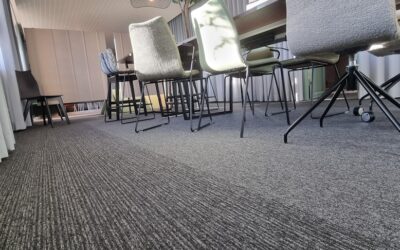
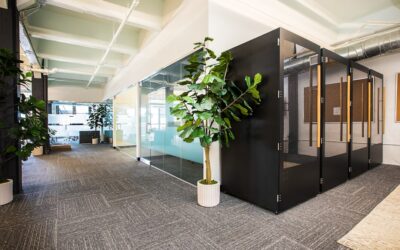
A single stained or worn 24-inch tile can be swapped in under two minutes without touching the rest of the floor, which is exactly why offices choose them over broadloom. Commercial office carpet tiles combine that modular repairability with tough construction rated for the foot traffic of a busy workplace, and increasingly they are showing up in home offices, basements, and playrooms for the same practical reasons. If you have ever had to replace an entire room of carpet because of one coffee spill, the appeal is obvious.
Part of our Tile & Grout guide — explore the full guide →
These tiles are built differently from residential carpet. The fibers are denser, the backing is rigid, and the whole thing is engineered to survive rolling chairs, spills, and years of heavy use. Here is what to look for and how to install them.
Standard Sizes and Formats
Commercial carpet tiles come in a few common formats:
- 24 by 24 inches: the classic square, easiest to lay out.
- 18 by 18 inches: smaller square for tighter patterns.
- 25 by 100 cm planks: long rectangles that mimic wood-plank layouts.
- 50 by 50 cm: the metric equivalent of the 24-inch square, common from European brands.
Planks and squares can be laid in monolithic, quarter-turn, brick, or herringbone patterns to change the look dramatically from the same product.
Face Weight and Fiber
Face weight measures the ounces of fiber per square yard and signals durability. Residential carpet runs 30 to 40 ounces. Commercial tiles for offices typically land between 18 and 28 ounces of dense, low-pile fiber, which sounds lower but wears far better because the pile is short and tightly packed to resist crushing under chairs.
Solution-dyed nylon is the gold standard for offices. The color runs all the way through the fiber, so it resists bleaching, fading, and most stains, and it stands up to commercial cleaning chemicals. Polypropylene (olefin) tiles cost less and resist moisture well, making them a smart pick for basements, but they crush faster under heavy traffic.
Backing Systems
The backing determines stability, comfort, and how the tiles install. Common types include:
- PVC backing: heavy, dimensionally stable, the traditional commercial standard.
- Bitumen backing: extremely stable and durable, common in high-traffic installations.
- Cushion or recycled backing: adds comfort underfoot and some sound absorption.
Quality backing keeps tiles flat and prevents the curling edges that trip people and collect dirt. Look for a manufacturer wear warranty of 10 years or more as a proxy for good construction.
Cost Per Square Foot
Commercial carpet tiles span a wide price range depending on quality:
- Budget commercial (olefin): $1 to $2.50 per square foot.
- Mid-grade nylon: $2.50 to $4 per square foot.
- Premium solution-dyed nylon (Interface, Shaw, Mohawk): $4 to $7 per square foot.
- Installation: $1 to $2 per square foot if you hire out, often DIY for zero.
For a 200-square-foot home office, expect $300 to $1,400 in materials depending on grade. Watch for closeout and discontinued styles, where premium tiles sell for a fraction of retail.
Why They Suit Home Use
Beyond offices, these tiles solve real problems at home. Their modular design means you replace only the damaged tile, so a kid’s spill or a pet accident costs one tile instead of a whole room. The dense, low pile is easy to vacuum and hard to stain. And the rigid backing lets them go directly over concrete slabs in basements without the moisture worries of broadloom and pad. For a home gym, playroom, or finished basement, they are hard to beat.
Installation Basics
Most carpet tiles install with releasable adhesive or peel-and-stick backing, which is well within DIY reach:
- Clean and dry the subfloor completely; fill any large cracks.
- Find the room center by snapping chalk lines corner to corner.
- Dry-lay a row in each direction to plan the pattern and cut edges.
- Apply the recommended adhesive dots or peel the release liner.
- Follow the directional arrows on the tile backs for a monolithic or quarter-turn look.
- Cut border tiles with a sharp utility knife against a straightedge.
Buy 5 to 10 percent extra for cuts and future repairs, and keep the leftovers so replacements match.
Maintenance
Upkeep is simple. Vacuum regularly with a commercial or high-suction machine, spot-clean spills promptly with a mild cleaner, and deep-clean with low-moisture encapsulation cleaning once or twice a year rather than steam extraction, which oversaturates tile backing. Rotate tiles from low-traffic areas into worn spots to even out wear over time.
Top Brands and What They Cost
A handful of manufacturers dominate the commercial market, and knowing their positioning helps you shop closeouts intelligently:
- Interface: the design leader, best patterns and sustainability, $4 to $9 per sq ft, with FLOR being their consumer-friendly line sold in smaller boxes.
- Shaw Contract: deep commercial catalog, durable EcoWorx backing, $3 to $6 per sq ft.
- Mohawk Group: broad range from budget to premium, $2.50 to $6 per sq ft.
- Milliken and Tandus: high-end cushion-backed options, $5 to $9 per sq ft.
Discontinued and overstock styles from any of these show up on flooring liquidator sites at 40 to 70 percent off. As long as you buy enough boxes with matching dye-lot numbers in one order, a closeout premium tile beats a new budget tile every time.
Peel-and-Stick vs. Adhesive Dots
How the tiles stick down affects both the install and future repairs. Peel-and-stick backing is the fastest for a DIYer and holds fine in low to medium traffic, but the adhesive can fail on damp concrete or under heavy rolling loads. Releasable adhesive applied in dots or a full trowel gives a stronger, more forgiving bond and lets you lift a tile cleanly for replacement, which is the whole point of modular flooring. For a home office over a wood subfloor, peel-and-stick is fine. Over a basement slab or under office chairs all day, spend the extra hour laying releasable adhesive.
Sound and Comfort Underfoot
One overlooked benefit is noise control, which matters in home offices on video calls and in open work areas. Cushion-backed tiles absorb footfall and reduce echo far better than hard-backed broadloom over pad. Look for a Noise Reduction Coefficient of 0.25 or higher if quiet is a priority. The trade-off is that softer cushion backing shows chair-wheel tracks faster, so in a heavy rolling-chair zone put a hard-backed tile or a chair mat over the cushioned field to protect it.