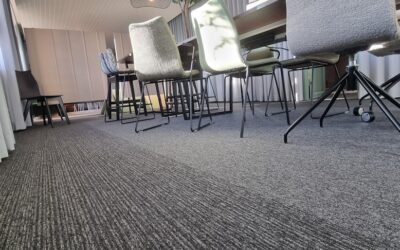
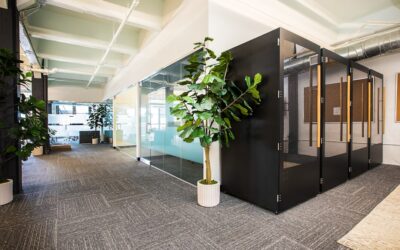
Carpet remains the most popular flooring choice for commercial offices, and for good reason. It absorbs sound, reduces fatigue for employees who stand at desks, hides wiring beneath modular tiles, and creates a polished, professional atmosphere. But office carpet is a very different product from residential carpet, and choosing the wrong type can lead to premature wear, maintenance headaches, and costly replacement.
This guide covers everything you need to know about selecting, installing, and maintaining commercial carpet for office environments — from carpet tiles versus broadloom to fiber types, ADA requirements, and realistic cost expectations.
- Carpet Tiles vs. Broadloom: Which Is Better for Offices?
- Fiber Types for Commercial Carpet
- Pile Height and Construction for Office Use
- Acoustic Benefits of Office Carpet
- ADA Compliance for Office Carpet
- Maintenance Schedules for Office Carpet
- Top Commercial Carpet Brands for Offices
- Cost of Commercial Office Carpet
- Making the Right Choice
Carpet Tiles vs. Broadloom: Which Is Better for Offices?
The first decision is format. Commercial carpet comes in two primary forms, and each has distinct advantages for office settings.
Carpet Tiles (Modular Carpet)
Carpet tiles — typically 18×18-inch or 24×24-inch squares — have become the dominant format in modern office design. They are manufactured with a built-in backing that provides cushion and dimensional stability, eliminating the need for separate carpet padding.
Advantages for offices:
- Easy access to underfloor systems. Office buildings route data cables, electrical wiring, and HVAC plenums beneath raised floors or access panels. Carpet tiles lift individually, allowing technicians to access these systems without disturbing the entire floor.
- Spot replacement. When a tile gets stained, burned, or worn beyond repair, you replace that single tile — not the entire room. This dramatically extends the functional life of the floor.
- Design flexibility. Mix colors, patterns, and textures to create wayfinding paths, zone different departments, or add visual interest. Herringbone, ashlar, and random-pattern installations add architectural character.
- Reduced waste. Carpet tile installation typically produces 3-5% waste compared to 10-15% for broadloom. Tiles can be cut and fitted precisely around columns, corners, and irregular shapes.
- Easier logistics. Tiles ship in boxes that fit in freight elevators and can be stored in small staging areas. Broadloom rolls are heavy, bulky, and require specialized delivery.
Disadvantages:
- Visible grid lines between tiles, though modern products minimize this with tight-butted edges and pattern designs that disguise seams.
- Higher per-square-foot material cost than comparable broadloom.
- Tile edges can lift or curl in high-humidity environments if adhesive fails.
Broadloom Carpet
Broadloom is traditional wall-to-wall carpet delivered in wide rolls (12 or 15 feet). It installs over separate carpet padding using tack strips at the perimeter.
Advantages for offices:
- Seamless appearance across large areas — no grid lines or tile edges.
- Lower material cost per square foot for comparable quality.
- Softer underfoot when installed with quality padding.
Disadvantages:
- Cannot access underfloor systems without cutting and re-seaming.
- Stains or damage require patching the entire area — patches are often visible.
- Seams between rolls are difficult to hide and can unravel over time.
- More installation waste and longer installation times.
For most modern offices, carpet tiles are the better choice. The access, replacement, and design advantages outweigh the slightly higher cost. Broadloom still works well in executive offices, conference rooms, and reception areas where seamless appearance is the priority.
Fiber Types for Commercial Carpet
The fiber (yarn) determines how long the carpet will look good, how it resists stains, and how it performs under heavy foot traffic.
Nylon (Type 6 and Type 6,6)
Nylon is the gold standard for commercial office carpet. It is the most resilient fiber available, meaning it bounces back after compression from foot traffic and furniture. Nylon also accepts dye well, cleans easily, and resists abrasion.
Type 6,6 nylon (branded names include Antron and Invista) has a tighter molecular structure than Type 6, making it more resilient and stain-resistant. It is the premium choice for high-traffic commercial applications.
For offices with 100+ employees or heavy daily traffic, nylon is the only fiber worth considering. It costs more upfront but maintains its appearance far longer than alternatives.
Olefin (Polypropylene)
Olefin is a budget-friendly alternative that offers excellent moisture and stain resistance. It does not absorb water, making it ideal for building entrances and break rooms where spills are common.
The downside is poor resilience — olefin fibers crush easily under foot traffic and furniture, and once matted, they do not recover. In a busy office, olefin carpet will look worn within 2-3 years, while nylon will maintain its appearance for 7-10 years.
Olefin works best in low-traffic ancillary spaces or as a temporary flooring solution when budget is the primary concern.
PET (Polyester)
PET polyester has improved significantly in commercial grades, offering good stain resistance and a soft hand feel. Some commercial PET carpets are made from recycled plastic bottles, which appeals to organizations with sustainability goals.
Like olefin, PET has lower resilience than nylon. It works for moderate-traffic offices but will show wear patterns sooner in high-traffic corridors and common areas.
Solution-Dyed vs. Piece-Dyed
Regardless of fiber type, choose solution-dyed carpet for offices. Solution-dyed fibers have color added during the manufacturing process (before the fiber is extruded), so the color goes all the way through. This makes the carpet virtually immune to bleach spots, fading, and chemical staining from cleaning products. Piece-dyed carpet, where color is applied after manufacturing, is less resistant to these issues.
Pile Height and Construction for Office Use
Office carpet needs to balance aesthetics, comfort, and function. Pile height and construction style affect all three.
Low pile (1/4 inch or less): Essential for any office with rolling desk chairs. High or plush pile creates resistance that makes chairs difficult to roll and accelerates wear in the chair’s path. Low-pile loop or textured loop construction is the standard for open office areas.
Loop pile: Yarn loops are left intact (not cut). This creates a dense, durable surface that resists crushing and hides footprints. Level loop is the most common commercial construction. Multi-level loop adds visual texture.
Cut pile: Yarn loops are cut, creating exposed fiber tips. Cut pile is softer underfoot and looks more formal, making it suitable for executive offices and conference rooms. It shows wear patterns more readily than loop pile.
Cut-and-loop: A combination that creates pattern and texture while balancing durability and appearance. Many modern carpet tile designs use cut-and-loop construction for visual interest.
Acoustic Benefits of Office Carpet
One of the strongest arguments for carpet in offices is sound control. Open-plan offices are notorious for noise problems, and hard-surface flooring amplifies footsteps, chair movement, conversations, and mechanical noise.
Carpet absorbs airborne sound (NRC rating of 0.15-0.40 depending on pile height and density) and reduces impact sound from footsteps by up to 30 decibels compared to hard flooring. Carpet tiles with thick backing systems like Shaw EcoWorx or Interface GlasBac provide additional sound absorption.
In open offices, carpet can reduce ambient noise levels by 10-15 decibels — a noticeable improvement that enhances concentration and reduces the need for white noise systems.
ADA Compliance for Office Carpet
The Americans with Disabilities Act has specific requirements for carpet in commercial spaces that must be followed:
- Pile height: Maximum 1/2 inch. For wheelchair accessibility, pile height should not exceed 1/4 inch. Most commercial carpet meets this standard.
- Firmness and stability: Carpet must be firmly attached to the subfloor and not shift, buckle, or bunch under wheelchair traffic. Glue-down carpet tiles meet this requirement more reliably than broadloom on tack strips.
- Exposed edges: Any carpet edge must have a trim or transition strip with no more than 1/4 inch height change and beveled edges.
- Padding: If padding is used (broadloom), it must be firm — no thick, squishy residential padding that impedes wheelchair movement.
Carpet tiles installed with adhesive on a level subfloor provide the most ADA-compliant installation. The tiles lay flat, do not shift, and maintain a consistent, firm surface.
Maintenance Schedules for Office Carpet
Commercial carpet requires a structured maintenance program to maintain appearance and extend life. Here is a recommended schedule for a typical office:
Daily:
- Vacuum high-traffic areas (corridors, entrances, break rooms) with a commercial upright vacuum with HEPA filtration.
- Spot-treat visible spills and stains immediately.
Weekly:
- Vacuum all carpeted areas thoroughly, including under desks and along walls.
- Inspect entrance mats and replace or clean as needed.
Monthly:
- Bonnet clean or encapsulation clean high-traffic areas. These low-moisture methods clean without saturating the carpet.
Quarterly:
- Hot water extraction (deep cleaning) of all carpeted areas. This removes embedded soil that vacuuming cannot reach.
Annually:
- Professional deep cleaning of entire carpet installation.
- Inspect for tile lifting, seam separation, and wear patterns. Replace damaged tiles.
- Apply carpet protector (fluorochemical treatment) to extend stain resistance.
A well-maintained commercial nylon carpet tile installation should last 10-15 years in a typical office environment. Without regular maintenance, that lifespan drops to 5-7 years.
Top Commercial Carpet Brands for Offices
Several manufacturers dominate the commercial carpet market, each with strengths in different areas:
Interface: The pioneer of modular carpet tiles and a leader in sustainability. Their carbon-neutral product lines appeal to organizations with environmental commitments. Known for innovative designs and biophilic patterns.
Shaw Contract: One of the largest commercial carpet manufacturers, offering an enormous range of styles, colors, and price points. Their EcoWorx backing system is 100% recyclable. Strong distribution network ensures availability.
Mohawk Group: Offers both carpet tile and broadloom with a focus on performance fibers and cradle-to-cradle design principles. Their Duracolor fiber technology provides excellent colorfastness.
Milliken: Known for premium quality and innovative backing systems. Milliken carpet tiles are among the most dimensionally stable on the market, resisting edge curling and shrinkage.
Tarkett (formerly Tandus Centiva): Strong in healthcare and education but also produces durable office carpet with ethos modular systems that emphasize indoor air quality.
Cost of Commercial Office Carpet
Commercial carpet pricing varies widely based on fiber, construction, and brand. Here are typical cost ranges for office installations:
- Budget carpet tiles (olefin/PET): $1.50–$3.50 per square foot for materials.
- Mid-range carpet tiles (nylon): $3.50–$7.00 per square foot for materials.
- Premium carpet tiles (solution-dyed nylon, designer brands): $7.00–$15.00 per square foot for materials.
- Broadloom (nylon, commercial grade): $2.00–$6.00 per square foot plus $0.50–$1.50 for padding.
- Installation labor: $0.75–$2.00 per square foot for carpet tiles; $1.00–$2.50 for broadloom.
- Subfloor preparation: $0.50–$2.00 per square foot if leveling or moisture mitigation is needed.
For a 10,000-square-foot office, expect to spend $40,000–$90,000 for a mid-range carpet tile installation including materials, installation, furniture moving, and old flooring removal.
Making the Right Choice
For most office environments, the recommended specification is solution-dyed nylon carpet tile with a low loop pile, installed with pressure-sensitive adhesive. This combination delivers the best balance of durability, maintenance ease, design flexibility, and long-term value.
Invest in quality fiber and a structured maintenance program, and your office carpet will look professional for a decade or more. Cut corners on fiber quality, and you will be replacing carpet in three to five years — which costs far more than the initial savings.