
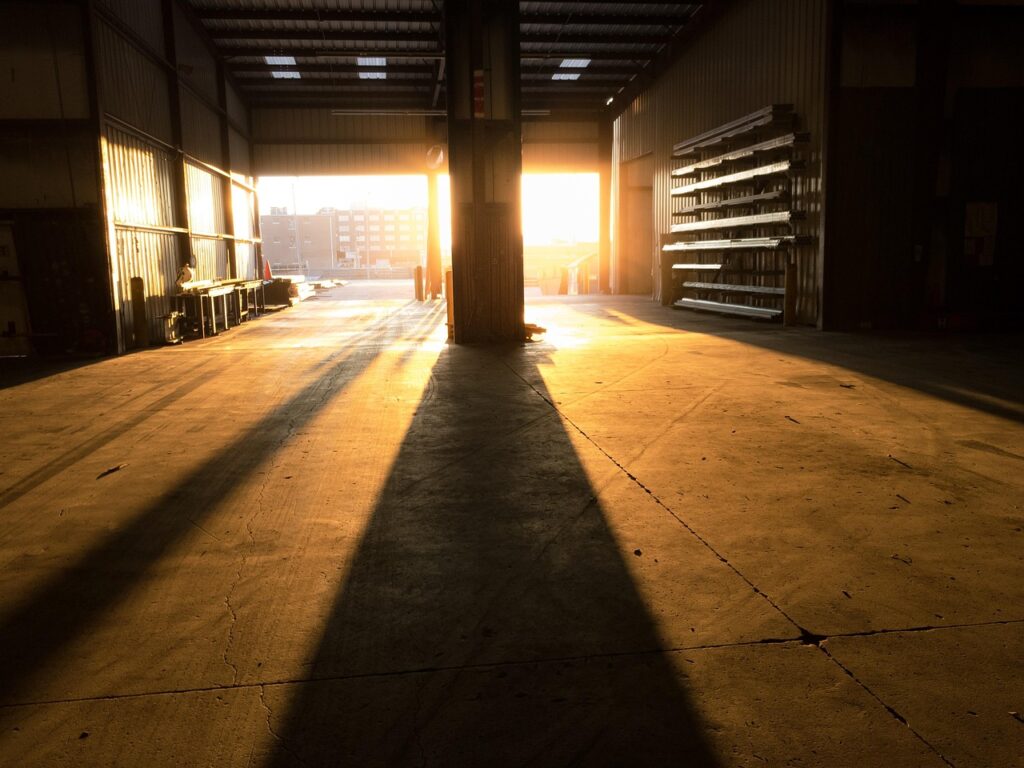
A 100,000 sq ft distribution center loses six figures a year if the floor is wrong: forklift tire wear, dust generation, joint spalls, slow inventory cycle times, and OSHA-flagged slip incidents all trace back to the floor. Commercial warehouse flooring is one of the highest-stakes flooring categories because the daily abuse is relentless: 6,000 pound electric forklifts hitting joints, pallet jacks dragging across uneven seams, dropped cases of product, hot tire pickup from rubber wheels, and 24/7 operation that leaves no maintenance window. Picking the right system means understanding what each surface actually delivers and where it falls short.
The Main Surface Options
Most US warehouses run one of four floor systems, sometimes combined in zones:
- Polished concrete: Densified, ground, and sealed slab
- Epoxy or polyaspartic coating: Pigmented resin coating over concrete
- Urethane mortar: Heavy-build resin system 1/4 to 3/8 inch thick
- Sealed bare concrete with surface densifier only: Lowest cost option
- Specialty zones: Static-control flooring, rubber mats, raised access flooring
For most general-purpose warehouses, polished concrete or epoxy systems handle 90 percent of the building, with specialty surfaces in production cells or static-sensitive areas.
Cost Per Square Foot
Realistic 2026 pricing for warehouse-grade installations:
- Densifier and basic seal on existing slab: $1.50 to $3 per sq ft
- Polished concrete (salt-and-pepper finish): $4 to $7 per sq ft
- Polished concrete (medium aggregate exposure): $7 to $9 per sq ft
- Epoxy coating (single-coat 18 to 22 mil): $4 to $7 per sq ft
- Epoxy with broadcast quartz or flake (40 to 60 mil): $7 to $11 per sq ft
- Polyaspartic coating: $6 to $10 per sq ft
- Urethane mortar (heavy industrial): $12 to $22 per sq ft
- Joint sealing or filling (per linear foot, not sq ft): $3 to $9 per LF
For a typical 50,000 sq ft warehouse, full polished concrete runs $200,000 to $350,000, while a mid-spec epoxy system runs $200,000 to $400,000. Joint repair across the building can add $30,000 to $80,000 more.
Polished Concrete: The Workhorse
Polished concrete dominates new warehouse construction because it leverages the slab already required structurally. The process grinds, densifies, and polishes existing or new concrete to a hardened, low-maintenance surface that resists tire marks, dust, and most chemical exposure.
Key benefits include extremely long lifespan (30-plus years before any major refurbishment), low ongoing maintenance (auto-scrub with neutral cleaner, no waxing), excellent reflectivity that reduces lighting requirements by 10 to 25 percent, and no coating delamination risk because there is no separate top layer to fail.
Limitations include slow installation (5 to 8 days for a typical bay due to grit progression), staining vulnerability if the slab is damaged before sealing, and an aesthetic that some tenants find too industrial. Heavy point loads from pallet feet and forklift wheels can also wear surface gloss in trafficked aisles, requiring buffing every 12 to 24 months.
Epoxy Systems: Color and Joint Bridging
Epoxy coatings bring color, line striping integration, and a thicker protective layer than polish alone. A 40 mil broadcast quartz system is significantly more impact and chemical resistant than polished concrete and bridges minor joint issues that polish exposes.
Epoxy disadvantages center on lifespan and recoat needs. A typical commercial epoxy lasts 5 to 12 years before recoating in heavy traffic, and the recoat process requires 2 to 4 days of operational shutdown. Hot tire pickup is also possible with cheap epoxy systems, where rubber transfers off forklift tires and lifts the coating.
For warehouses needing color zoning, painted aisles, or chemical resistance beyond water-based concerns, epoxy or polyaspartic earns its higher recurring cost.
Urethane Mortar: For Punishing Conditions
Food processing, brewing, and chemical-handling warehouses move beyond standard epoxy into urethane mortar. These 1/4 to 3/8 inch systems handle thermal shock (steam cleaning, freezer transitions), concentrated acid spills, and impact loads that crack thinner systems.
Cost is 2 to 3 times standard epoxy, but lifespan in the right environment runs 15 to 25 years with minimal maintenance. The wrong choice in a beverage plant is one of the most expensive mistakes in commercial flooring.
Joint Repair: The Hidden Budget Item
Most warehouse floor failures originate at slab joints. Forklift tires hitting an unfilled or spalling joint generate impact loads that cascade into wider damage. A proactive joint program looks like:
- Inspect all joints annually for spalling, settlement, and seal failure
- Fill control joints with semi-rigid polyurea or epoxy at construction
- Repair spalled edges with high-strength polymer mortars before they widen
- Clean and reseal joints every 5 to 7 years
Joint repair costs $3 to $9 per linear foot. For a 100,000 sq ft warehouse with typical 15-foot grid, that is roughly 6,500 LF of joints, or $20,000 to $60,000 to address fully. The alternative is much higher slab repair costs over time.
Pros: Why Spec Quality Matters
Operational benefits compound. A high-spec floor reduces forklift maintenance (less wheel wear, less battery drain on smooth surfaces), lighting costs (reflectivity), cleaning costs (auto-scrub instead of polish-and-strip), and slip incidents (proper traction profile for the equipment).
Tenant retention also improves. Industrial tenants with 5 to 10 year leases negotiate harder when the floor is failing, and lease renewal becomes uncertain. A well-maintained floor supports rent escalations.
Cons and Trade-offs
Initial capital is real. Even a basic polished concrete spec on a 100,000 sq ft warehouse runs $400,000-plus. Owners with thin operating margins may delay flooring investment in favor of HVAC or roof, then pay double when they have to replace damaged sub-floors.
Operational disruption is unavoidable. Even fast-cure systems require 24 to 72 hour shutdowns by section. Coordination with operations is mandatory and costly if poorly planned.
Specifications are easy to get wrong. The same product label can mean very different things across manufacturers. Always reference cured film thickness, abrasion resistance (Taber test), and chemical resistance certifications, not just the product name.
Maintenance Schedule
- Daily: Auto-scrub or sweep depending on dust and debris levels
- Weekly: Inspect for spills and address chemical exposure promptly
- Monthly: Spot-check joints and high-traffic aisles for wear
- Annually: Full joint inspection, gloss measurement, professional clean
- Every 3 to 7 years: Recoat or polish refresh depending on system
- Every 10 to 25 years: Major resurfacing or full replacement
How to Spec the Right Floor
Walk the operation before specifying. Note forklift type and weight, daily traffic counts in aisles, chemical exposure, temperature swings, and shutdown tolerance. A grocery distribution warehouse with refrigerated zones needs urethane mortar in those zones, while a dry-goods 3PL operation runs fine on polished concrete throughout. Spending 20 percent more in the right zone often saves 50 percent over the asset life. Always get three bids from contractors with verified references on similar facilities, and request 5-year photo follow-ups, not just initial install photos.
Prefer to explore on your own?
See how new flooring looks in your actual room in seconds — free, no signup.
Try the free Floor Studio →

