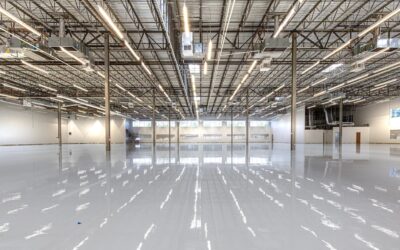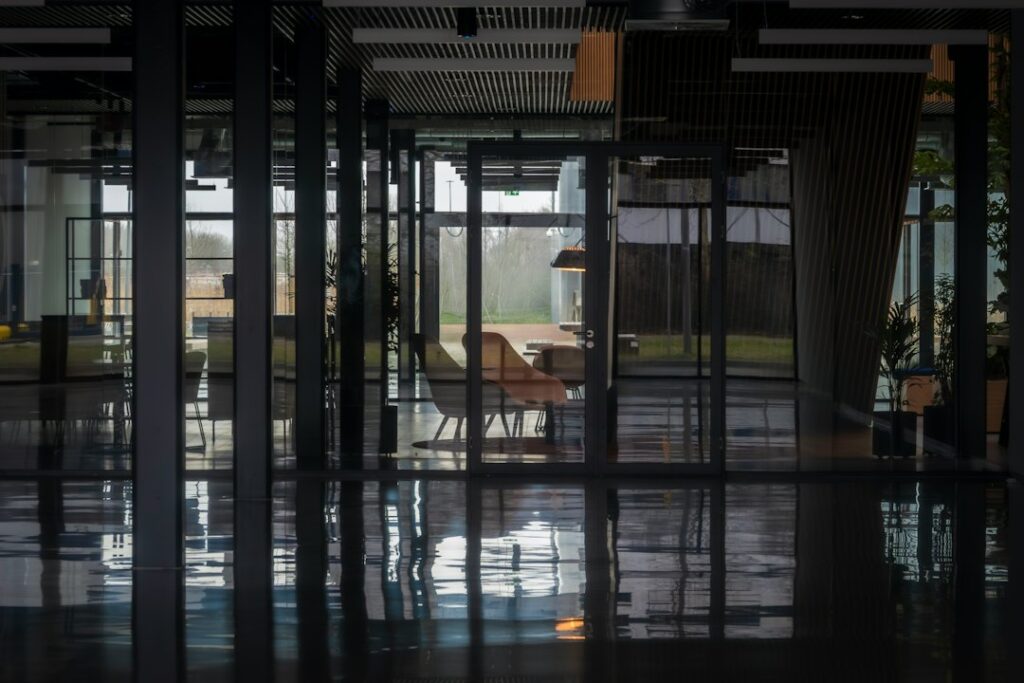
In a commercial setting, the finish on a floor works as hard as the floor itself. The right commercial floor finishes protect the substrate, control slip resistance, withstand heavy traffic and rolling loads, and stand up to chemicals, all while looking professional. Whether you are outfitting a warehouse, a retail space, a restaurant kitchen, or a converted commercial property at home, choosing the wrong finish leads to early wear, constant maintenance, and safety problems. This guide explains the major finish systems, how they perform, and where each one fits.
What a Floor Finish Actually Does
A finish is the protective and decorative layer applied over or into a floor substrate. It seals porous surfaces against moisture and stains, provides a wear layer that takes the abuse instead of the floor, controls how slippery the surface is, and defines the appearance. In commercial environments, the finish also has to meet practical demands such as chemical resistance in a kitchen, static control in an electronics facility, or easy cleanability in a healthcare setting.
Epoxy Coatings
Epoxy is one of the most common commercial floor finishes, especially over concrete in warehouses, garages, and industrial spaces. It is a two-part resin that cures into a hard, seamless, chemical-resistant surface bonded to the concrete. Epoxy handles heavy foot and vehicle traffic, resists oils and many chemicals, and can be tinted, flaked, or finished with a clear topcoat for slip resistance.
The trade-offs are real. Epoxy requires thorough surface preparation, often diamond grinding or shot blasting, and a clean, dry, properly profiled substrate. Installed cost commonly ranges from roughly $3 to $12 per square foot depending on the system and prep required. Skipped prep is the leading cause of epoxy peeling later.
Polished Concrete
Polished concrete has become a go-to finish for retail, showrooms, and modern offices because it uses the existing slab. The process mechanically grinds and polishes the concrete with progressively finer diamond abrasives, then densifies it with a chemical hardener and seals it. The result is a hard, dust-free, low-maintenance surface that resists abrasion and reflects light well.
Polished concrete is durable and economical over the long term, with typical costs from about $3 to $8 per square foot for a basic polish and higher for stained or decorative finishes. Its limitations are that it relies on the quality of the existing slab and offers limited chemical resistance compared to epoxy.
VCT and Floor Wax
Vinyl composition tile (VCT) remains a staple in schools, offices, and retail because of its low cost and easy repairability. VCT itself is not the finish; it is maintained with layers of floor wax or acrylic finish that are stripped and reapplied periodically. This wax layer provides the gloss and protects the tile, but it requires an ongoing maintenance cycle of cleaning, stripping, and recoating.
VCT material is inexpensive, often around $1 to $3 per square foot installed, but the labor of maintaining the wax over time adds up. It is a reasonable choice where budget is tight and an in-house cleaning crew can keep up with the finish schedule.
Urethane and Specialty Coatings
Where conditions are especially demanding, specialty resinous finishes step in. Urethane coatings, often applied as a topcoat over epoxy, add UV stability and resistance to abrasion and chemicals, which makes them common in food processing and pharmaceutical facilities. Urethane cement (urethane mortar) systems tolerate thermal shock and heavy washdowns, making them ideal for commercial kitchens and breweries. Other specialty finishes include methyl methacrylate (MMA) for fast cure times and electrostatic dissipative (ESD) coatings for environments with sensitive electronics.
Comparing the Options
No single finish wins everywhere; the right choice depends on traffic, chemical exposure, budget, and downtime tolerance.
- Epoxy: Best for chemical resistance and heavy industrial loads; needs serious prep.
- Polished concrete: Best for low maintenance and a clean modern look using the existing slab.
- VCT with wax: Lowest material cost; highest ongoing maintenance.
- Urethane systems: Best for kitchens, washdowns, and thermal extremes.
- Specialty coatings: For UV stability, static control, or rapid installation needs.
Slip Resistance and Safety
In any commercial space, slip-and-fall liability makes traction a serious consideration, not an afterthought. A glossy epoxy or polished concrete floor can become slick when wet, so finishes in kitchens, entryways, and washdown areas often need an anti-slip additive broadcast into the topcoat, or a textured profile that improves grip. The static coefficient of friction is the measure used to compare slip resistance, and many facilities specify a minimum value for safety. Balancing a clean, reflective appearance with adequate traction is one of the key design decisions in finish selection.
Consider where water, oil, or other contaminants will land and choose accordingly. A showroom floor can prioritize shine, while a commercial kitchen must prioritize grip, even at the cost of some gloss. Matching slip resistance to the actual conditions protects both employees and the business.
Surface Preparation Is Everything
No matter which finish you choose, the result is only as good as the preparation underneath. For resinous coatings like epoxy and urethane, the concrete must be clean, sound, dry, and mechanically profiled, usually by diamond grinding or shot blasting, so the coating bonds properly. Skipping or shortcutting this step is the leading cause of premature peeling, bubbling, and delamination. Moisture in the slab is a particular enemy; excess vapor can push a coating right off the floor, which is why a moisture test before coating is standard practice on slabs at risk.
For polished concrete, the condition and quality of the existing slab dictate the final appearance, so cracks and surface defects should be repaired before polishing begins. Budgeting adequate time and money for prep is the single best predictor of a finish that lasts.
Maintenance Drives Long-Term Cost
The cheapest finish to install is rarely the cheapest to own. Polished concrete and epoxy require relatively little daily upkeep beyond cleaning, while waxed VCT demands a recurring strip-and-recoat cycle that consumes labor and materials for years. When comparing finishes, factor in the maintenance program and the cost of downtime during recoating, especially in spaces that cannot easily close. A finish that costs slightly more to install but needs far less ongoing maintenance often wins on total lifetime cost.
Final Thoughts
Selecting commercial floor finishes is a balance of durability, chemical and slip performance, appearance, and lifetime cost. Match the finish to the real demands of the space, invest in proper surface preparation, and weigh the ongoing maintenance burden, not just the install price. Get those factors right and the finish will protect your floor and your budget for years.
Prefer to explore on your own?
See how new flooring looks in your actual room in seconds — free, no signup.
Try the free Floor Studio →