Slips, trips, and falls account for roughly a quarter of all reported workplace injuries, and few rooms are riskier than a busy kitchen where grease, water, and food debris coat the floor for hours at a time. Choosing the right non slip commercial kitchen flooring is one of the most important safety decisions an operator makes, because a single fall can mean lost wages, an insurance claim, and a health inspection headache. This guide breaks down the materials that actually hold up, what they cost, and how to read the slip-resistance numbers that manufacturers print on their spec sheets.
Part of our Kitchen Remodeling guide — explore the full guide →
Why Slip Resistance Matters in a Commercial Kitchen
A residential kitchen sees the occasional water spill. A commercial kitchen deals with standing water near dish pits, animal fat aerosolized from the fryer, soap film, and constant foot traffic in rubber-soled shoes. That combination turns an ordinary floor into a skating rink. The metric most professionals watch is the coefficient of friction (COF). A dynamic COF of 0.42 or higher on a wet surface is the widely referenced threshold for “high traction,” and many insurers and franchisors now require documentation that a floor meets it.
The other reason slip resistance matters is liability. If an employee or delivery driver falls and the floor cannot be shown to meet a recognized traction standard, the operator often shoulders the cost. Spending a little more upfront on a tested, certified surface is cheaper than a single settlement.
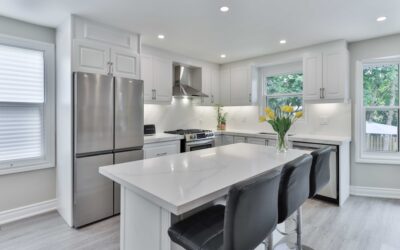
While you’re upgrading the kitchen floor, it might be a good time to rethink the seating too. Swapping out old bar stools is one of those small changes that makes the whole room feel more pulled together.
We may earn a commission when you purchase through our links.
The Main Flooring Options
There is no single best material for every kitchen. The right pick depends on your budget, how much grease you generate, and whether you can shut down for installation. Here are the surfaces that dominate the commercial market.
- Quarry tile: The traditional workhorse. Dense, fired clay tile with an abrasive surface that grips well even when greasy.
- Epoxy and urethane resin coatings: Poured seamless systems that can be broadcast with aggregate for traction.
- Slip-resistant porcelain tile: Modern tiles rated R10 to R12 with textured faces.
- Vinyl safety flooring (sheet vinyl): Welded sheets with embedded grit, common in healthcare and food prep.
- Rubber flooring and anti-fatigue mats: Often used in front of stations rather than as a full floor.
Quarry Tile: The Industry Standard
Quarry tile has been the default in restaurant kitchens for decades, and for good reason. The unglazed clay body is naturally abrasive, so it keeps its grip as it wears. It resists thermal shock from hot oil and boiling water, and it shrugs off heavy carts and dropped pans. With an epoxy grout and a proper sloped installation toward floor drains, a quarry tile floor can last 20 years or more.
The downsides are real, though. Installation is labor intensive, the grout lines need periodic regrouting, and the hard surface is unforgiving for staff who stand for ten-hour shifts. Expect material and labor in the range of $10 to $20 per square foot installed, more if the subfloor needs prep or drains relocated.
Epoxy and Urethane Resin Floors
Seamless resin floors have become the fastest-growing choice for new builds and remodels. A urethane mortar system, sometimes called urethane concrete, is poured over the slab and broadcast with silica or aluminum oxide aggregate to create a textured, grippy finish. Because there are no grout lines, there is nowhere for bacteria to hide, which is why these systems pass demanding health audits.
Resin floors tolerate thermal shock better than thin-film epoxy and handle the temperature swings near ovens and steam tables. The catch is that installation requires a dry, properly prepped slab and a curing window, often 12 to 24 hours, during which the kitchen cannot operate. Installed pricing typically runs $7 to $15 per square foot for a quality urethane system, and cheaper thin coatings should be avoided because they delaminate under hot grease.
Slip-Resistant Porcelain and Vinyl
Textured porcelain tile rated R11 or R12 is a solid middle-ground option, offering the cleanability of tile with a face designed for wet traction. It costs roughly $8 to $16 per square foot installed. Welded safety vinyl is the budget-friendly alternative at about $5 to $10 per square foot, easy to clean and comfortable underfoot, though it does not handle dropped knives or dragged equipment as well as tile or resin.
Reading Slip Ratings Correctly
Manufacturers use several rating systems, and mixing them up leads to bad buys. The R-value (R9 through R13) comes from a ramp test using oil and is common on European tile. The DCOF (dynamic coefficient of friction) under the ANSI A326.3 standard is the US benchmark, with 0.42 wet as the floor for interior wet areas. For a kitchen, look for R11 or higher, or a documented wet DCOF well above 0.42. Do not trust marketing words like “anti-slip” without a tested number behind them.
Pros and Cons at a Glance
Every option trades something. Quarry tile and porcelain win on durability and grip but cost more and are hard on the legs. Resin floors win on hygiene and seamlessness but demand professional installation and downtime. Vinyl wins on price and comfort but loses on impact resistance. Anti-fatigue mats improve comfort and traction at workstations but must be lifted and cleaned daily or they trap grease and become a hazard themselves.
Maintenance Keeps the Grip
Even the best non-slip floor becomes slippery if grease builds up in the texture. Use a degreasing cleaner formulated for commercial kitchens, scrub with a deck brush or auto-scrubber, and rinse thoroughly so no film remains. Mopping with dirty water just spreads grease and is a leading cause of “the floor was supposed to be non-slip but isn’t.” Schedule a deep scrub weekly and address spills immediately with a wet-floor sign in place.
How to Choose
Start with your volume of grease and water. High-output kitchens with fryers and steam should lean toward quarry tile or urethane resin. Lower-volume prep areas, cafes, and bakeries can do well with porcelain or safety vinyl. Factor in downtime tolerance, your slab condition, and whether your insurer or franchise requires a specific tested rating. When comparing quotes, ask each installer for the documented wet DCOF or R-rating, the warranty terms, and a sample you can test with wet shoes. D and G Flooring recommends getting at least three itemized bids and confirming that subfloor prep and drainage are included, because those line items are where surprise costs hide. With the right material and a disciplined cleaning routine, a non-slip kitchen floor protects your staff and your bottom line for many years.
Prefer to explore on your own?
See how new flooring looks in your actual room in seconds — free, no signup.
Try the free Floor Studio →