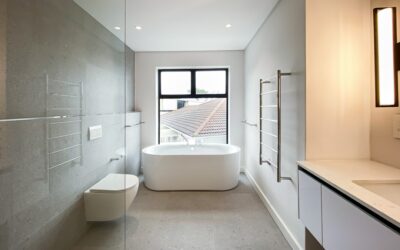
Choosing the right non slip wet room flooring is the single most important safety decision you will make when building a curbless, fully waterproofed bathroom. Falls in the bathroom send hundreds of thousands of Americans to the emergency room every year, and a wet, smooth surface is the leading cause. A floor engineered with the correct slip resistance, measured by a coefficient of friction, dramatically lowers that risk while still looking like a finished, high-end space. This guide walks through the materials, the ratings that actually matter, and the trade-offs so you can buy with confidence.
What Makes a Wet Room Different
A wet room is a bathroom where the shower area is open to the rest of the room and the entire floor is sealed and graded to drain. There is no raised shower tray and often no glass enclosure. Because water reaches every part of the floor, the surface cannot rely on staying dry the way a traditional bathroom does. That means slip resistance is not a nice-to-have; it is the core performance requirement. The floor must shed water toward a drain with a gentle slope, usually around a quarter inch per foot, and grip bare feet even when soapy.
Understanding Slip Ratings
Two rating systems dominate product listings in the United States. The first is the DCOF, or dynamic coefficient of friction, published under the ANSI A326.3 standard. For floors expected to get wet, look for a DCOF of 0.42 or higher. The second is the European R-rating, which runs from R9 (lowest grip) to R13 (highest). For a wet room, R10 is the practical minimum, and R11 or R12 is better for the shower zone itself.
- DCOF 0.42 or above: meets the recognized wet-area benchmark
- R10: acceptable for general wet room floors
- R11 to R12: recommended directly under the showerhead
- Small mosaic tiles: extra grout lines add grip underfoot
Ratings are a starting point, not a guarantee. Texture, tile size, and grout coverage all change real-world traction.
Material Options Compared
Several materials work well in a wet room, and each balances grip, looks, and cost differently.
Textured porcelain tile is the most popular choice. It is dense, nearly waterproof on its own, and available in slip-rated finishes that mimic stone or wood. Small-format porcelain mosaics are especially good in the shower zone because the many grout joints create a naturally grippy surface.
Natural stone such as slate or tumbled travertine offers a beautiful, organic texture that grips well when honed rather than polished. The trade-off is that stone is porous and needs sealing every year or two to resist staining.
Safety vinyl sheet flooring is a commercial-grade product with embedded grit, delivering a high R-rating and a fully welded, seamless surface. It is the most slip-resistant option available and is common in accessible and senior-friendly designs, though its utilitarian look does not suit every home.
Anti-slip rubber flooring is warm underfoot and very grippy, popular in family and accessible bathrooms, but it has a softer, sportier aesthetic that reads more like a gym than a spa.
The Pros of Non Slip Wet Room Flooring
The advantages go well beyond safety, though safety leads the list.
- Major reduction in fall risk, especially valuable for children, older adults, and anyone with mobility challenges
- A seamless, curbless layout that is fully accessible to wheelchairs and walkers
- Easier cleaning because there is no shower tray lip or enclosure track to scrub
- A modern, open, spa-like look that can make a small bathroom feel larger
- Better long-term waterproofing when the whole floor is tanked and sealed correctly
The Cons to Weigh
No product is perfect, and a wet room asks for some compromises.
- Textured surfaces collect soap scum and grime in their micro-grooves, so they need more frequent scrubbing than a smooth floor
- Heavily textured flooring can feel rough on bare feet
- Proper installation is demanding; the waterproof membrane and floor slope must be exactly right or leaks follow
- Upfront cost is higher than a standard bathroom because of the tanking, drainage, and labor involved
- Some highly rated safety surfaces look industrial and may not match a luxury design
What It Costs
Material prices vary widely. Slip-rated porcelain tile generally runs $3 to $10 per square foot, natural stone $5 to $15, safety vinyl $3 to $8, and anti-slip rubber $4 to $9. Those are material figures only. The waterproofing membrane, drain, and professional installation typically add the largest share of a wet room budget, since the tanking work is what protects the rest of your home. Always budget for a qualified installer here; this is not the project to cut corners on labor.
Installation Essentials
A wet room lives or dies by its waterproofing. The subfloor must be tanked with a continuous membrane that runs up the walls several inches, and the floor must be sloped toward a linear or point drain. Tile is then set over the membrane with a waterproof thin-set, and joints are sealed. Grout choice matters too; epoxy grout resists water and mold far better than standard cement grout in a constantly wet environment. Even with the most slip-resistant flooring, pairing it with a grab bar and a fold-down shower seat is a smart safety upgrade.
Maintenance Tips for Lasting Grip
Textured floors keep their slip resistance only if they stay clean. Soap film and body oils can fill the micro-texture and make a rated surface slippery again. Clean weekly with a pH-neutral cleaner and a stiff brush, rinse thoroughly, and squeegee standing water toward the drain after showers. Reseal natural stone on schedule, and inspect grout lines annually for cracks that could let water reach the subfloor. A well-ventilated room, helped by an exhaust fan, also slows mold growth in the grout.
Is It Right for Your Home
Non slip wet room flooring is an excellent fit for accessible bathrooms, family homes with young children, and anyone planning to age in place. It is also a strong choice for small bathrooms where an open, curbless layout maximizes usable space. If you prefer the lowest possible maintenance and do not need a barrier-free design, a traditional shower enclosure with a slip-rated tile floor may suit you better. Whatever you choose, prioritize the slip rating first and the looks second. The specialists at D and G Flooring suggest sampling a few textures in person, wetting them, and standing on them barefoot before you commit, because the floor that feels safe underfoot is the one that will actually protect your family for years to come.
Prefer to explore on your own?
See how new flooring looks in your actual room in seconds — free, no signup.
Try the free Floor Studio →