
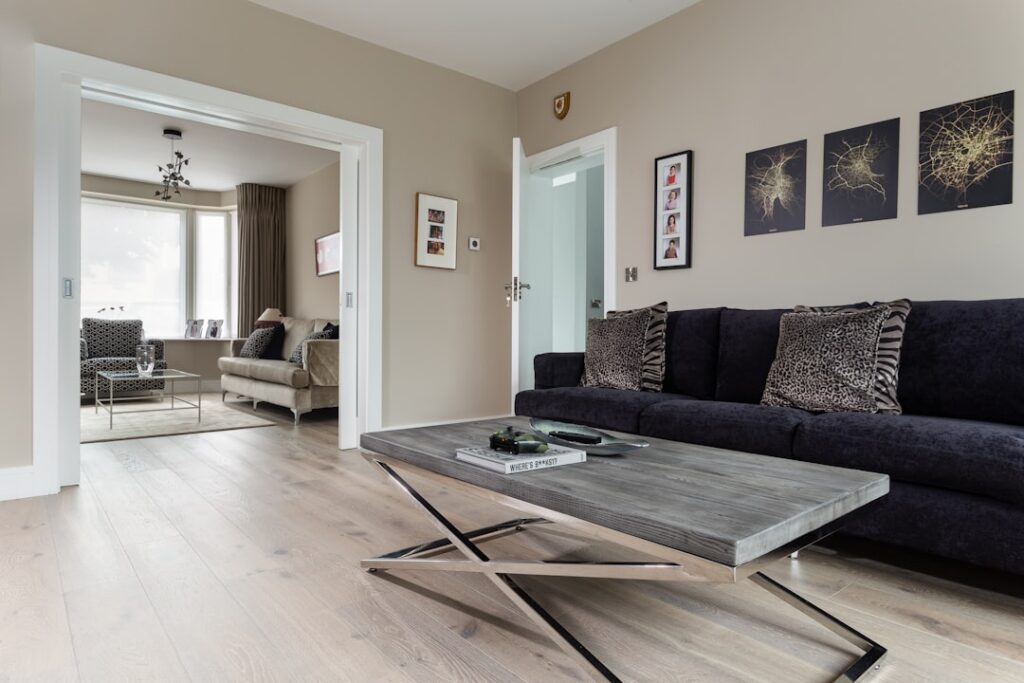
A restaurant in Portland spent $48,000 installing white oak floors, then replaced them fourteen months later because the contractor specified a 2mm residential wear layer in a space that sees 800 covers a night. That single decision explains most commercial wood flooring failures. Commercial wood flooring can absolutely survive hotels, offices, and showrooms, but only when the species, construction, and finish are chosen for the traffic load rather than aesthetics alone. This guide walks through the specs that actually matter before you sign a purchase order.
How Commercial Differs from Residential
The wood looks identical. Everything underneath is not. A commercial-grade product starts with a thicker wear layer, usually 4mm to 6mm versus the 1mm to 3mm you find in residential engineered planks. That extra material allows two to four professional sand-and-refinish cycles across a 20 to 30 year service life. Residential engineered product typically supports one refinish or none at all.
Finishes also differ. Commercial floors ship with aluminum-oxide reinforced UV cured finishes rated AC4 or AC5, or with penetrating hardwax oils designed for spot repair. Residential polyurethane is softer, scratches faster, and looks terrible after 18 months of rolling office chairs.
Species That Actually Hold Up
Janka hardness is the single most useful number when comparing species. The scale measures the force required to embed a steel ball halfway into a plank. Anything below 1,200 is going to dent in a commercial setting within the first year.
- White oak (Janka 1,360): The workhorse. Tight grain hides minor dents, takes stain beautifully, and costs $6 to $12 per sq ft for quality commercial product.
- Hickory (Janka 1,820): Roughly 30% harder than oak. Pronounced grain variation hides wear. Runs $7 to $14 per sq ft.
- Hard maple (Janka 1,450): Standard for basketball courts and dance studios. Uniform grain, ultra-smooth. $6 to $11 per sq ft.
- Brazilian cherry (Janka 2,350): Extremely dent resistant but color-shifts dramatically with UV exposure. $8 to $15 per sq ft.
- Engineered bamboo strand (Janka 3,000+): Hardest mainstream option. $5 to $9 per sq ft. Performs well but lacks the warmth of true hardwood.
Solid vs Engineered for Commercial Use
Most commercial specifications call for engineered product, and for good reason. A quality engineered plank with a 6mm white oak wear layer over a multi-ply birch or poplar core is more dimensionally stable than solid wood, resists the humidity swings common in buildings with aggressive HVAC cycling, and can be glued directly to concrete slabs without a plywood subfloor.
Solid wood still has a place in restorations, historic buildings, and anywhere the design intent requires nail-down installation over sleepers. Budget for longer acclimation (at least 14 days onsite) and a plywood subfloor over concrete.
Finishes and Wear Ratings
Abrasion Class ratings are your clearest signal of durability. AC4 handles light commercial (boutiques, executive offices, small retail). AC5 is the minimum for hotels, restaurants, showrooms, and general retail. AC6 exists for heavy public spaces like airports and museums.
Site-finished floors allow full customization of stain and sheen but require four to seven days of downtime during installation. Factory-finished planks with micro-beveled edges install in one day per 1,000 sq ft but cannot be stained to a custom color later. Many commercial jobs split the difference with a factory-finished product that accepts on-site recoat every four to six years.
Pros of Specifying Real Wood
Wood floors increase perceived property value in hospitality and retail. Hotels with hardwood in lobbies and corridors consistently price rooms 8 to 15% higher than comparable properties with carpet, according to JLL hotel sector data. Wood also outlasts LVT in high-end environments: a 30-year lifecycle for refinishable engineered wood versus 10 to 15 years for premium LVT.
Acoustics improve over tile, and the material is genuinely sustainable when sourced FSC-certified. Many projects pursuing LEED v4.1 points specify wood for Material Ingredients and Sourcing of Raw Materials credits.
Cons and Deal Breakers
Wood is intolerant of standing water. Front entrances exposed to snow and salt, public restrooms, and pool decks all belong in tile or porcelain plank, not wood. Even commercial-grade finishes will fail within 18 months under constant moisture.
Rolling loads also punish hardwood. Hospital corridors, warehouse offices, and any space with pallet jacks or heavy carts should specify a harder option like quartzite tile or concrete. Finally, refinishing requires closing the space for three to five days. Hotels and restaurants need to plan phased shutdowns or off-season scheduling.
Installed Cost Ranges
For a 5,000 sq ft office lobby, expect the following all-in numbers including demolition, moisture testing, material, glue-down installation, base shoe, and final finish:
- Entry-level engineered oak, AC4: $45,000 to $60,000
- Mid-range engineered white oak, AC5, 6mm wear layer: $70,000 to $95,000
- Premium wide-plank European oak, hardwax oil finish: $110,000 to $165,000
- Solid hickory, site-finished, historic restoration: $120,000 to $180,000
Moisture testing with calcium chloride or in-situ RH probes is non-negotiable over concrete slabs and adds $800 to $1,500 to any commercial bid. Skip it at your peril.
Specification Checklist
Before signing, confirm the following with your supplier and installer. Request a written warranty covering both wear layer and finish for the intended traffic category. Require a moisture mitigation report showing concrete slab RH below 75%. Specify aluminum-oxide or ceramic-reinforced UV cured finish, not plain polyurethane. Order 7 to 10% attic stock for future repairs. And build a quarterly maintenance schedule into the lease or ownership budget: dust mopping daily, neutral pH cleaner weekly, recoat every four to six years.
Bottom Line
Done right, commercial wood flooring is one of the few finishes that genuinely appreciates in appearance with age while delivering 25-plus years of service. Done wrong, it is a seven-figure lawsuit waiting to happen. The difference comes down to species hardness, wear layer thickness, finish rating, and an installer who owns a moisture meter.
Prefer to explore on your own?
See how new flooring looks in your actual room in seconds — free, no signup.
Try the free Floor Studio →

