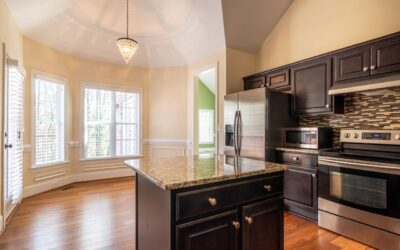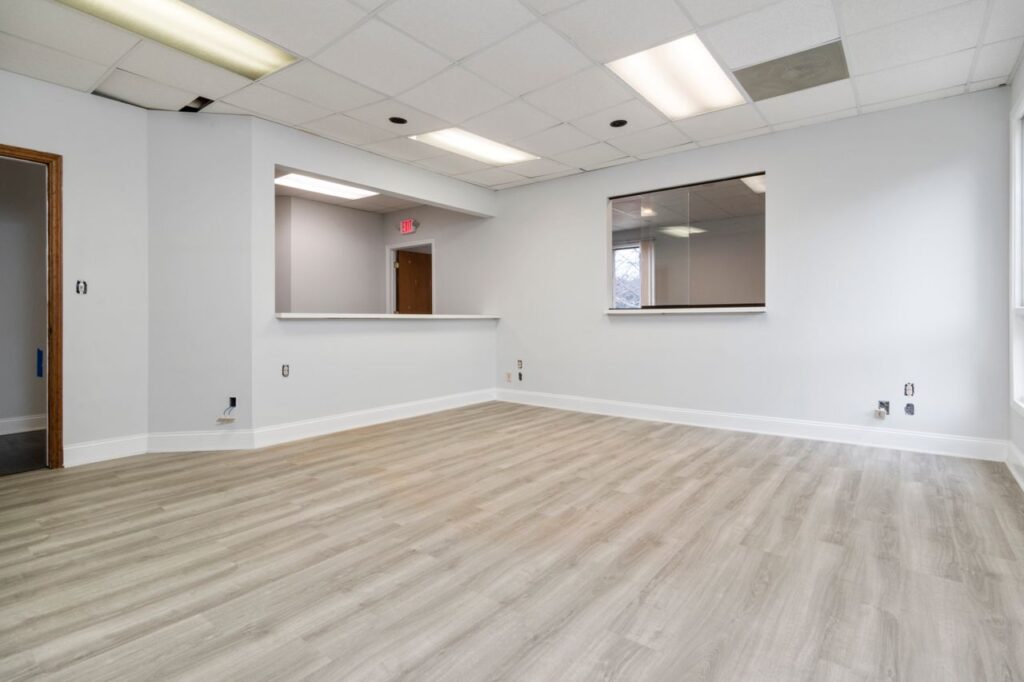
The hardwood in a busy restaurant takes more abuse in six months than a home floor sees in twenty years. Stilettos, dropped silverware, rolling carts, daily deep cleaning, and 200+ foot traffics per hour demand material that was never designed to hide in a living room. Commercial hardwood flooring is a distinct product category with thicker wear layers, harder species selection, factory-applied commercial finishes, and warranty terms keyed to actual traffic counts. This guide covers what separates commercial-spec hardwood from residential, which brands specify-in most often, and how to budget accurately.
What Makes a Floor “Commercial”
Three technical differences separate commercial hardwood from residential lines:
- Wear layer thickness: 4-6 mm on engineered commercial products vs. 2-3 mm for residential
- Finish chemistry: seven to nine coats of UV-cured aluminum oxide urethane vs. four to five on residential
- Janka hardness floor: specifications typically demand 1,290+ Janka rating for public spaces
Commercial products are also tested and rated to NWFA and ASTM standards for abrasion resistance, indentation, and chemical resistance in ways residential lines rarely report.
Species Built for Abuse
Not every hardwood survives commercial use. These species dominate spec sheets for a reason:
- Hickory (Janka 1820): hardest domestic species, dramatic grain, popular for brewpubs and retail
- White oak (Janka 1360): the all-around workhorse, stable, beautiful with any stain
- Hard maple (Janka 1450): tight grain, clean modern look, basketball courts and dance studios
- Red oak (Janka 1290): classic American look, strongest grain pattern, easy to source
- Brazilian cherry/Jatoba (Janka 2350): extreme durability, deep red color, premium spec
Softer species — pine, walnut, hemlock — belong in lower-traffic residential applications only.
Leading Commercial Brands
When architects and contractors specify commercial hardwood flooring, a handful of names dominate proposals:
Ten Oaks
Ten Oaks is a specialist commercial mill based in Pennsylvania, offering solid and engineered products specifically for office, retail, and light industrial use. Known for their UV-oil finishes and wide-plank formats up to 12 inches. Expect material pricing of $8-$14 per sq ft on engineered lines.
Aacer Flooring
Aacer is Wisconsin-based, specializing in maple and oak sports-floor products. Their maple flooring sits under countless high school and college basketball courts, and the same construction adapts to retail, showroom, and event space installs. Premium maple ships around $10-$16 per sq ft.
Boen Arena
Boen is a Norwegian manufacturer with a strong US commercial presence. Their Arena line is engineered for sports and high-traffic public floors, featuring a proprietary Live Pure Natural finish that delivers a near-raw wood appearance with commercial durability. Installed cost runs $12-$18 per sq ft.
Additional Commercial Specifications
Anderson Tuftex Kinsella Live Sawn, Mirage Admiration, Mullican Heritage, and Shaw Epic Plus all offer commercial-grade product lines worth bidding against the specialists above.
Solid vs. Engineered for Commercial Use
Engineered hardwood dominates commercial installations for three practical reasons: dimensional stability in HVAC environments, adaptability to concrete slab subfloors common in commercial construction, and faster install timelines. A 5/8-inch engineered plank with a 4 mm real-wood wear layer delivers the refinish-once capability most commercial projects need, at 60-70% the cost of comparable solid hardwood.
Solid hardwood still wins for historical restorations, high-end hospitality, and projects where multiple future refinishes are expected over a 40-year floor life.
Finish Systems That Matter
Commercial finishes are the unsung hero of these floors. Current commercial specifications lean toward three finish systems:
- UV-cured aluminum oxide urethane (factory-applied): hardest and most scratch-resistant, 9-coat systems common
- Hardwax oil (Rubio Monocoat Pro, Osmo Polyx Pro): easier spot repair, natural appearance, excellent for hospitality
- Waterborne commercial polyurethane (Bona Traffic HD, Loba 2K Supra): site-applied, strong repairable coating
For new construction, factory UV finishes offer the longest initial wear. For historic buildings where sanding is feasible, site-applied commercial polyurethane delivers renewability.
Subfloor Requirements
Commercial hardwood succeeds or fails on subfloor prep. Plywood over joist systems need moisture content testing (target 8-10%), flatness verification to 3/16-inch over 10 feet, and proper fastening before installation. Concrete slabs require an in-situ RH test with readings below 75% before any glue-down work starts.
Skipping these steps on a commercial job creates warranty disputes that dwarf the cost of doing it right.
Installation Methods
- Full-spread glue-down: most common for engineered commercial plank over concrete
- Nail-down: 18-gauge cleats into plywood subfloor, standard for solid hardwood
- Floating (commercial-rated only): fastest install, only for specified floating engineered systems with commercial underlayment
Commercial adhesives from Bostik, Mapei, and Sika carry specific ratings — use a urethane adhesive with moisture-mitigation compatibility for any slab installation.
Cost Breakdown
A realistic all-in cost for premium commercial hardwood flooring in a retail or office environment looks like:
- Premium engineered material with 4 mm wear layer: $9-$16 per sq ft
- Professional glue-down installation: $4-$7 per sq ft
- Moisture mitigation (slab prep): $1.50-$3 per sq ft
- Trim, transitions, and base shoe: $400-$1,200 per project
Commercial projects of 3,000-10,000 sq ft often include mill-run allowances, upgraded warranty packages, and dedicated project management — budget accordingly.
Maintenance and Long-Term Performance
A commercial hardwood floor maintained properly lasts 25-40 years with one or two mid-life refinishes. The key operational practices:
- Walk-off matting at every entrance — 10-15 feet of matting removes 90% of grit
- Daily dust-mopping with microfiber
- Weekly damp cleaning with pH-neutral commercial cleaner (Bona Pro Series)
- Annual professional recoat (not a full sand) in high-traffic zones
- Spot-refinish before damage reaches the wear layer base
When to Specify Alternatives
Commercial hardwood is not universal. For wet-service environments (restaurants near dishwashing, gyms with pool access, healthcare corridors), porcelain tile or commercial LVT outperform any wood product. Hardwood shines in office lobbies, retail, hospitality, casual dining, and specialty fitness spaces where the warmth of real wood supports the brand experience.
For the right commercial project, a well-specified commercial hardwood floor ages into one of the most valuable visual assets in the building — not a liability replaced every seven years.
Prefer to explore on your own?
See how new flooring looks in your actual room in seconds — free, no signup.
Try the free Floor Studio →