
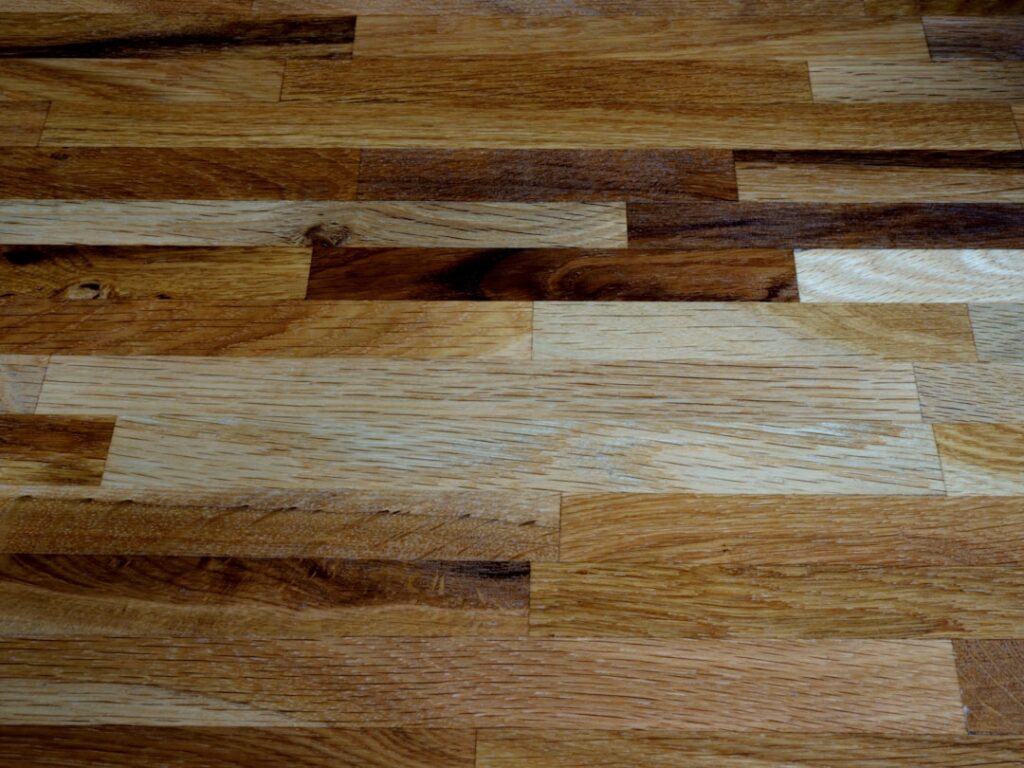
Maple flooring delivers a clean, light aesthetic that has made it a favorite for modern and contemporary interiors. Hard maple (Acer saccharum) boasts a Janka hardness of 1,450 lbf — harder than both red and white oak — and its fine, subtle grain creates a smooth, uniform surface that brightens any room. From NBA basketball courts to upscale residential kitchens, maple’s combination of durability, beauty, and versatility has earned it a permanent place in the flooring market.
This guide covers everything about maple flooring — its hardness, cost, staining challenges, solid vs engineered options, the sports flooring connection, pros and cons, best room applications, and maintenance requirements.
- What Is Maple Flooring?
- Janka Hardness: Harder Than Oak
- Appearance and Grain
- Maple in Sports and Gym Flooring
- Solid vs Engineered Maple
- Maple Flooring Cost
- Staining Challenges: Why Maple Is Difficult to Stain
- Pros and Cons of Maple Flooring
- Best Rooms and Design Styles
- Maintenance and Care
- Frequently Asked Questions
What Is Maple Flooring?
Maple flooring is milled from the hard maple tree (Acer saccharum), also known as sugar maple or rock maple. This species grows predominantly in the northeastern United States and southeastern Canada, where cold winters produce the slow growth that makes the wood so dense and hard.
Hard maple should not be confused with soft maple (Acer rubrum), which is a different species with a lower Janka hardness of approximately 950 lbf. When flooring is labeled simply as “maple,” it almost always refers to hard maple. Soft maple is occasionally used in lower-cost products and should be identified specifically.
Maple has a long history in North American construction and furniture making. Its hardness, fine grain, and ability to take a smooth finish have made it a preferred wood for bowling alleys, dance floors, gymnasium surfaces, and high-end cabinetry. In residential flooring, maple offers a naturally light, clean appearance that works beautifully in contemporary, Scandinavian, minimalist, and transitional interiors.
Janka Hardness: Harder Than Oak
Hard maple’s Janka rating of 1,450 lbf places it above both red oak and white oak on the hardness scale. Among common domestic species, only hickory (1,820) is significantly harder.
| Wood Species | Janka Hardness (lbf) | Compared to Maple |
|---|---|---|
| Hickory | 1,820 | 26% harder |
| Hard maple | 1,450 | — |
| White oak | 1,360 | 6% softer |
| Red oak | 1,290 | 11% softer |
| American walnut | 1,010 | 30% softer |
| Soft maple | 950 | 34% softer |
| Black cherry | 950 | 34% softer |
This hardness makes maple an excellent choice for high-traffic residential areas. It resists dents from dropped objects, scratches from chair legs, and the general wear of daily use. The dense, closed grain structure also means the surface is naturally smoother than open-grained species like oak, giving maple a refined, polished feel underfoot.
Appearance and Grain
Maple’s subtle, fine grain is one of its most distinctive characteristics. Unlike oak’s prominent cathedral patterns or hickory’s dramatic color swings, maple has a tight, even grain that produces a smooth, almost creamy surface. This understated texture makes maple ideal for spaces where the floor should complement the design rather than dominate it.
The natural color of hard maple ranges from nearly white to light cream or pale golden. Some boards exhibit a light pinkish or reddish-brown hue, particularly in the heartwood. Select or first-grade maple minimizes color variation for the most uniform appearance, while character grade includes more natural markings, mineral streaks, and subtle color differences.
Maple is also known for occasional figuring — curly maple (tiger stripe), bird’s-eye maple, and quilted maple are all highly prized variations that occur naturally. These figured boards are typically reserved for specialty applications and premium flooring products, commanding significantly higher prices than standard maple.
Maple in Sports and Gym Flooring
Hard maple is the official flooring surface for NBA basketball courts and is the standard for professional and collegiate gym flooring across North America. The Maple Flooring Manufacturers Association (MFMA) certifies maple specifically for athletic use, and there is no substitute that matches its combination of hardness, resilience, and consistent ball bounce.
What makes maple ideal for sports flooring is its combination of surface hardness and underlying elasticity. The wood is hard enough to resist the constant impact of athletic shoes and provide a consistent surface for ball bounce, yet it has enough give in its cellular structure to reduce fatigue on athletes’ joints. This balance of performance characteristics is unique to hard maple.
For homeowners, the sports flooring connection translates into a practical benefit: maple’s proven performance in the most demanding environments confirms its durability for residential use. If a maple floor can withstand nightly NBA games, it can certainly handle a busy household.
Home gym owners who want a premium exercise surface often choose hard maple for dedicated workout rooms. The same performance characteristics that benefit professional athletes — consistent surface, excellent durability, and shock absorption — enhance any home fitness space.
Solid vs Engineered Maple
| Feature | Solid Maple | Engineered Maple |
|---|---|---|
| Construction | 100% hard maple, 3/4″ thick | Maple veneer over plywood core |
| Thickness | 3/4″ | 3/8″ to 5/8″ |
| Wear layer | Full board | 2mm – 4mm |
| Refinishing | 3 – 5 times | 1 – 2 times |
| Installation | Nail-down | Nail, glue, or float |
| Moisture stability | Low (maple moves significantly) | High |
| Below grade | Not recommended | Yes, with vapor barrier |
| Material cost | $4 – $8 per sq ft | $4 – $9 per sq ft |
An important note about solid maple: it is one of the most moisture-sensitive domestic hardwoods. Maple expands and contracts more dramatically than oak or hickory in response to humidity changes. Solid maple installations require carefully controlled indoor humidity (35%–55%) and proper acclimation before installation. Gaps in winter and cupping in summer are common complaints when humidity is not managed.
For this reason, engineered maple is often the better choice for homes without year-round climate control, for installations over concrete or radiant heat, and in regions with extreme seasonal humidity swings. The cross-laminated plywood core resists the dimensional movement that makes solid maple challenging in these situations.
Maple Flooring Cost
Maple flooring is competitively priced with oak and falls in the mid-range of domestic hardwood options.
| Cost Component | Price Range |
|---|---|
| Solid maple (material) | $4 – $8 per sq ft |
| Engineered maple (material) | $4 – $9 per sq ft |
| Professional installation | $3 – $5 per sq ft |
| Total installed (solid) | $7 – $13 per sq ft |
| Total installed (engineered) | $7 – $14 per sq ft |
| Figured maple (bird’s-eye, curly) | $10 – $20+ per sq ft |
| Underlayment (floating install) | $0.25 – $0.75 per sq ft |
For a 500-square-foot project, expect total installed costs of $3,500 to $7,000 for standard maple flooring. Figured or specialty maple can significantly increase this budget. Maple is typically less expensive than walnut and comparable in price to white oak, making it an excellent value given its superior hardness.
Staining Challenges: Why Maple Is Difficult to Stain
One of maple’s most well-known drawbacks is its tendency to stain blotchy. The dense, closed grain structure that makes maple so smooth also causes it to absorb stain unevenly. Areas of varying density within the wood take up different amounts of pigment, resulting in a mottled, patchy appearance that can be disappointing.
This staining challenge is particularly evident with medium and dark stains. Light stains and natural finishes tend to work well because there is less pigment to distribute unevenly. The blotching issue worsens with darker colors, making very dark stains on maple risky without professional application techniques.
How to Get Better Stain Results on Maple
- Use a pre-stain wood conditioner — partially seals the grain for more even absorption
- Apply gel stain instead of liquid stain — gel stain sits on the surface rather than penetrating, reducing blotchiness
- Sand to a lower grit — stopping at 120 grit rather than 150 or 180 leaves the grain slightly more open for stain penetration
- Use a dye stain — water-soluble dyes penetrate more evenly than pigmented stains
- Apply multiple thin coats — building color gradually produces more consistent results than one heavy application
- Consider a tinted finish — adding color to the polyurethane coat rather than staining the raw wood
Many professionals recommend embracing maple’s natural light color rather than fighting its staining characteristics. If you want a dark floor, species like oak or walnut accept dark stains far more predictably than maple.
Pros and Cons of Maple Flooring
Pros
- Excellent hardness — Janka 1,450 exceeds oak and resists dents effectively
- Clean, modern aesthetic — subtle grain and light color suit contemporary design
- Smooth surface — closed grain creates a naturally refined feel
- Brightens rooms — light color reflects light and makes spaces feel larger
- Proven durability — trusted in sports arenas and gymnasiums worldwide
- Good value — mid-range pricing for above-average hardness
- Sustainable domestic species — abundant in North American forests
Cons
- Stains blotchy — difficult to achieve even color with medium and dark stains
- High moisture sensitivity — solid maple expands and contracts more than oak
- Shows dirt easily — light color reveals dust, crumbs, and pet hair
- Yellows over time — natural maple develops a warm amber tone with UV exposure
- Limited character — subtle grain may feel too plain for rustic or traditional settings
- Not ideal for open-concept — the light, uniform look can feel monotonous over large areas
Best Rooms and Design Styles
Maple flooring excels in interiors that prioritize clean lines, light tones, and modern sensibility. Its understated grain and bright color serve as a neutral canvas that lets furniture, art, and architectural details take center stage.
| Design Style | Compatibility | Notes |
|---|---|---|
| Contemporary / Modern | Excellent | Maple’s clean look is a natural fit |
| Scandinavian | Excellent | Light wood is a hallmark of Scandinavian design |
| Minimalist | Excellent | Subtle grain avoids visual clutter |
| Transitional | Good | Bridges modern and traditional effectively |
| Mid-century modern | Good | Works well with period furniture and warm accents |
| Farmhouse / Rustic | Poor | Lacks the grain character these styles require |
| Traditional | Fair | Oak is typically a better fit for traditional homes |
The best rooms for maple flooring include living rooms, bedrooms, home offices, and kitchens in modern homes. Maple also works beautifully in home gyms and exercise rooms, drawing on its athletic heritage. For rooms that need a warmer, more characterful look, pair maple with natural wood furniture, woven textiles, and warm lighting to add depth to the space.
Maple is not the best choice for very high-humidity environments like bathrooms or mudrooms. Its moisture sensitivity makes it risky in these spaces, even in engineered form. Consider other hardwood options or waterproof alternatives for moisture-prone rooms.
Maintenance and Care
Daily and Weekly Care
- Sweep or vacuum frequently — maple’s light color shows debris quickly, so plan on sweeping every 1–2 days in high-traffic areas
- Damp mop weekly — use a cleaner specifically formulated for hardwood floors
- Clean spills immediately — maple’s moisture sensitivity means standing water is a real risk
- Use microfiber cloths — gentle on the finish and effective at capturing dust
Humidity Management
Humidity control is critical for maple flooring. Maintain indoor relative humidity between 35% and 55% year-round. Use a humidifier in winter and a dehumidifier or air conditioning in summer. Maple floors in uncontrolled environments commonly develop gaps in winter and cupping in summer.
Preventing UV Yellowing
Maple’s natural aging process turns the light cream color to a warm amber or golden tone. This yellowing is accelerated by direct sunlight. To slow the process, use UV-blocking window films, close blinds during peak sun hours, and periodically rearrange area rugs and furniture to ensure even color development across the floor.
Refinishing
Solid maple can be refinished 3 to 5 times. Maple sands smoothly due to its fine grain and takes polyurethane finishes beautifully. Water-based polyurethane is recommended for maple because it preserves the wood’s natural light color, while oil-based polyurethane adds an amber tint that may not be desired.
Frequently Asked Questions
Is maple flooring harder than oak?
Yes. Hard maple has a Janka hardness of 1,450 lbf, compared to 1,290 for red oak and 1,360 for white oak. Maple is approximately 12% harder than red oak and 7% harder than white oak, giving it better dent resistance.
Why does maple stain unevenly?
Maple’s dense, closed grain structure causes it to absorb stain at inconsistent rates across the wood’s surface. Areas of varying density take up different amounts of pigment, creating a blotchy, mottled appearance. Using a pre-stain conditioner, gel stain, or dye stain can improve results significantly.
Does maple flooring turn yellow?
Yes. Natural maple develops a warm golden or amber tone over time, especially with UV exposure from sunlight. Oil-based polyurethane finishes accelerate this yellowing. To maintain maple’s light color longer, use a water-based finish and protect the floor from direct sunlight with window treatments.
Is maple good for kitchens?
Maple works well in kitchens thanks to its hardness and smooth surface. However, its light color shows stains and spills more readily, and its moisture sensitivity requires prompt cleanup. If you cook frequently and worry about water exposure, engineered maple with a durable finish is the better choice over solid.
Can maple flooring be installed in a basement?
Only engineered maple should be installed in basements. Solid maple is too moisture-sensitive for below-grade installation. Engineered maple with a plywood core and a proper vapor barrier can perform well in dry, climate-controlled basements.
How does maple compare to white oak for flooring?
Maple is harder (1,450 vs 1,360 Janka), lighter in color, and has a more subtle grain. White oak has more visible grain character, better stain absorption, and superior moisture resistance. White oak is the more versatile choice; maple is better for specifically modern, light-toned interiors.
Is maple flooring good for pets?
Maple’s hardness makes it more scratch-resistant than softer species, which helps with pet claws. However, its light color shows pet hair (especially from dark-furred animals) more than darker woods. Regular sweeping and keeping nails trimmed will keep a maple floor looking great in a pet-friendly home.
Prefer to explore on your own?
See how new flooring looks in your actual room in seconds — free, no signup.
Try the free Floor Studio →

