I have built decks in pressure-treated pine, cedar, ipe, PVC, and just about every generation of composite since the early boards that turned gray and grew mushrooms. A modern composite deck is a genuinely good product now, but the category still gets sold with a level of hype that sets homeowners up for disappointment. Composite is not maintenance-free, it is not cooler than wood in the sun, and the boards within a single brand’s catalog can vary more in quality than the boards between two competing brands. This guide covers what the material actually is, how the major brands differ, and the trade-offs nobody mentions at the lumber desk.
Part of our Decks & Outdoor guide — explore the full guide →
What Composite Decking Actually Is
Composite decking is a blend of wood fiber (usually recycled sawdust or flour) and plastic (usually recycled polyethylene), extruded into board form. The wood content typically runs 40 to 60 percent. The plastic binds it, resists rot, and lets manufacturers mold in a grain texture. Most boards on the market today are capped composites: the wood-plastic core is wrapped in a hard polymer shell on three or four sides. That cap is the single most important development in the category’s history, because the uncapped boards of the 2000s stained, faded, and supported mold growth in the wood fibers at the surface. If someone offers you an uncapped composite board in 2026, walk away. The savings are not worth it.
You will also see full PVC boards sold alongside composites. They contain no wood at all, weigh less, resist moisture completely, and cost more. TimberTech AZEK is the best-known PVC line. For docks, pool surrounds, and ground-level decks with poor drainage, PVC is worth the premium. For a typical elevated backyard deck, capped composite is the sweet spot.
The Real Pros
- No rot, no splinters, no insect damage. This is the core promise and it holds. The wood fiber is encapsulated in plastic, so the failure modes that kill a pine deck in 12 to 15 years simply do not apply.
- No sanding, staining, or sealing. A wood deck needs a full refinish every two to three years, at roughly $700 to $1,200 per cycle if you hire it out. Composite needs a soap-and-water wash once or twice a year.
- Color consistency. Capped boards hold their color for decades. Warranties on fade and stain now run 25 to 50 years with the premium brands.
- Hidden fasteners. Grooved-edge composite boards accept clip systems that leave the walking surface free of screw heads. It looks cleaner and there is nothing to back out and catch a bare foot.
The Real Cons
Heat is the big one. A dark composite board in full summer sun will reach 140 to 160 degrees Fahrenheit, hot enough that you cannot walk on it barefoot. Wood gets hot too, but composite gets hotter and holds the heat longer. If your deck faces south or west with no shade, choose the lightest color you can live with, and consider PVC, which runs a bit cooler because it is less dense.
Composite also flexes more than wood. It is a plastic product, and it has almost no structural strength of its own. Joist spacing matters: 16 inches on center is the standard for perpendicular boards, but diagonal installs need 12 inches, and some budget boards sag noticeably even at 16. That sag shows up as a wavy surface in raking evening light, and it drives people crazy once they notice it.
Scratches are permanent. You cannot sand a capped board because sanding removes the cap. Dragging a steel patio chair or a grill across the surface leaves marks that stay until you replace the board. Keep spare boards from your original lot, because colors are discontinued constantly and replacement boards from a new lot rarely match.
Finally, expansion. Composite moves with temperature more than wood moves with moisture. End-to-end gaps of 1/8 to 1/4 inch are mandatory, and boards installed tight in winter will buckle in July. Half the composite failures I get called to look at are installation errors, not product defects.
Brand Comparison: Trex, TimberTech, Fiberon, and the Rest
The three national brands dominate for good reason, but each has a distinct personality.
| Brand | Entry Line | Premium Line | Known For | Watch Out For |
|---|---|---|---|---|
| Trex | Enhance Basics | Transcend Lineage | Availability, recycled content, price spread | Enhance boards are scalloped underneath and feel flimsy |
| TimberTech | Edge Prime | AZEK (full PVC) | Most realistic grain, best caps, cooler PVC options | Costs 10-20% more than comparable Trex |
| Fiberon | Good Life | Concordia | Value, solid mid-range boards, strong warranty | Thinner dealer network in some regions |
| Deckorators | Trailhead | Voyage | Mineral-based composite, near-zero expansion | Limited color range, mostly sold through Lowe’s dealers |
My honest ranking for most projects: TimberTech makes the best-looking board, Trex Transcend is the safest widely available choice, and Fiberon Concordia is the value play that punches above its price. Deckorators Voyage deserves a special mention because its mineral-based core barely expands, which makes it the best composite for picture-frame borders and breaker-board patterns where expansion gaps are hard to hide. Avoid the true entry-level boards from every brand — Trex Enhance Basics and similar scalloped-bottom products exist to hit a price point at the box store, and they telegraph every joist and flex underfoot.
A Brief Word on Cost
Since we cover deck pricing in depth elsewhere on the site, I will keep this short. Materials run roughly $4 to $8 per square foot for entry composite boards, $7 to $13 for premium capped lines, and $10 to $15 for PVC. Installed, a straightforward composite deck lands between $45 and $80 per square foot in most US markets in 2026, with railing driving a surprising share of the total. Composite costs 40 to 100 percent more than pressure-treated upfront and typically breaks even against wood’s refinishing costs somewhere around year eight to ten.
Substructure: Where Composite Decks Actually Fail
Here is the irony of the category: the composite boards will outlast the pressure-treated frame underneath them. A capped composite board is good for 30 to 50 years. A ground-contact treated joist in a wet climate is good for maybe 15 to 20, less where boards trap moisture against the joist tops. If you are spending premium money on the surface, spend a little more protecting the frame:
- Joist tape. Butyl flashing tape on every joist and beam top costs $150 to $300 for a typical deck and roughly doubles the life of the frame. This is the highest-return upgrade in deck building.
- Better hardware. Hot-dipped galvanized or stainless hangers and structural screws, especially near pools or coastal air.
- Steel framing. Both Trex and Fortress offer light-gauge steel deck frames. They cost 25 to 40 percent more than lumber but match the lifespan of the composite above. On a high deck where reframing later would be miserable, steel is worth a hard look.
How to Choose Without Regret
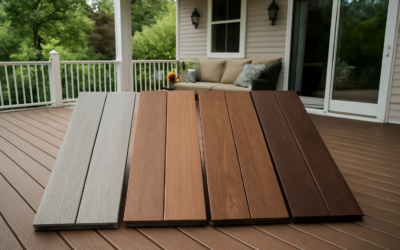
Get physical samples and leave them outside for a week — in the sun, in the rain, on the actual site. Colors that look rich in a showroom can look plastic in daylight, and you will feel the heat difference between shades immediately. Step on a sample supported at 16 inches if the dealer has a display; flex you can feel in the store will not improve on your deck. Check the warranty terms for the word “prorated,” because a 50-year warranty that prorates to 20 percent value after year ten is a 10-year warranty with marketing attached. And confirm the labor coverage: most manufacturer warranties cover replacement boards but not the labor to install them, which is two-thirds of the real cost of a failure.
The last thing I tell every client: composite is a great deck surface and a mediocre religion. It solves rot, splinters, and refinishing forever, and in exchange you accept heat, scratches, and a higher upfront bill. If you use your deck hard and hate maintenance, that trade is easy. If you love the feel of real wood underfoot and do not mind a weekend with a stain pad every couple of years, cedar and ipe have not gone anywhere. Pick the trade-off you can live with, put joist tape on the frame either way, and whichever board you choose, buy two extra and store them in the garage.